Did the Kerala Lok Bhavan Breach Convention?

Synopsis
Kerala Assembly Speaker A.N. Shamseer recently criticized the office of Governor Rajendra Arlekar for improper conduct, reigniting tensions between Lok Bhavan and the elected government. This incident raises questions about the constitutional roles and relationships between State and Centre, especially as elections approach.
Key Takeaways
Kerala Assembly Speaker A.N.
Shamseer has expressed significant concerns regarding a letter from the Governor's office.
The letter was labeled “highly confidential” and had already been leaked to the media.
Chief Minister Pinarayi Vijayan has raised objections to the modifications in the Governor's policy address.
Article 176 of the Constitution outlines the Governor's responsibilities regarding policy statements.
The situation highlights ongoing tensions between the Centre and State governance.
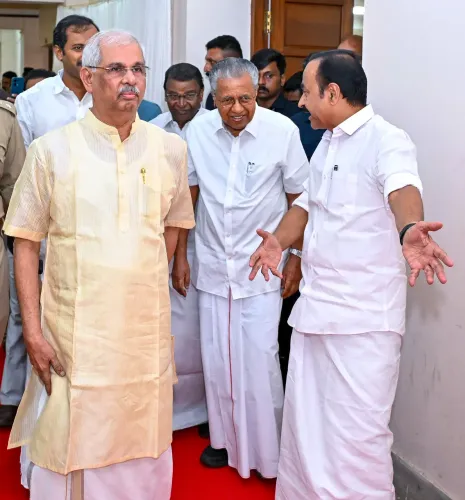
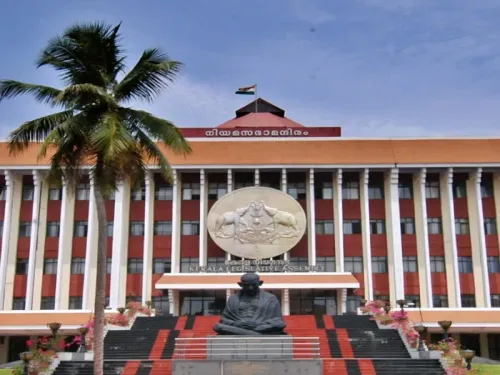
Thiruvananthapuram, Jan 27 (NationPress) - Kerala Assembly Speaker A.N. Shamseer voiced significant dissatisfaction on Tuesday regarding what he termed as improper behavior from the office of Governor Rajendra Arlekar, igniting a renewed conflict in the ongoing standoff between Lok Bhavan and the elected government.
In a media briefing, Shamseer revealed that he received a letter from the Governor’s office labeled as “highly confidential”, which led him to personally supervise its unsealing — a break from standard procedure.
“It was astonishing to discover that the letter's details had already surfaced in news reports before it was delivered to me,” the Speaker stated.
Shamseer indicated that the letter requested video footage of remarks made by Chief Minister Pinarayi Vijayan following the Governor's policy address and his departure from the Assembly.
“What is concerning is that the Speaker received merely a ‘copy’ of a communication that seems to have been initially disseminated to the media. I do not hold the Governor personally responsible for this, but rather his office. Since it is only a copy, I will refrain from responding,” he added.
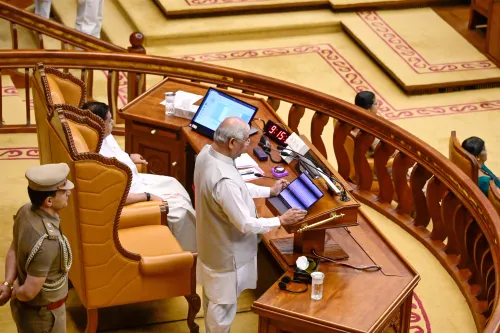
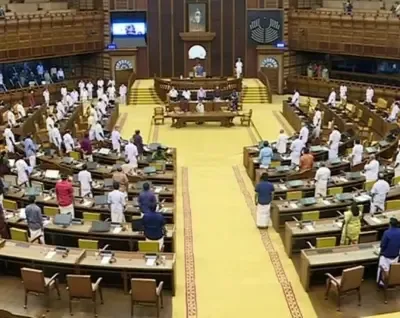
These comments from the Speaker come shortly after a dispute regarding amendments made to the Governor’s policy address delivered to the Assembly on January 20.
Chief Minister Vijayan had openly criticized the omissions and modifications to the Cabinet-approved document.
He emphasized that significant sections mentioning Kerala’s financial difficulties, attributed to what the state perceives as detrimental actions by the Union government, pending state legislation, and fiscal federalism issues had been either excluded or altered.
Vijayan highlighted that Article 176 of the Constitution requires the Governor to present the government’s policy statement during the first session of the year, and established legislative norms recognize the Cabinet-approved address as the authoritative version.
Supporting the Chief Minister, Speaker Shamseer previously ruled that any deviation from the Cabinet-approved text breached legislative norms, affirming that the original document would be regarded as the official record for the Assembly and the media.
This incident has rekindled discussions surrounding the constitutional role of Governors, relationships between the Centre and States, and the boundaries of gubernatorial discretion.
Senior BJP figure and former Goa Governor P.S. Sreedharan Pillai commented, stating that Governors are facing “humiliation” in states like Kerala and Tamil Nadu.
Political analysts caution that the rising institutional tensions could intensify as elections draw near, highlighting the delicate equilibrium between ceremonial constitutional roles and the power of an elected government.
Point of View
The ongoing tensions between Kerala's Governor and the Assembly highlight significant issues regarding the constitutional roles of Governors and their interactions with elected officials. As this situation evolves, it serves as a crucial reminder of the delicate balance between state authority and constitutional mandates, underscoring the importance of respecting democratic processes.
NationPress
6 Oct 2026
Frequently Asked Questions
What did Speaker A.N. Shamseer criticize?
He criticized the office of Governor Rajendra Arlekar for improper conduct concerning a confidential letter.
What was the content of the controversial letter?
The letter requested video footage of remarks made by Chief Minister Pinarayi Vijayan after the Governor's policy address.
Why did Chief Minister Vijayan object to the Governor's address?
He raised concerns about deletions and alterations to the Cabinet-approved text, which he argued misrepresented Kerala's financial situation.
What does Article 176 of the Constitution state?
It mandates that the Governor presents the government's policy statement at the first session of the year.
What will be the impact of this controversy?
It may intensify discussions on the Governor's constitutional role and the relationship between the Centre and States, especially with elections nearing.