Is Kerala CM's Response to Congress and Former Left MLAs Fair?
Synopsis
The Kerala CM's handling of a complaint against a former CPI-M MLA raises questions about fairness in political cases. The contrast with a swift response to a Congress MLA's complaint has sparked debate. Can political biases influence justice? Read on to explore the implications of this incident.
Key Takeaways
The contrast in handling complaints raises concerns about political bias.
CCTV footage may play a crucial role in the investigation.
The legal framework under which the case is registered is significant.
Public perception is critical for the integrity of political processes.
Timeliness in addressing complaints is essential for justice.
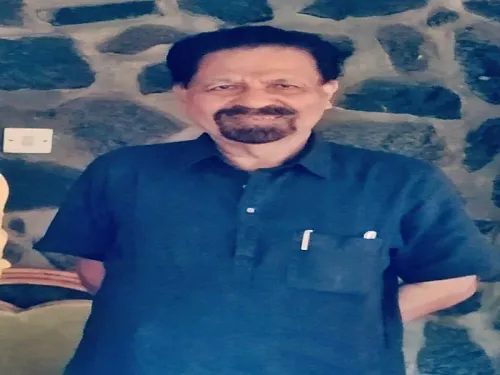
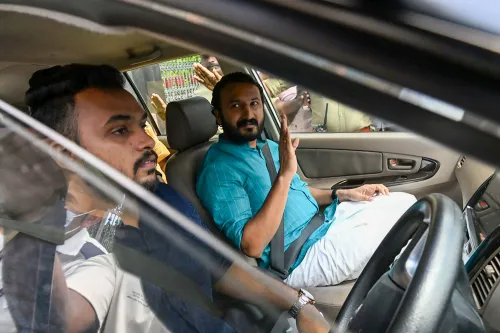
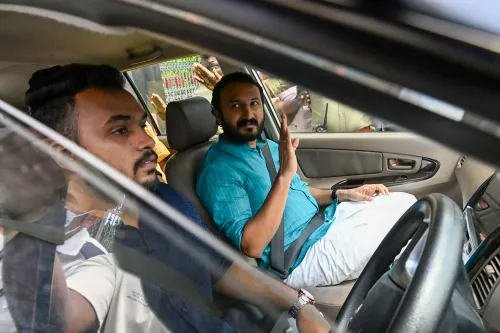
Thiruvananthapuram, Dec 9 (NationPress) The response to the complaint against filmmaker and former CPI-M-affiliated MLA P.T. Kunju Muhammed has drawn criticism, particularly when juxtaposed with the rapid action taken by the Kerala Police regarding first-time Congress MLA Rahul Mamkootathil.
In the case of Mamkootathil, the initial complaint reached Chief Minister Pinarayi Vijayan and was swiftly referred to the police.
When a subsequent complaint was filed with Kerala Pradesh Congress Committee President Sunny Joseph, it was immediately sent to State Police Chief Ravada A. Chandrasekhar, resulting in prompt action.
This quick response in both cases was widely acknowledged and appreciated.
Conversely, the complaint against P.T. Kunju Muhammed, which was submitted directly to Chief Minister Vijayan on November 27 by a female film professional, was only forwarded to the police on December 2—almost five days later.
This timeline has ignited discussions about whether there are varying standards applied in politically sensitive matters.
The incident took place at a Thiruvananthapuram hotel, where the complainant asserts that Kunju Muhammed entered her room.
CCTV footage allegedly confirms that both the accused and the complainant were present at the hotel and that Kunju Muhammed did enter the room.
Based on these details, a case was lodged under Sections 74 and 75(1) of the Bharatiya Nyaya Sanhita.
It is noteworthy that the charges are bailable, and police are expected to record the complainant's statement before a Magistrate on Wednesday.
The alleged misconduct occurred on November 6 during the selection process for Malayalam films for the 30th International Film Festival of Kerala (IFFK), which kicks off on December 13.
Kunju Muhammed, who was the Chairman of the Selection Committee at the time, and the complainant, a committee member, were both residing at the hotel where the incident reportedly happened.
Muhammed, a CPI-M associate, former MLA, and ex-director of Kairali TV, has refuted any allegations of inappropriate behavior, stating he is willing to apologize.
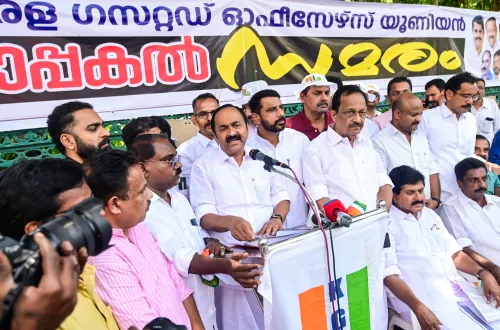
However, the perceived delay in addressing the complaint and the discrepancies in police responses have raised concerns about the equity and consistency in handling politically sensitive cases.
Point of View
It's crucial to recognize the delicate nature of politically sensitive cases like this. The focus should remain on equitable treatment under the law, regardless of political affiliations. The community deserves transparency and consistency in how such matters are addressed, ensuring that justice is truly served.
NationPress
21 Oct 2026
Frequently Asked Questions
What sparked the criticism of Kerala CM?
The criticism arose from the perceived delay in handling a complaint against filmmaker P.T. Kunju Muhammed compared to the quick response to Congress MLA Rahul Mamkootathil's case.
What are the key details of the complaint against Kunju Muhammed?
The complaint involves an allegation that Kunju Muhammed entered a woman’s hotel room. CCTV footage reportedly supports the claim.
What are the legal implications for Kunju Muhammed?
A case has been registered under Sections 74 and 75(1) of the Bharatiya Nyaya Sanhita, which are bailable charges.
What was the timeline of events?
The complaint was submitted on November 27, but the police were not notified until December 2, five days later.
How has the public reacted to this situation?
Public discourse has raised concerns about fairness and consistency in handling politically sensitive cases, highlighting potential biases.