Former Kerala DGP Tomin Thachankary convicted, gets 4 years in disproportionate assets case
Synopsis
Nearly two decades after the Vigilance registered a disproportionate assets case against him, former Kerala DGP Tomin J. Thachankary has been convicted and sentenced to four years' rigorous imprisonment — making him the first officer in Kerala's history to retire at the rank of DGP and then go to jail. He continued rising through the ranks even as the probe was underway.
Key Takeaways
Kottayam Vigilance Court convicted former Kerala DGP Tomin J.
Thachankary on 17 September 2026 in a disproportionate assets case.
Thachankary was sentenced to four years' rigorous imprisonment and fined ₹30,84,892 .
He is the first IPS officer in Kerala to retire as DGP and subsequently be sentenced to prison.
The case relates to assets worth ₹64.70 lakh — 135.80% above his known income — accumulated between January 2003 and July 2007 .
Thachankary continued to rise to the rank of DGP and retired in 2023 while the Vigilance case was pending.
He must approach the Kerala High Court for bail, as the four-year term bars lower courts from granting relief.
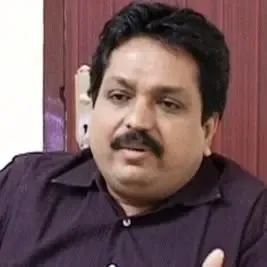
Former Kerala Director General of Police Tomin J. Thachankary was on Thursday, 17 September 2026, convicted by the Kottayam Vigilance Court in a disproportionate assets case and sentenced to four years' rigorous imprisonment, along with a fine of ₹30,84,892. The case, which has been pending for nearly two decades, marks the first time a Kerala IPS officer who retired at the rank of DGP has been sentenced to imprisonment.
The Verdict and Its Significance
Kottayam Vigilance Court Judge K.V. Rajneesh pronounced the sentence hours after finding Thachankary guilty of accumulating assets disproportionate to his known sources of income. With a four-year sentence, Thachankary is barred from seeking bail at any lower court and must approach the Kerala High Court for relief.
Thachankary becomes only the second IPS officer in Kerala history to be sentenced to imprisonment. The first was retired Inspector General of Police Lakshmana, who was convicted in a separate firing case. Crucially, Thachankary is the first officer to have retired from the top rank of DGP before being sentenced.
What the Case Is About
The Vigilance Department registered the case in 2007, alleging that between January 2003 and July 2007, Thachankary had accumulated assets 135.80 per cent in excess of his known sources of income — quantified at ₹64.70 lakh. The agency alleged he had acquired houses, flats, and other properties disproportionate to his salary.
The investigation was completed and a charge sheet filed in 2013. Thachankary challenged the proceedings, contending that some properties had come through family partition and gifts. The court rejected his plea and proceeded with the trial.
A Career That Continued Despite the Probe
The trial assumed particular significance because Thachankary continued rising through the police hierarchy even as the Vigilance investigation was underway. He had reached the rank of Additional Director General of Police by the time the charge sheet was filed and subsequently rose to become DGP before retiring in 2023 — a fact that the prosecution underscored in its arguments.
The Public Prosecutor described Thursday's verdict as significant, noting the difficulties faced by investigating officers who were Deputy Superintendents of Police while the accused was a serving senior officer. 'It was a tough time for the then investigating officers, who were Deputy Superintendents of Police, as the accused was a serving ADGP,' the Public Prosecutor said.
Sentencing and Thachankary's Response
When the court asked Thachankary whether he had anything to say before sentencing, he cited his health condition, stating he had suffered chest pain two days prior. The defence produced medical documents and sought maximum leniency. The prosecution, however, sought the maximum punishment. The court ultimately imposed four years' rigorous imprisonment.
Vigilance Department officials are expected to complete the necessary procedures, and Thachankary is to be taken to Thiruvananthapuram Central Jail.
What Comes Next
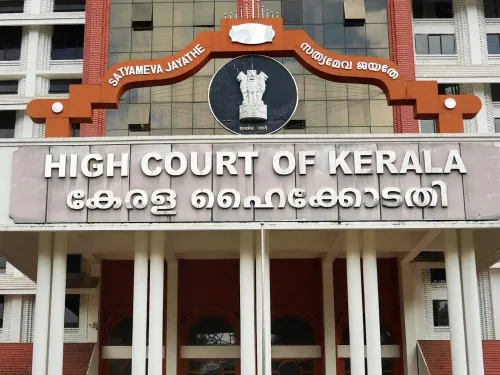
Thachankary's only immediate legal recourse is an appeal before the Kerala High Court. The verdict is being seen as a major judicial setback for an officer once considered close to the top political leadership of Kerala. It also reopens scrutiny of how serving senior police officers facing Vigilance investigations continue to be promoted within the force — a systemic question that this case brings into sharp relief.
Point of View
Reaching the apex rank of DGP, while a charge sheet for disproportionate assets sat in court. That institutional silence around accountability is the real story here. The verdict, though two decades in the making, signals that the judiciary can still deliver consequences; the harder question is why the executive allowed the promotion pipeline to remain unaffected throughout.
NationPress
17 Sept 2026
Frequently Asked Questions
Who is Tomin J. Thachankary and why was he convicted?
Tomin J. Thachankary is a former Director General of Police of Kerala, once regarded as one of the state's most influential and controversial senior police officers. He was convicted on 17 September 2026 by the Kottayam Vigilance Court for accumulating assets 135.80% in excess of his known sources of income between January 2003 and July 2007.
What is the sentence given to Thachankary?
The Kottayam Vigilance Court sentenced Thachankary to four years' rigorous imprisonment and imposed a fine of ₹30,84,892. Because the sentence exceeds three years, he cannot seek bail from any lower court and must approach the Kerala High Court for relief.
How significant is this conviction in Kerala's police history?
Thachankary is only the second IPS officer in Kerala to be sentenced to imprisonment, and the first to have retired at the rank of Director General of Police before being convicted. The case is also notable because he continued to be promoted within the force even while the Vigilance investigation was underway.
What was the disproportionate assets case about?
The Vigilance Department registered the case in 2007, alleging that Thachankary had acquired houses, flats, and other properties worth ₹64.70 lakh more than his known income between 2003 and 2007. The charge sheet was filed in 2013 after the investigation was completed.
What are Thachankary's options after the conviction?
Thachankary's only immediate legal avenue is an appeal before the Kerala High Court, as the four-year sentence bars lower courts from granting bail. He cited health concerns during sentencing, but the court proceeded with the verdict after rejecting his plea for leniency.