India's decade of reforms built resilience against global shocks: Shaktikanta Das
Synopsis
Former RBI Governor and current Principal Secretary to the Prime Minister Shaktikanta Das made a sweeping case at the Kautilya Economic Conclave that India's last decade of reforms — from GST to flexible inflation targeting to a banking-sector clean-up — have transformed the country into a structural shock-absorber, with GDP at 7.8% in Q1 FY27 and '8 per cent within striking distance.'
Key Takeaways
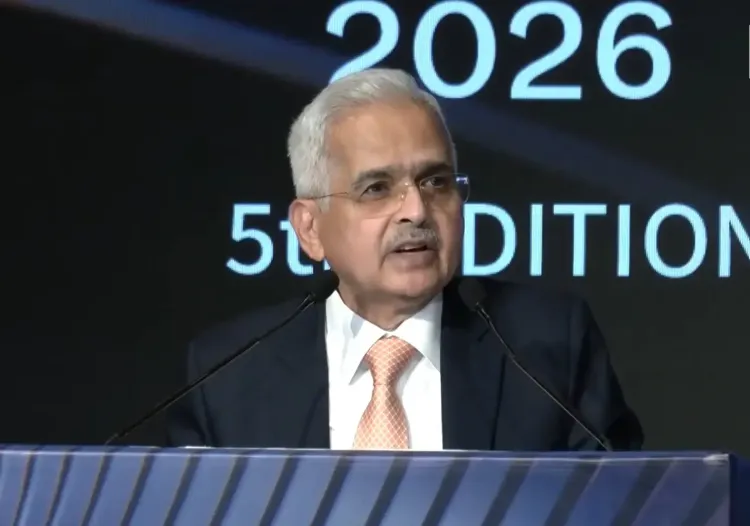
Shaktikanta Das , Principal Secretary to the PM and former RBI Governor , addressed the Kautilya Economic Conclave in New Delhi on 4 October 2026 .
He credited a decade of reforms — flexible inflation targeting (2016) , GST , digital payments , and banking-sector overhaul — for India's macroeconomic resilience.
India's real GDP grew 7.8% in Q1 FY27 ; Das said 8% growth is within 'striking distance'.
Above- 8% growth was recorded in each of the four consecutive quarters from July–September 2025 to April–June 2026 .
Das flagged AI , financial market deepening, strategic self-reliance, sustainability, and human capital as the five pillars of India's next growth phase.
He cautioned that sustaining reform momentum is 'very critical' for long-term, resilient growth — not just rapid expansion.
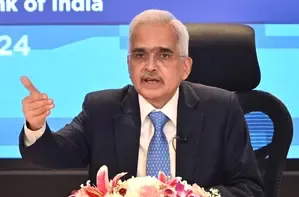
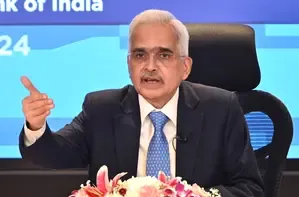
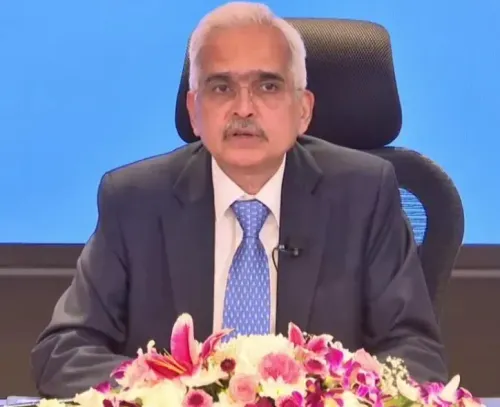
Shaktikanta Das, Principal Secretary to the Prime Minister and former Reserve Bank of India (RBI) Governor, on Sunday, 4 October 2026, said that a broad sweep of economic reforms over the past decade has made India structurally resilient against successive global shocks that have weighed on the world economy. Speaking at the Kautilya Economic Conclave in New Delhi, Das argued that these reforms were never conceived as isolated, one-off interventions, but as systemic buffers designed to help the economy absorb disruptions and recover rapidly.
Key Reforms Cited
Das highlighted four pillars that, in his assessment, have fundamentally strengthened India's economic architecture. These are the flexible inflation-targeting framework introduced in 2016, the rollout of the Goods and Services Tax (GST), the rapid expansion of digital payments, and a comprehensive overhaul of the banking sector. He described the restoration of banking-sector health as a 'defining feature' of India's resilience, noting that the clean-up of balance sheets had freed credit channels for productive investment.
On fiscal policy, Das stated that sustained fiscal consolidation — pursued without sacrificing growth-supporting expenditure — had helped stabilise macroeconomic fundamentals. The GST, he added, created an integrated national market, eliminated cascading taxes, and accelerated the formalisation of the economy.
Growth Numbers and Global Context
India's real GDP grew 7.8 per cent in the first quarter of 2026-27, supported by strong domestic demand and investment, Das noted. He said the country was now within 'striking distance of 8 per cent growth', pointing to the above-8-per-cent expansion recorded across the four consecutive quarters from July–September 2025 to April–June 2026 as evidence of underlying momentum.
Das framed India's performance against a challenging global backdrop marked by geopolitical uncertainty, trade fragmentation, technology restrictions, energy-price volatility, and elevated public debt in advanced economies. He noted that the flexible inflation-targeting framework had enabled India to navigate the Covid pandemic, the Russia-Ukraine war, and ongoing conflicts in West Asia without the macroeconomic dislocations seen elsewhere.
Infrastructure, Energy and Manufacturing
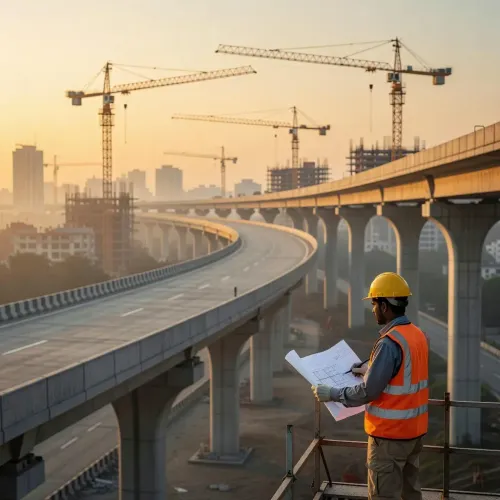
Das underscored large-scale public investment in transport and logistics — backed by initiatives including PM Gati Shakti, the National Logistics Policy, Sagarmala, and UDAN — as a driver that has reduced economic friction and laid the groundwork for investment-led growth. He also pointed to India's diversified energy base, spanning fossil fuels, renewables, biofuels, and nuclear energy, as a buffer against external energy shocks.
On manufacturing, Das said India was witnessing a 'manufacturing resurgence', supported by production-linked incentives (PLI), semiconductor investments, automation, and Industry 4.0 technologies. This comes amid a broader global effort to de-risk supply chains away from single-country dependence — a dynamic that has positioned India as an alternative manufacturing hub.
The Road Ahead
Looking forward, Das identified artificial intelligence, deeper financial markets, strategic self-reliance, sustainable development, and human capital as the five domains that could define the next phase of India's growth trajectory. He stressed that sustaining the reform momentum would be 'very critical', since India's objective was not simply rapid expansion but long-term, sustainable and resilient growth. The remarks signal that the reform agenda is far from complete and that institutional strengthening remains a live priority at the highest levels of economic policymaking.
Point of View
Coherent resilience architecture. The argument has real data behind it — India's growth record through Covid, the Ukraine shock, and West Asian instability is genuinely stronger than most emerging-market peers. Yet the 'striking distance of 8 per cent' claim deserves scrutiny: Q1 FY27 came in at 7.8%, a step down from the above-8-per-cent run in the preceding four quarters. Das's forward-looking five pillars — AI, financial deepening, strategic autonomy, sustainability, human capital — are directionally sound but conspicuously light on execution timelines or measurable targets, which is precisely the gap that separated rhetoric from results in past reform cycles.
NationPress
4 Oct 2026
Frequently Asked Questions
What did Shaktikanta Das say about India's economic resilience?
Das said India's broad range of economic reforms over the past decade — including flexible inflation targeting, GST, digital payments expansion, and banking-sector overhaul — have created systemic buffers that have made the country resilient against successive global shocks. He was speaking at the Kautilya Economic Conclave in New Delhi on 4 October 2026.
What is India's GDP growth rate for the first quarter of 2026-27?
India's real GDP grew 7.8 per cent in the first quarter of 2026-27, supported by strong domestic demand and investment, according to Das. He added that the country is within 'striking distance of 8 per cent growth', citing above-8-per-cent expansion across the four preceding quarters.
Which reforms did Shaktikanta Das highlight as key to India's resilience?
Das highlighted the flexible inflation-targeting framework introduced in 2016, the Goods and Services Tax, the expansion of digital payments, and banking-sector reforms as the primary drivers of India's macroeconomic stability and resilience.
What are the five areas Das identified for India's next growth phase?
Das identified artificial intelligence, deeper financial markets, strategic self-reliance, sustainable development, and human capital as the five domains that could define the next phase of India's growth. He stressed that sustaining reform momentum would be 'very critical' to achieving long-term, resilient growth.
Who is Shaktikanta Das and why is his view significant?
Shaktikanta Das currently serves as Principal Secretary to the Prime Minister and is a former Governor of the Reserve Bank of India and former Economic Affairs Secretary in the Union Finance Ministry. His assessment carries weight both as a senior policymaker and as the former steward of India's monetary policy through the Covid pandemic and subsequent global shocks.