KGMU forms disciplinary committee to probe STF report on conversion case
Synopsis
KGMU's Executive Council unanimously voted on 6 November to form a six-member Disciplinary Action Committee to scrutinise the STF report on alleged religious conversion and harassment of female doctors — a step mandated by the UP government after the report was handed over on 30 October. With retired IPS officers set to serve as independent members, the panel's findings will determine whether named faculty face formal disciplinary proceedings.
Key Takeaways
KGMU's Executive Council unanimously decided on 6 November 2026 to constitute a Disciplinary Action Committee to examine the STF report.
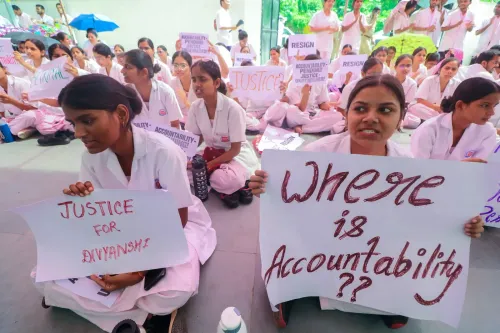
The STF investigated allegations of religious conversion and harassment of female doctors at the institute.
The Uttar Pradesh government directed KGMU to act on the STF report, which was received by the university on 30 October .
The committee will have six members : the Vice-Chancellor, the Registrar, two senior faculty, and two independent members — preferably retired IPS officers .
Some faculty members contested their inclusion, claiming their names were 'wrongly' and 'unfairly' added to the STF's observations.
The panel will review all representations and records before recommending action under Section 11.11 of the KGMU Act .
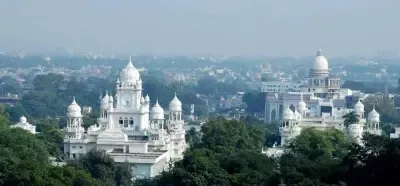
King George's Medical University (KGMU) in Lucknow on Friday, 6 November 2026, decided to constitute a Disciplinary Action Committee to examine the findings of the Special Task Force (STF) report on alleged religious conversion and harassment of female doctors at the institution. The move follows a directive from the Uttar Pradesh government to initiate action against individuals identified in the STF's investigation.
What the Executive Council decided
A special meeting of the KGMU Executive Council was convened on Friday under the chairmanship of the Vice-Chancellor. The session was called specifically to deliberate on the STF report, which was received through the state government on 30 October. At the outset, the Registrar presented the detailed STF findings before the full Council.
After considering all facts, records, and representations, the Executive Council unanimously decided to form the Disciplinary Action Committee as mandated under the provisions of Section 11.11 of the KGMU Act and the university statutes.
Composition of the disciplinary panel
The six-member committee will include the Vice-Chancellor, the Registrar, two senior faculty members nominated from relevant categories within the university, and two independent members. For the independent positions, preference is to be given to retired Indian Police Service (IPS) officers who retired at the highest ranks, according to an official statement.
Representations and contested inclusions
Several university teachers and administrative staff had submitted formal representations in connection with the STF report. These were read out before the Council during the meeting. Some members reportedly informed the Council that their names had been 'wrongly' and 'unfairly' included in the STF's observations. The Executive Council resolved that such representations should be forwarded to the relevant departmental committees for due consideration, with action to be taken in accordance with rules after examining the facts and objections raised.
Scope of the committee's work
The Disciplinary Action Committee is mandated to conduct a detailed examination of the STF report and all related facts and records. It will also review the submissions of all concerned teachers and individuals before recommending further action under the university statutes and applicable rules. This comes amid broader scrutiny of institutional accountability at medical universities in Uttar Pradesh, as state authorities have pressed for time-bound action in cases involving faculty conduct.
The committee's findings are expected to shape the next phase of proceedings, with formal disciplinary action against named individuals contingent on its conclusions.
Point of View
Rather than direct action, is consistent with due-process requirements but also signals institutional caution: KGMU is building a procedural buffer between the government's directive and any final punitive step. The inclusion of retired IPS officers as independent members is a deliberate signal of impartiality, yet their police background could raise questions about the committee's ability to assess medical and academic conduct. Most critically, some faculty have already contested their inclusion in the STF report — a challenge that, if sustained, could slow or complicate proceedings. Whether this committee delivers time-bound accountability or becomes a prolonged procedural exercise will be the real test of the UP government's intent in ordering action in the first place.
NationPress
6 Nov 2026
Frequently Asked Questions
Why has KGMU formed a disciplinary committee?
KGMU formed the Disciplinary Action Committee on 6 November 2026 to examine the STF report on alleged religious conversion and harassment of female doctors at the university. The move was prompted by a directive from the Uttar Pradesh government to take action against individuals named in the report.
What did the STF investigate at KGMU?
The Special Task Force (STF) was formed to investigate allegations of religious conversion and harassment of female doctors at King George's Medical University in Lucknow. Its report was submitted to the state government and forwarded to KGMU on 30 October 2026.
Who will be on the KGMU disciplinary committee?
The six-member committee will include the Vice-Chancellor, the Registrar, two senior faculty members, and two independent members. Preference for the independent slots is to be given to retired IPS officers who retired at the highest ranks.
What happens to faculty who say their names were wrongly included?
Representations from university teachers and staff contesting their inclusion in the STF report will be forwarded to the relevant departmental committees for consideration. The disciplinary panel will review all such submissions before recommending further action.
What legal provision governs the committee's proceedings?
The committee's constitution and powers are drawn from Section 11.11 of the KGMU Act and the university statutes, which provide the framework for disciplinary proceedings against faculty and staff.