Khattar pays tribute to Guru Ram Das on Prakash Purab
Synopsis
Union Power Minister Manohar Lal Khattar paid homage to Guru Ram Das Ji on his Prakash Purab, saluting the Fourth Sikh Guru's founding of Amritsar, his strengthening of the langar tradition, and his enduring teachings on service and equality.
Key Takeaways
Union Power Minister Manohar Lal Khattar posted a tribute to Guru Ram Das Ji on his Prakash Purab on 27 October 2026 .
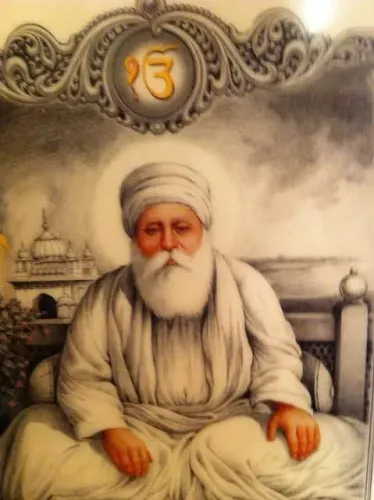
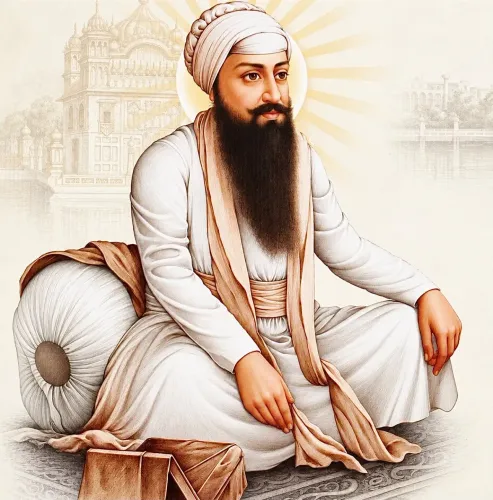
Guru Ram Das Ji is the Fourth Guru of Sikhism , revered as a symbol of service ( seva ) and harmony ( samrasta ).
He founded the city of Amritsar , which became the spiritual heart of the Sikh Panth and home to the Golden Temple.
The Guru strengthened the langar tradition — a community kitchen open to all — as a living symbol of equality and brotherhood.
Khattar, a former Chief Minister of Haryana , noted that the Guru's teachings continue to guide humanity toward an egalitarian society.
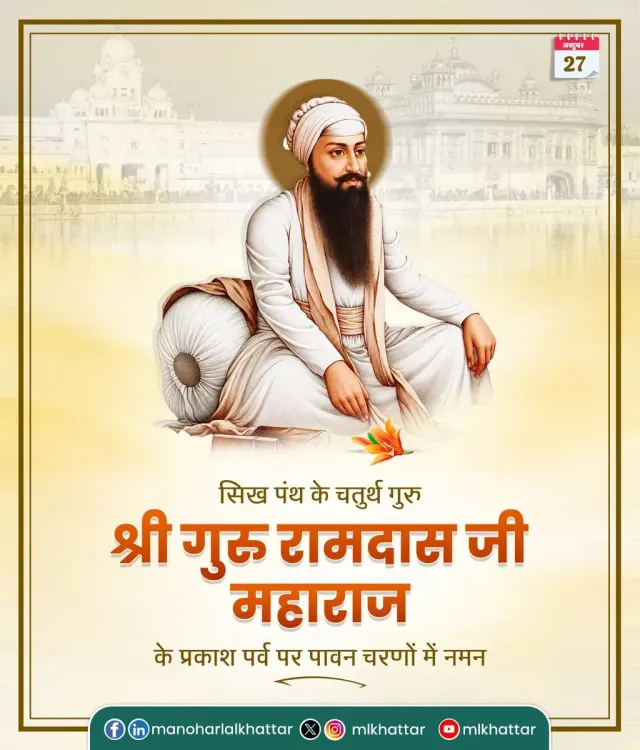
On the auspicious Prakash Purab of Guru Ram Das Ji, Union Power Minister Manohar Lal Khattar offered reverent homage to the Fourth Guru of Sikhism, honouring a legacy of service, devotion, and equality that continues to shape India's spiritual and cultural fabric.
Khattar wrote: 'सिख पंथ के चतुर्थ गुरु, सेवा और समरसता के प्रतीक श्री गुरु रामदास जी महाराज के पावन प्रकाश पर्व पर उनके चरणों में श्रद्धापूर्वक नमन!' — 'Reverential salutations at the feet of Sri Guru Ram Das Ji Maharaj, the Fourth Guru of the Sikh Panth and symbol of service and harmony, on his sacred Prakash Purab.'
The Guru who gave India Amritsar
Guru Ram Das Ji is venerated across the Sikh community not only as a spiritual master but as the founder of Amritsar — the city that would eventually become home to the Harmandir Sahib (Golden Temple), the holiest shrine in Sikhism. Khattar's post specifically acknowledged this act of founding, noting that it gave the Sikh Panth and Indian culture a new height of identity and purpose.
That single act of city-building carries centuries of consequence. Amritsar today stands as a living monument to the Guru's vision — a centre of pilgrimage, culture, and communal harmony in Punjab.
Langar — the tradition that feeds millions without asking a name
Khattar's tribute also highlighted Guru Ram Das Ji's role in strengthening the langar tradition — the practice of a community kitchen open to all, regardless of caste, creed, or status. The minister described it as a symbol of equality and brotherhood that has endured for centuries. Today, the Golden Temple's langar feeds well over one lakh people daily, a direct continuation of the Guru's teaching made manifest in steel and flour and quiet service.
The Guru's teachings, Khattar wrote, 'continue to light the way for an egalitarian society and the service of humanity' — a principle the minister presented as timeless rather than historical.
A broader pattern of political tribute
Leaders across India's political spectrum regularly mark the birth anniversaries of Sikh Gurus with public tributes — a practice that reflects both genuine reverence and the deep imprint of Sikh heritage on India's national identity. For Khattar, a senior BJP leader who served as Chief Minister of Haryana — a state with a significant Sikh population and deep cultural ties to Punjab — this tribute carries particular resonance.
The message of seva (service) and samata (equality) that runs through Guru Ram Das Ji's life is one that political leaders across generations have returned to, finding in it a vocabulary that speaks to India's pluralist self-image.
The teachings of Guru Ram Das Ji have outlasted empires. That they still find an echo in the public square on a Tuesday morning in October is its own kind of testament.
Point of View
Cutting across party lines — reflecting both the spiritual depth of Sikh heritage and its electoral salience in states like Punjab, Haryana, and Delhi. For Khattar, whose political base lies in Haryana, invoking Guru Ram Das Ji's values of service and equality connects personal faith with a broader BJP outreach to Sikh communities. The emphasis on the langar tradition and Amritsar's founding also subtly underlines a narrative of Sikh contributions to India's civilisational story. As Guru Nanak Jayanti approaches in coming weeks, such tributes are likely to intensify across the political spectrum.
NationPress
27 Oct 2026
Frequently Asked Questions
Who was Guru Ram Das Ji?
Guru Ram Das Ji was the Fourth Guru of Sikhism, known for founding the city of Amritsar, strengthening the langar tradition, and dedicating his life to service, devotion, and humility.
What is Prakash Purab?
Prakash Purab is the birth anniversary celebration of a Sikh Guru. The word 'Prakash' means divine light, and the occasion is observed with prayers, kirtans, and community service.
Why is Guru Ram Das Ji associated with Amritsar?
Guru Ram Das Ji founded the city of Amritsar in Punjab, which later became home to the Harmandir Sahib (Golden Temple), the holiest shrine in Sikhism.
What is the langar tradition in Sikhism?
Langar is a community kitchen found in every Gurdwara that provides free meals to all visitors regardless of religion, caste, or status. Guru Ram Das Ji is credited with strengthening this tradition as a symbol of equality.
Why did Manohar Lal Khattar post about Guru Ram Das Ji?
Khattar posted on the occasion of Guru Ram Das Ji's Prakash Purab, paying tribute to the Sikh Guru's contributions to Sikh heritage and Indian culture — a common practice among senior Indian political leaders on such occasions.