Khattar pays tribute to Haryana BJP stalwart Dr. Mangal Sen
Synopsis
Union Power Minister Manohar Lal Khattar pays tribute to Dr. Mangal Sen, former Haryana Deputy CM and BJP stalwart, on his birth anniversary, calling him a priceless source of inspiration for party workers.
Key Takeaways
Manohar Lal Khattar posted a birth-anniversary tribute to Dr.
Mangal Sen on 27 October 2026 .
Mangal Sen served as Deputy Chief Minister of Haryana and is credited with strengthening the BJP's organisational base in the state.
Khattar described Mangal Sen's simple life, far-sighted leadership, and commitment to public service as enduring inspiration for cadres.
The tribute follows a wider BJP practice of marking birth anniversaries of pre-2014 state-level organisational pioneers.
Haryana BJP evolved from a smaller presence in the 1980s–1990s to repeated state government tenures, with early organisers like Mangal Sen central to that growth.
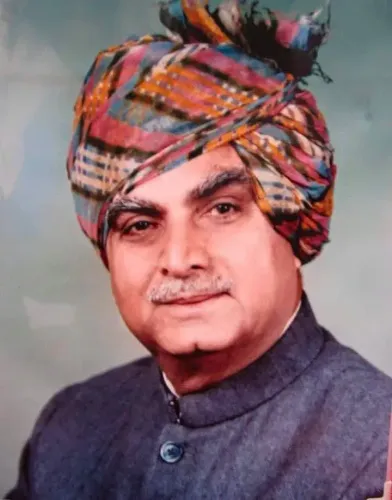
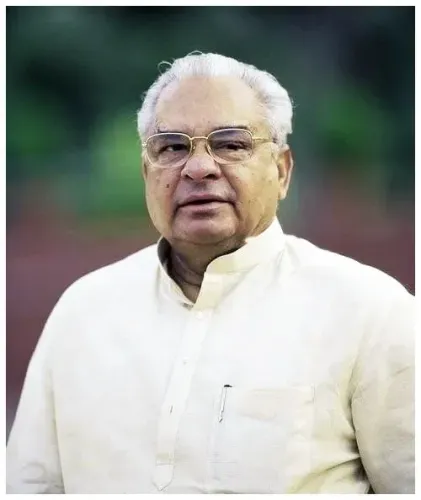
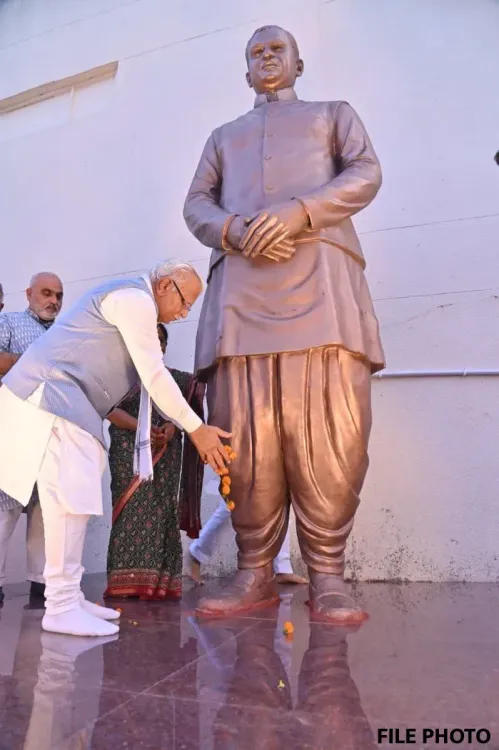
On the birth anniversary of Dr. Mangal Sen, Union Power Minister Manohar Lal Khattar paused to salute the man widely credited with laying the organisational bedrock of the Bharatiya Janata Party in Haryana — a former Deputy Chief Minister whose simplicity and steadfast dedication the minister calls an enduring inspiration for every party worker.
Posting on Tuesday, 27 October 2026, Khattar wrote in Hindi: 'हरियाणा भाजपा के आधारस्तम्भ एवं प्रदेश के पूर्व उपमुख्यमंत्री डॉ. मंगल सेन जी की जयंती पर उन्हें श्रद्धापूर्वक नमन!' — 'Respectful salutations to Dr. Mangal Sen, the cornerstone of Haryana BJP and former Deputy Chief Minister of the state, on his birth anniversary!' He went on to invoke Mangal Sen's 'simple life, far-sighted leadership, unbreakable commitment to the organisation, and high ideals of public service' as values that remain a 'priceless source of inspiration' for cadres today.
The man who built Haryana BJP's foundations
Dr. Mangal Sen served as Deputy Chief Minister of Haryana and was a senior figure in the state's early BJP organisation during a period when the party was still carving out electoral space in the region. Veterans like him are credited with nurturing the ground-level cadre networks that would later underpin the party's successive state government tenures from the 2014 election cycle onward.
Khattar himself knows that journey intimately — he rose through the ranks of Haryana BJP before serving as Chief Minister for a decade and is now a Union Cabinet minister. His tribute is as much an organisational signal as a personal one: the party's present strength, it says, stands on shoulders like Mangal Sen's.
A BJP tradition: honouring its state-level architects
Birth-anniversary tributes to pre-2014 state organisers are a deliberate fixture in BJP's political calendar. They serve a dual purpose — preserving institutional memory and motivating the current cadre by connecting them to a founding ethos of discipline and grassroots service. Haryana, which has seen the party evolve from a modest presence in the 1980s and 1990s to a dominant political force, offers a particularly vivid arc of that transformation.
For workers in the state unit, a tribute from a leader of Khattar's stature reinforces that the party's organisational lineage is valued — not just its electoral wins.
The legacy Dr. Mangal Sen leaves behind is, by Khattar's own measure, not a chapter in history but a live instruction manual for anyone who serves the organisation today.
Point of View
Which has built on decades of painstaking groundwork to become electorally dominant, these rituals of remembrance reinforce continuity and loyalty. At a moment when the BJP's organisational machinery in states like Haryana faces the constant pressure of factionalism and electoral competition, anchoring the present in a venerated past is a cohesion strategy as old as politics itself.
NationPress
27 Oct 2026
Frequently Asked Questions
Who was Dr. Mangal Sen?
Dr. Mangal Sen was a veteran BJP leader and former Deputy Chief Minister of Haryana, credited with building the party's organisational foundations in the state.
Why did Manohar Lal Khattar post a tribute to Dr. Mangal Sen?
Khattar posted the tribute on Dr. Mangal Sen's birth anniversary on 27 October 2026, honouring his role as a founding pillar of Haryana BJP and an inspiration for party workers.
What role did Dr. Mangal Sen play in Haryana BJP?
He is credited with providing a strong organisational foundation to the BJP in Haryana during the party's early years in the state, helping lay the groundwork for its later electoral successes.
Who is Manohar Lal Khattar?
Manohar Lal Khattar is the Union Minister of Power and Housing & Urban Affairs, a senior BJP leader, and former Chief Minister of Haryana.
Why does BJP mark birth anniversaries of state-level organisers?
BJP regularly honours its pre-2014 state organisational pioneers on their birth anniversaries to preserve party history, reinforce cadre motivation, and connect present workers to the party's founding ethos.