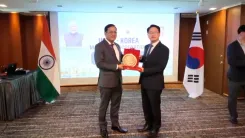
Goyal Flags 3,500 Sign-Ups on Trade Facilitation Portal

Synopsis
Commerce Minister Piyush Goyal has spotlighted 3,500 early registrations on India's Trade Facilitation Portal, positioning the digital platform as a key enabler for MSMEs and first-time exporters to forge global partnerships and access new markets.
Key Takeaways
The Trade Facilitation Portal has recorded around 3,500 registrations within a few months of its launch, according to Minister Piyush Goyal.
The platform is specifically designed to help MSMEs and first-time exporters find partners and expand into new markets.
Goyal described the portal as a 'landmark initiative' that 'seamlessly connects businesses on both sides' of a bilateral trade relationship.
The push aligns with India's Foreign Trade Policy 2023-28 , which prioritises MSME export growth and digital trade facilitation.
The government's next challenge is converting registrations into actual trade flows and sustained cross-border partnerships.
A digital bridge for Indian exporters just crossed its first major milestone. Union Commerce and Industry Minister Piyush Goyal on Tuesday, October 27, 2026, highlighted that the Trade Facilitation Portal has recorded around 3,500 registrations within just a few months of its launch — a figure he called a testament to the platform's growing role in connecting businesses across borders.
What the portal promises for small exporters
Goyal framed the portal's significance in three words: 'Trust. Trade. Opportunities.' The platform is designed to 'seamlessly connect businesses on both sides,' with a particular focus on MSMEs and first-time exporters — the segment that has historically faced the steepest barriers to global market entry. For a small manufacturer in Ludhiana or a first-generation exporter in Coimbatore, the pitch is direct: find partners, explore new markets, and expand global reach without navigating the procedural maze that larger firms can absorb but smaller ones cannot.
India's digital-first push on export facilitation
The portal sits within a broader policy arc. India's Foreign Trade Policy 2023-28 explicitly prioritised MSME export growth and digital facilitation tools as levers to diversify the country's trade footprint beyond traditional markets. The logic is straightforward — India's export ambitions cannot be carried by large corporates alone; the sheer volume of mid-tier and micro enterprises needs to be mobilised. Successive administrations have backed technology-enabled business matchmaking as the most scalable way to do that.
The 3,500 registration mark, reached in a matter of months, signals early traction. Whether that converts into actual trade flows and sustained partnerships is the next question the government will need to answer.
MSMEs at the centre of the export push
India's MSME sector employs hundreds of millions of people and contributes significantly to GDP, yet its share in formal goods exports has remained a persistent policy challenge. Platforms like this one aim to change that calculus by reducing the information asymmetry between Indian suppliers and overseas buyers. The bilateral matchmaking dimension — connecting 'businesses on both sides' — suggests the portal has a counterpart market in focus, though the specific bilateral partner was not named in the post.
As the government watches registration numbers, the sharper metric will be conversion: how many of those sign-ups move from profile creation to actual trade engagement, and how many MSMEs crack a new market they could not reach before.
Point of View
500 registration figure is an early data point the government will cite as proof of concept for its digital-first trade facilitation strategy — but the harder test lies ahead. India's Foreign Trade Policy 2023-28 set ambitious MSME export targets, and platforms like this one are meant to do the heavy lifting of market linkage that policy documents alone cannot. The minister's emphasis on 'first-time exporters' is telling: it signals an intent to expand the base of India's exporter community, not just deepen the reach of existing players. If the portal sustains momentum and posts conversion metrics in the next parliamentary session, it could become a template for bilateral trade infrastructure going forward.
NationPress
27 Oct 2026
Frequently Asked Questions
What is the Trade Facilitation Portal launched by India?
The Trade Facilitation Portal is a digital platform aimed at connecting Indian businesses — especially MSMEs and first-time exporters — with counterparts in a partner country, enabling them to forge trade partnerships and explore new markets.
How many registrations has the Trade Facilitation Portal received?
According to Commerce Minister Piyush Goyal, the portal has received around 3,500 registrations within a few months of its launch as of October 2026.
How does the Trade Facilitation Portal help MSMEs?
The portal is designed to reduce procedural and information barriers for MSMEs and first-time exporters, helping them discover partners, access new markets, and expand their global reach without the complexity that typically favours larger firms.
What is India's Foreign Trade Policy 2023-28?
India's Foreign Trade Policy 2023-28 is a five-year framework that prioritises MSME export growth, digital trade facilitation, and diversification of India's export markets beyond traditional destinations.
Who is Piyush Goyal and what is his role in India's trade policy?
Piyush Goyal is India's Union Minister of Commerce and Industry , the Leader of the House in the Rajya Sabha , and a senior BJP leader who oversees the country's trade, export, and industry policies.