Khattar meets HP CM Sukhu, discusses power and urban development
Synopsis
Union Power Minister Manohar Lal Khattar met Himachal Pradesh Chief Minister Sukhvinder Singh Sukhu on 16 June 2026 for detailed discussions on energy and urban development, spanning central schemes such as RDSS and AMRUT 2.0 that directly affect the hill state's infrastructure priorities.
Key Takeaways
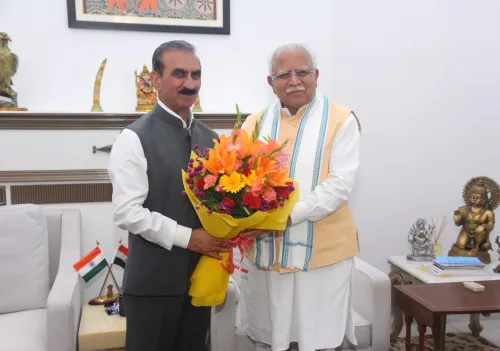
Union Power Minister Manohar Lal Khattar held a courtesy meeting with Himachal Pradesh CM Sukhvinder Singh Sukhu on 16 June 2026 .
Discussions covered energy and urban development subjects concerning Himachal Pradesh , according to Khattar's post on X.
The meeting was cross-party: Sukhu leads a Congress government while Khattar is a senior BJP leader and Union minister.
Key central schemes relevant to the state include the Revamped Distribution Sector Scheme (RDSS) for power infrastructure and AMRUT 2.0 for urban development.
No formal outcomes or decisions were publicly announced following the meeting.
Follow-up project sanctions or allocations for Himachal Pradesh in the 2026-27 cycle are the key development to watch.
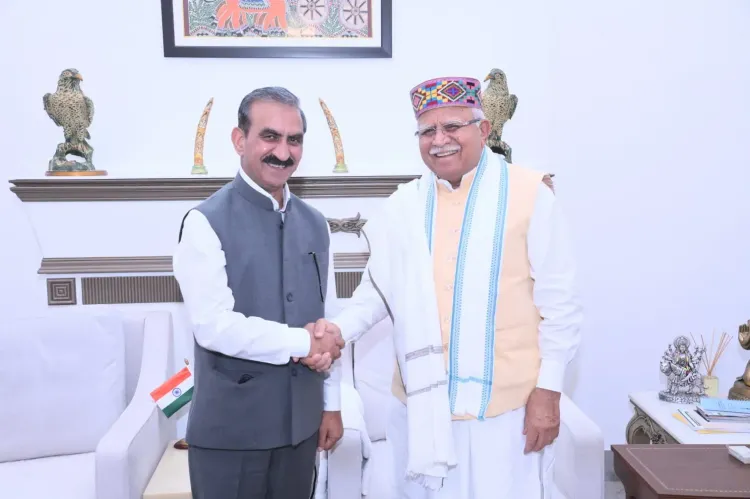
Union Power Minister Manohar Lal Khattar met Himachal Pradesh Chief Minister Sukhvinder Singh Sukhu at the latter's residence on Tuesday, 16 June 2026, for a courtesy call that extended into substantive discussions on energy and urban development issues concerning the hill state.
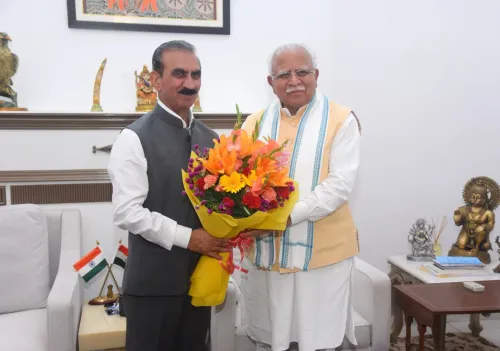
Khattar posted on X that the meeting involved 'विस्तृत एवं सार्थक विचार विमर्श' ('detailed and meaningful deliberations') on various subjects related to energy and urban development in the state. Two images shared alongside the post showed the two leaders at the meeting.
Context
Himachal Pradesh sits at the intersection of two central ministries Khattar heads — Power, and Housing and Urban Affairs. The state is endowed with significant hydroelectric potential and its hill towns, including Shimla, face persistent urban infrastructure pressures. Chief Minister Sukhu, who leads a Congress government in the state since 2022, represents the political opposition at the national level, making the meeting a cross-party, centre-state technical engagement.
Such courtesy calls between Union ministers and state chief ministers are a standard mechanism through which states flag project priorities, seek central approvals, and align on implementation timelines — irrespective of the parties in power at either level.
Policy Backdrop
Two major central schemes are directly relevant to Himachal Pradesh's development agenda. The Revamped Distribution Sector Scheme (RDSS), launched in 2021, provides financial and technical support to state power utilities for infrastructure upgrades and reduction of aggregate technical and commercial losses. The scheme requires close coordination between state utilities and the Union Ministry of Power.
AMRUT 2.0, also approved in 2021, extends central assistance to states for water supply, sewerage, and urban mobility projects in towns and cities. Hill municipalities in Himachal Pradesh have been among the beneficiaries of this programme, making the Ministry of Housing and Urban Affairs a key funding partner for the state government.
Stakeholders and Impact
The primary stakeholders in any outcomes from this engagement are Himachal Pradesh's state power utilities and the urban local bodies that administer towns across the state. Hydropower evacuation infrastructure — the transmission lines that carry electricity generated in the hills to the national grid — is a perennial concern that requires central coordination on right-of-way, inter-state agreements, and grid integration.
For urban bodies, central scheme funding under AMRUT 2.0 can determine the pace and scale of water and sewerage projects in towns that face seasonal population surges due to tourism. Any decisions or recommendations emerging from this meeting could shape project sanctions in the 2026-27 budget cycle.
What's Next
No public statement of outcomes or decisions was issued following the meeting. Watch for follow-up announcements on hydro-power evacuation line approvals, new RDSS project sanctions for Himachal Pradesh, or fresh AMRUT 2.0 project clearances in the coming weeks. State-central coordination committee meetings often follow such ministerial-level interactions and can produce concrete allocations.
The meeting signals that technical and financial coordination between New Delhi and Shimla on infrastructure continues at the highest levels, with the 2026-27 implementation cycle likely to be a key test of how swiftly agreed priorities translate into on-ground project activity.
Point of View
Where political differences are set aside in the interest of scheme implementation and fund flows. For a Congress-governed state like Himachal Pradesh, maintaining a working relationship with the BJP-led Union ministries that control RDSS and AMRUT 2.0 funding is not optional — it is essential for project approvals. Khattar, as a former chief minister himself, brings an understanding of state-level pressures that can make such engagements more productive than routine bureaucratic exchanges. The timing, ahead of the 2026-27 budget implementation cycle, suggests both sides have an interest in moving pending project files forward.
NationPress
17 Sept 2026
Frequently Asked Questions
Why did Manohar Lal Khattar meet Himachal Pradesh CM Sukhu?
Khattar met CM Sukhvinder Singh Sukhu on 16 June 2026 for a courtesy call that included detailed discussions on energy and urban development issues affecting Himachal Pradesh.
What central schemes are relevant to Himachal Pradesh under Khattar's ministries?
The Revamped Distribution Sector Scheme (RDSS) for power utility upgrades and AMRUT 2.0 for urban water, sewerage, and mobility projects are the two key central schemes directly relevant to Himachal Pradesh.
Is there a political significance to a BJP minister meeting a Congress chief minister?
Centre-state meetings on technical and infrastructure matters routinely take place across party lines; states depend on Union ministry approvals and funding regardless of which party governs at either level.
What outcomes came from the Khattar-Sukhu meeting?
No formal outcomes or decisions were publicly announced; Khattar's post described 'detailed and meaningful deliberations' but did not specify any agreements reached.
What should I watch for after this meeting?
Watch for announcements on hydropower evacuation line approvals, RDSS project sanctions, or fresh AMRUT 2.0 clearances for Himachal Pradesh in the weeks following the 16 June 2026 meeting.