Khattar Meets South Korea Minister on Urban, Climate Ties
Synopsis
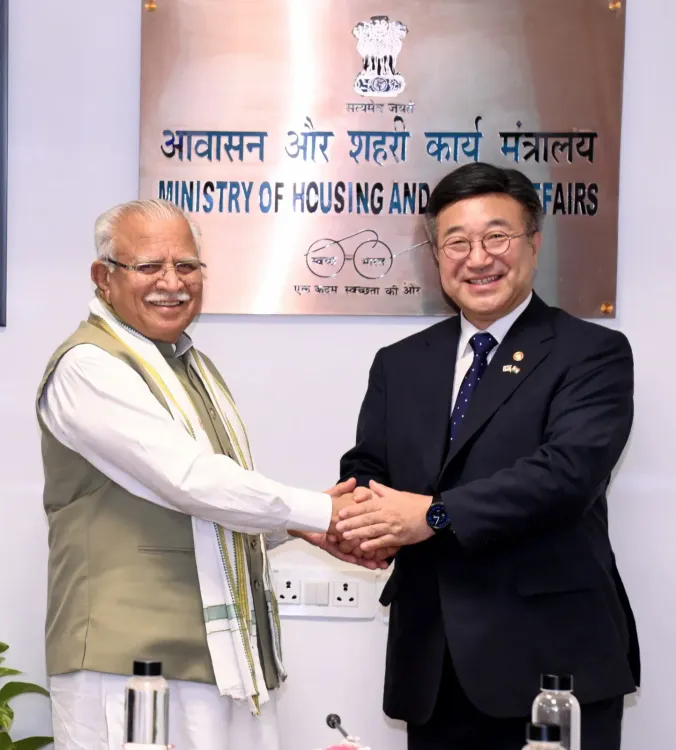
Union Minister Manohar Lal Khattar met South Korea's Interior Minister Yun Hojung on June 18, 2026, to advance the India-Korea Special Strategic Partnership, with talks centring on sustainable urban development, mobility systems, balanced regional growth, and climate-resilient infrastructure.
Key Takeaways
Manohar Lal Khattar , Union Minister of Housing and Urban Affairs, held a bilateral meeting with Yun Hojung , South Korea's Minister of the Interior and Safety, on June 18, 2026 .
Discussions focused on sustainable urban transformation, balanced regional development, mobility systems, and climate-resilient infrastructure .
The meeting reinforced the India-South Korea Special Strategic Partnership , elevated to its current status in 2015 .
The bilateral relationship is underpinned by the CEPA (in force since 2010 ) and India's Smart Cities Mission and AMRUT schemes.
No new agreements were announced; follow-up working groups or summit-level MoUs are anticipated.
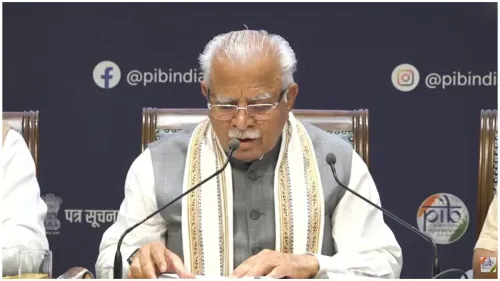
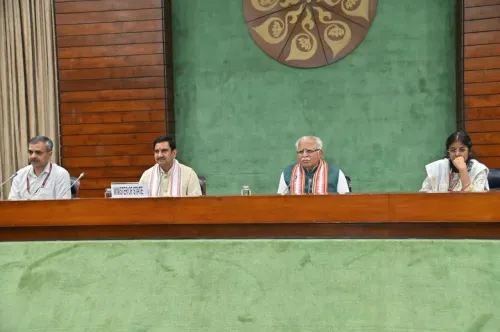
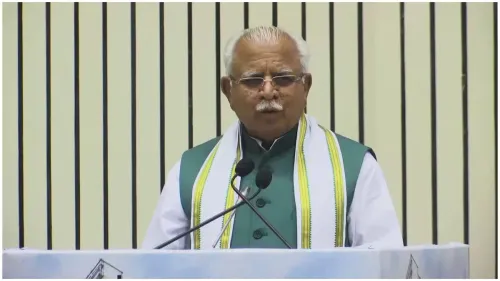
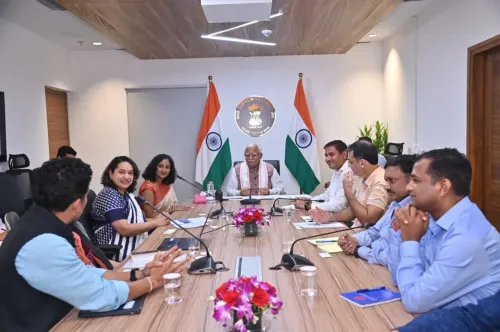
Union Minister of Housing and Urban Affairs Manohar Lal Khattar met Yun Hojung, Minister of the Interior and Safety of the Republic of Korea, on Thursday, June 18, 2026, for wide-ranging discussions on deepening bilateral cooperation in urban development, mobility, and climate-resilient infrastructure.
Context
Khattar described the meeting as underscoring 'the growing depth of the India-Korea Special Strategic Partnership,' with both sides affirming a shared commitment to 'sustainable urban transformation, balanced regional development, mobility systems, and climate-resilient infrastructure.' The encounter marks a high-level ministerial exchange between the two countries' urban and interior governance portfolios.
The India-South Korea Special Strategic Partnership was elevated to its current status in 2015, providing a framework for cooperation across strategic, economic, and now increasingly, urban and climate domains.
Policy Backdrop
India and South Korea have built a substantial bilateral architecture over the past two decades. The Comprehensive Economic Partnership Agreement (CEPA), signed in 2009 and effective from 2010, laid the foundation for deeper trade and investment ties. Urban cooperation has since emerged as a distinct pillar, with India's Smart Cities Mission and AMRUT scheme — both launched in 2015 — creating large-scale demand for technology, planning expertise, and infrastructure investment of the kind South Korea has developed over decades.
India's broader Act East Policy has consistently positioned South Korea as a priority partner for infrastructure and technology exchange. Recent bilateral engagements have extended this cooperation into mobility systems and climate adaptation, reflecting the evolving priorities of both governments.
Stakeholders and Impact
The discussions are of direct relevance to urban local bodies across India, which are the primary implementing agencies for Smart Cities and AMRUT projects. South Korean expertise in integrated transit systems, smart governance, and climate-adaptive city planning has been sought by several Indian municipalities in recent years.
For infrastructure developers and private sector players in both countries, ministerial-level alignment on these themes signals potential project pipelines. Balanced regional development — explicitly mentioned by Khattar — points to interest in extending such cooperation beyond large metros to smaller cities and towns.
What's Next
No specific agreements or memoranda of understanding have been confirmed from this meeting. However, such high-level exchanges typically precede the formation of joint working groups or the finalisation of project-level frameworks at subsequent summits. Follow-up engagement between the two ministries — potentially at the next India-Korea bilateral summit — could yield concrete MoUs on mobility infrastructure or climate-resilient urban projects.
As India accelerates its urban infrastructure agenda ahead of its growing city population targets, partnerships with technically advanced economies like South Korea are likely to become more operationally significant, moving from strategic intent to on-ground project collaboration.
Point of View
Pushing urban infrastructure and climate adaptation to the centre of the bilateral agenda. For Khattar, whose portfolio spans both power and housing, engaging a country with advanced smart-city and transit credentials aligns with the Centre's push to accelerate AMRUT and Smart Cities outcomes. The explicit mention of 'balanced regional development' is notable — it suggests India is seeking models applicable to Tier-2 and Tier-3 cities, not just flagship metros. If this ministerial contact translates into joint working groups, it could mark a qualitative deepening of the partnership's practical deliverables.
NationPress
17 Sept 2026
Frequently Asked Questions
What did Manohar Lal Khattar and South Korea's minister discuss?
They discussed sustainable urban transformation, balanced regional development, mobility systems, and climate-resilient infrastructure as part of the India-Korea Special Strategic Partnership.
What is the India-South Korea Special Strategic Partnership?
It is a bilateral framework elevated in 2015 to guide cooperation between India and South Korea across strategic, economic, and urban domains.
How does this meeting relate to India's Smart Cities Mission?
India's Smart Cities Mission and AMRUT scheme, both launched in 2015, create demand for the kind of urban technology and planning expertise South Korea has developed, making such bilateral meetings directly relevant to those programmes.
Will India and South Korea sign any agreements on urban development?
No specific agreements were announced from this meeting; follow-up joint working groups or the next bilateral summit could produce concrete MoUs on mobility or climate-resilient projects.