Khattar inaugurates sewing training centre for rural women in Karnal
Synopsis
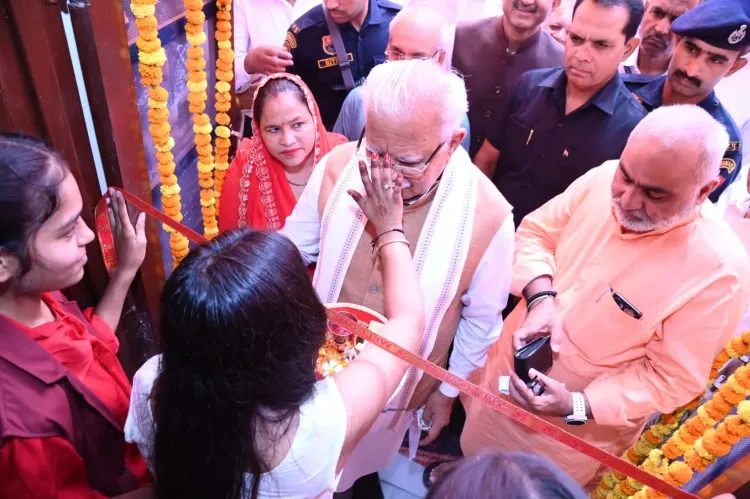
Union Power Minister Manohar Lal Khattar inaugurated a tailoring training centre set up by Antyodaya Foundation at Kachhwa village in Karnal on 21 June 2026, calling such skill-development initiatives vital for rural women's economic empowerment and self-reliance.
Key Takeaways
Union Power Minister Manohar Lal Khattar attended the inauguration of a sewing training centre at Kachhwa village, Karnal, Haryana on 21 June 2026 .
The centre was established by Antyodaya Foundation to provide vocational skill training to rural women.
Khattar said employment-oriented training enables women to contribute to family economic progress and national development.
The initiative aligns with central schemes including the Deen Dayal Antyodaya Yojana and Skill India Mission , both launched in 2015 .
The minister extended congratulations to Antyodaya Foundation and expressed confidence the centre would drive positive change for many women.
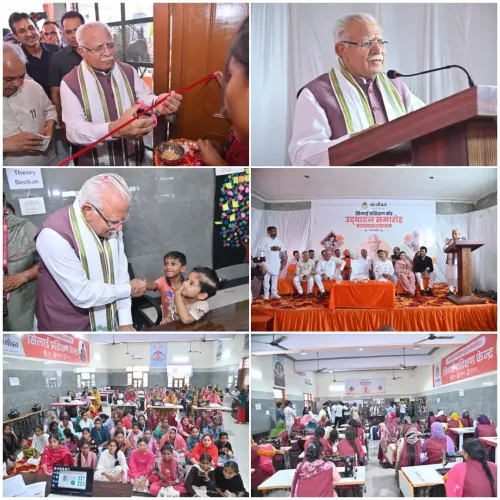
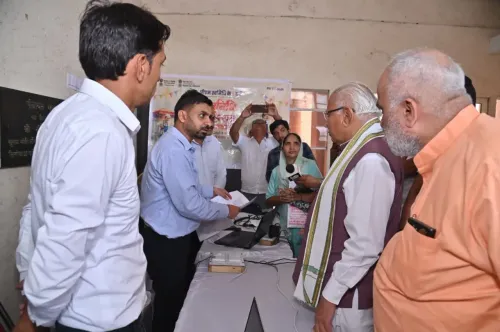
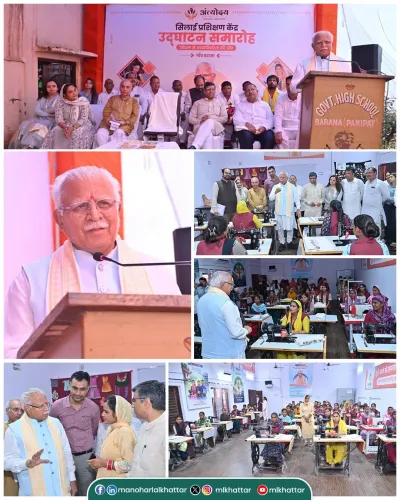
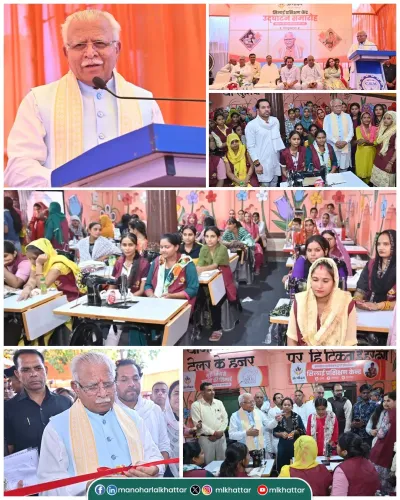
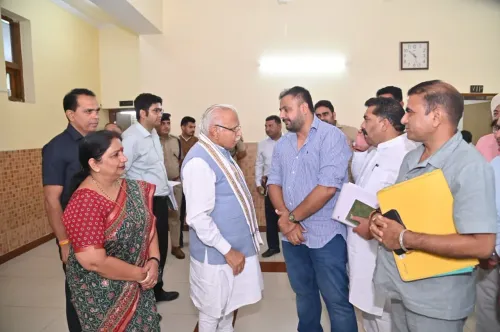
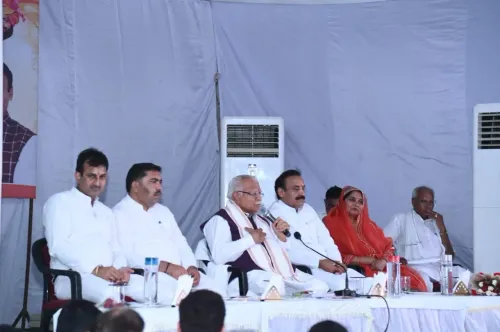
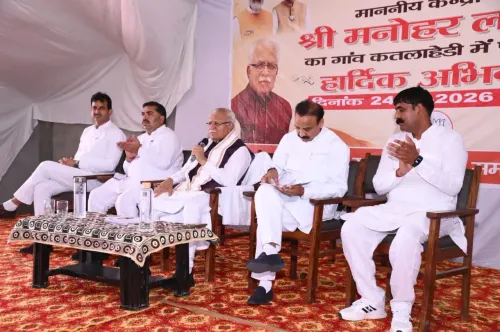
Union Power Minister Manohar Lal Khattar attended the inauguration of a sewing and tailoring training centre established by Antyodaya Foundation at Kachhwa village in Karnal, Haryana, on Sunday, 21 June 2026. The centre aims to equip rural women with vocational skills to support economic self-reliance and broader social participation.
Context
Khattar shared his remarks on the occasion in Hindi, stating: 'ग्रामीण महिलाओं को कौशल विकास से जोड़ने वाली ऐसी पहलें उन्हें आर्थिक रूप से सशक्त बनाने... में महत्वपूर्ण भूमिका निभाती हैं' — ('Such initiatives that connect rural women to skill development play an important role in empowering them economically and advancing their self-reliance.'). He further noted that when women receive employment-oriented training, they contribute not only to their family's economic progress but also give fresh momentum to the process of nation-building.
The minister congratulated Antyodaya Foundation for the initiative, calling it a public-welfare and inspirational effort. He expressed confidence that the centre would become a medium of positive change in the lives of many women.
Policy Backdrop
The inauguration aligns with two central government programmes: the Deen Dayal Antyodaya Yojana, launched in 2015 to provide skill training and livelihood support to rural and urban poor households, and the Skill India Mission, also launched in 2015, which aims to train millions of youth — including women — in vocational trades.
Haryana has seen a pattern of partnerships between elected representatives, civil society organisations, and NGOs to establish community-level skill centres, particularly for women in rural areas. Such centres typically offer tailoring, handicrafts, and allied trades that can translate directly into self-employment or small-enterprise income.
Stakeholders and Impact
The primary beneficiaries are rural women in and around Kachhwa village, Karnal district. Tailoring and sewing skills are among the most accessible entry points into self-employment for women in semi-rural Haryana, requiring relatively modest infrastructure investment while offering tangible income potential.
Broader stakeholders include the state government's skill development apparatus and civil society groups working on female labour force participation. India's female labour force participation rate remains a subject of sustained policy attention, and community-level vocational centres are one instrument used to address it.
What's Next
The effectiveness of such NGO-led centres typically depends on sustained follow-through: placement linkages, access to raw materials, and market connections for finished products. Observers will watch whether Antyodaya Foundation's Karnal centre develops such downstream support structures, and whether the state or central government moves to formally integrate or scale similar initiatives under existing schemes in Haryana.
Point of View
Using women's skill development as a visible policy deliverable. The choice of a tailoring centre — one of the most symbolically legible forms of women's vocational training in rural India — reflects a deliberate effort to connect national policy frameworks like the Skill India Mission to local, tangible outcomes. For a minister whose current portfolio is centred on power and urban affairs, engagement with a rural welfare initiative signals the dual role senior BJP leaders play as both sectoral administrators and constituency-level mobilisers. The broader arc points to intensified competition among parties to demonstrate last-mile delivery on women's economic inclusion ahead of state election cycles.
NationPress
19 Sept 2026
Frequently Asked Questions
What did Manohar Lal Khattar inaugurate in Karnal?
Manohar Lal Khattar inaugurated a sewing and tailoring training centre established by Antyodaya Foundation at Kachhwa village in Karnal, Haryana, on 21 June 2026.
What is Antyodaya Foundation?
Antyodaya Foundation is the civil society organisation that set up the sewing training centre at Kachhwa village in Karnal to provide vocational skill development for rural women.
What is the Deen Dayal Antyodaya Yojana?
The Deen Dayal Antyodaya Yojana is a central government scheme launched in 2015 to provide skill training and livelihood support to rural and urban poor households, including women.
Why is skill training important for rural women in Haryana?
Skill training in trades like tailoring gives rural women a path to self-employment and income generation, contributing to family economic stability and raising female labour force participation.
What is Khattar's current role in the central government?
Manohar Lal Khattar is currently the Union Minister of Power and Housing and Urban Affairs, and is a senior BJP leader and former Chief Minister of Haryana.