Khattar pays tribute to Bhagat Singh on birth anniversary
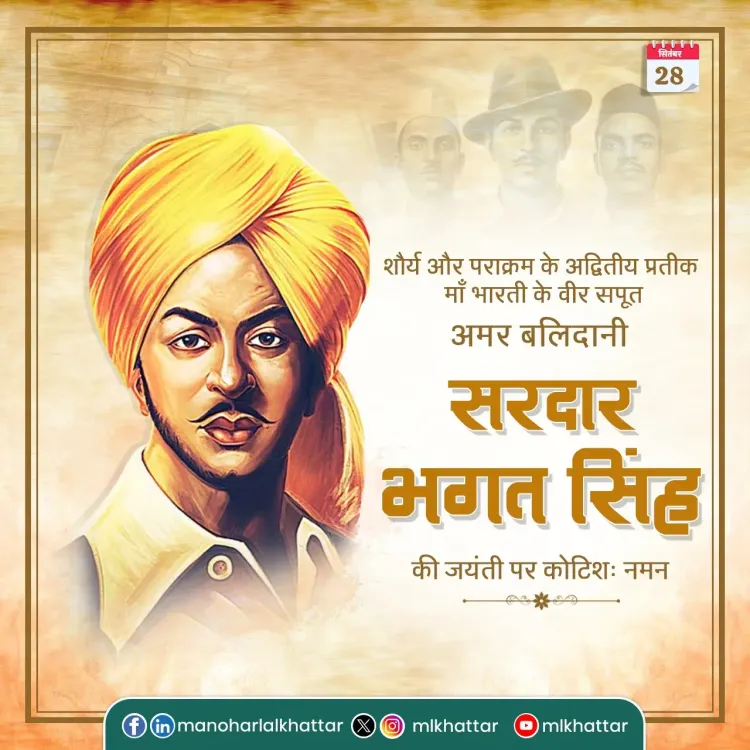
Synopsis
Union Power Minister Manohar Lal Khattar honoured revolutionary martyr Bhagat Singh on his birth anniversary, calling him an eternal source of inspiration for India's youth and a symbol of indomitable courage in the fight for independence.
Key Takeaways
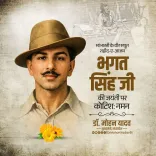
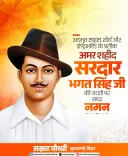
Manohar Lal Khattar , Union Minister of Power and Housing & Urban Affairs, paid tribute to Bhagat Singh on his birth anniversary, 28 September 2026 .
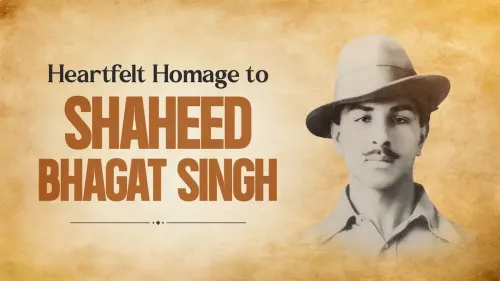
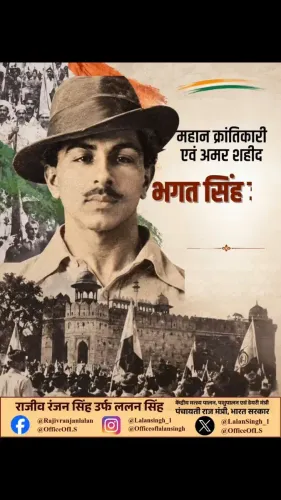
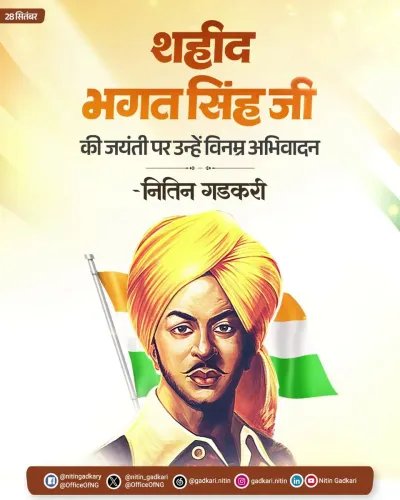
Khattar described Bhagat Singh as 'the brave son of Mother India' and an 'immortal martyr' who inspired countless youth during the freedom struggle.
Bhagat Singh was born on 28 September 1907 and hanged by British authorities on 23 March 1931 at age 23 .
The minister highlighted Bhagat Singh's role in deepening patriotism among youth and mobilising them for the independence movement.
The tribute is part of an annual national tradition of commemorating freedom fighters' anniversaries through public events and political homage.
At 23, Bhagat Singh walked to the gallows — and never stopped walking into the hearts of every generation that followed. On the revolutionary's birth anniversary, Union Power Minister Manohar Lal Khattar offered a national salute on Monday, 28 September 2026, honouring the martyr as an eternal flame for India's youth.
Posting in Hindi, Khattar wrote: 'I bow before the brave son of Mother India, the immortal martyr Sardar Bhagat Singh, on his birth anniversary, on behalf of a grateful nation.' He added that Bhagat Singh had, even in his short life, made the freedom of the country the sole resolve of his existence — drawing countless young people into the struggle for independence through the sheer depth of his patriotism.
The martyr who made youth the vanguard
Bhagat Singh, born 28 September 1907 in what is now Punjab, Pakistan, was hanged by British authorities on 23 March 1931 — aged just 23. In that compressed life, he transformed from a teenage revolutionary into one of British India's most feared and celebrated anti-colonial figures. His writings, his defiance in court, and his willingness to die made him a blueprint for a generation of freedom fighters.
Khattar's tribute specifically noted Bhagat Singh's role in 'deepening the spirit of patriotism among the youth and connecting them to the freedom struggle' — a framing that speaks as much to the present as to the past. India's political leadership, across party lines, has consistently invoked Bhagat Singh as the archetype of selfless national service, particularly when addressing younger citizens.
A ritual of remembrance, and what it signals
Birth and death anniversaries of freedom fighters are marked by formal tributes from leaders across India's political spectrum — a practice that is as much about the living as the departed. On 28 September each year, schools, universities, and state governments typically organise commemorative events, essay competitions, and cultural programmes in Bhagat Singh's name. The minister's post is part of that larger, ongoing national effort to keep the memory of the independence movement alive for citizens who were born decades after 1947.
Khattar — who served as Chief Minister of Haryana before taking charge of the Union portfolios for Power and Housing & Urban Affairs — carries particular resonance in paying this tribute. Haryana, which borders Punjab, shares deep cultural and historical ties with the land that produced Bhagat Singh. His tribute closes with the conviction that Bhagat Singh's 'indomitable courage and love for the nation will continue to inspire patriots to serve the motherland for centuries to come.' That is not just a ceremonial line. It is the bet every generation places on the one before it.
Point of View
Invoking Bhagat Singh carries particular regional weight, given the deep Punjab-Haryana cultural connection to the martyr. The emphasis on youth patriotism also resonates with the BJP's broader ideological project of channelling nationalist sentiment as a civic value. These tributes are low-stakes politically, but their cumulative effect shapes how the next generation is taught to remember the independence movement.
NationPress
28 Sept 2026
Frequently Asked Questions
When is Bhagat Singh's birth anniversary?
Bhagat Singh's birth anniversary falls on 28 September every year. He was born on 28 September 1907 and is celebrated as one of India's greatest revolutionary freedom fighters.
What did Manohar Lal Khattar say about Bhagat Singh?
Khattar said Bhagat Singh was 'an immortal martyr and brave son of Mother India' who made the country's freedom the sole resolve of his short life, and that his courage and patriotism would inspire generations for centuries to come.
Who was Bhagat Singh and why is he remembered?
Bhagat Singh was a revolutionary independence activist born in 1907 who was hanged by British authorities in 1931 at age 23 . He is remembered for his fearless anti-colonial resistance, his writings, and his role in inspiring Indian youth during the freedom movement.
What is Manohar Lal Khattar's current role?
Manohar Lal Khattar currently serves as Union Minister of Power and Housing & Urban Affairs . He is a senior BJP leader and former Chief Minister of Haryana.
How is Bhagat Singh's birth anniversary marked in India?
Every year on 28 September , schools, universities, and state governments organise commemorative events, cultural programmes, and essay competitions in Bhagat Singh's honour. Political leaders across the spectrum also post tributes on social media.