Khattar pays tribute to 'Surya Kavi' Pandit Lakhmichand on birth anniversary
Synopsis
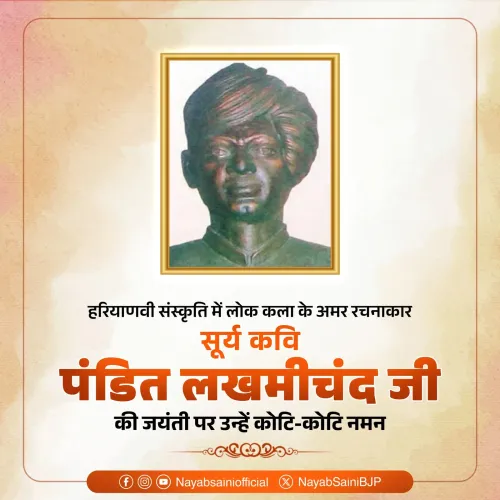
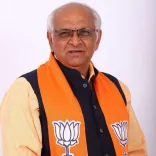
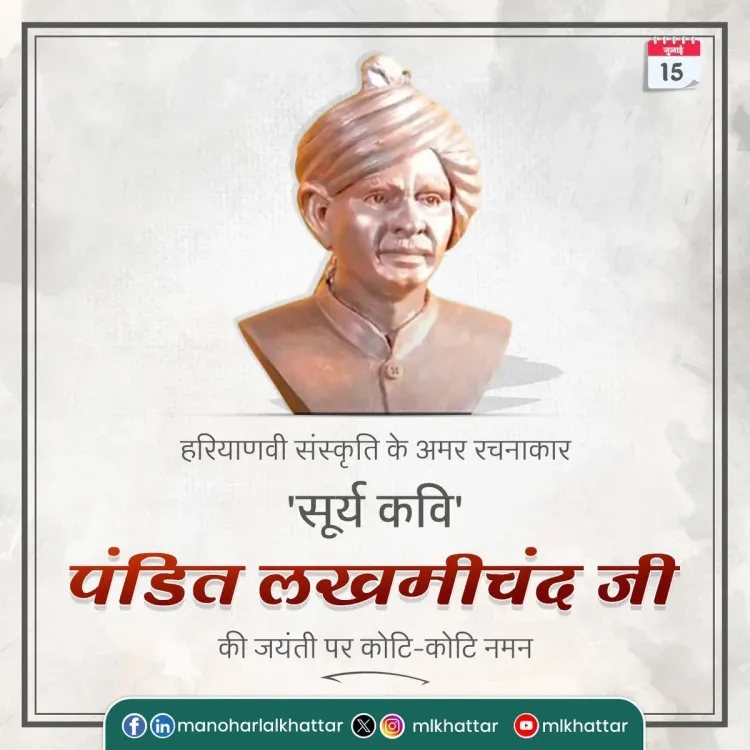
Union Power Minister Manohar Lal Khattar on July 15, 2026 paid tribute to 'Surya Kavi' Pandit Lakhmichand on his birth anniversary, calling the legendary Haryanvi folk poet the pride of Haryana's art and culture world whose compositions will keep alive the state's folk sentiment and self-respect.
Key Takeaways
Union Power Minister Manohar Lal Khattar paid tribute to Pandit Lakhmichand on his birth anniversary on July 15, 2026 .
Lakhmichand is known by the honorific 'Surya Kavi' (Sun Poet) and is a foundational figure in Haryana's Saang folk-theatrical tradition.
Khattar described Lakhmichand as 'the pride of Haryana's art and cultural world' and a 'man of great talent.' He stated that Lakhmichand's compositions 'will always keep alive the folk sentiment, culture and self-respect of Haryana.' The tribute continues Khattar's established pattern of publicly acknowledging Haryanvi cultural icons from his national platform as a Union Minister.
Cultural groups and folk artists in Haryana may look to the tribute as a signal for potential state or central support for the Saang and ragini traditions.
Union Power Minister Manohar Lal Khattar on Wednesday, July 15, 2026, paid homage to legendary Haryanvi folk poet Pandit Lakhmichand, popularly known as 'Surya Kavi' (Sun Poet), on the occasion of his birth anniversary, describing him as a towering figure in Haryana's art and cultural landscape.
In his post on X, Khattar wrote: 'हरियाणा के कला एवं संस्कृति जगत की शान, महान प्रतिभा के धनी, 'सूर्य कवि' पंडित लख्मीचंद जी की जयंती पर उन्हें कोटि-कोटि नमन।' — translated as: 'Heartfelt salutations in crores to 'Surya Kavi' Pandit Lakhmichand ji, the pride of Haryana's art and cultural world, a man of great talent, on his birth anniversary.' He further noted that Lakhmichand's compositions 'will always keep alive the folk sentiment, culture and self-respect of Haryana.'
Context
Pandit Lakhmichand is regarded as one of the most celebrated figures in the Saang tradition — a classical-folk theatrical form native to Haryana — known for his raginis, devotional verses, and dramatic compositions that captured the social and spiritual ethos of rural north India. His honorific title 'Surya Kavi' reflects the brilliance attributed to his literary output by generations of folk artists and cultural scholars in the region.
His works continue to be performed at village fairs, cultural festivals, and Saang gatherings across Haryana, keeping alive an oral tradition that predates formal literary institutions in the state. Folk performers and cultural groups in the state consider Lakhmichand a foundational figure whose raginis shaped the Haryanvi artistic identity.
Policy Backdrop
Indian political leaders from regional backgrounds have a long-standing practice of issuing public tributes to folk poets, saints, and cultural icons on their birth and death anniversaries. For Khattar, who served as Chief Minister of Haryana before taking charge as Union Minister of Power and Housing and Urban Affairs, such acknowledgments carry a dual significance — affirming personal cultural roots while signalling political continuity with the state's heritage.
During his tenure as Chief Minister, Khattar's administration made periodic acknowledgments of Haryanvi literary and performance traditions as part of broader cultural outreach. Tributes to figures like Pandit Lakhmichand align with this established pattern of linking governance identity with regional folk heritage.
Stakeholders and Impact
The tribute resonates primarily with Haryanvi artists, folk culture groups, Saang performers, and communities that maintain the ragini tradition across districts such as Rohtak, Jhajjar, and Sonipat — the heartland of the Saang belt. For these communities, official recognition from a senior national-level leader reinforces the cultural legitimacy of their art form.
Cultural organisations and folk academies in Haryana have long advocated for greater state and central support for the Saang tradition, and public statements from ministers of Khattar's stature can lend momentum to such advocacy ahead of budget cycles or cultural-grant announcements.
What's Next
Observers of Haryana's cultural policy landscape will watch for whether the birth anniversary tribute translates into any formal commemorations — such as cultural grants, state-sponsored Saang festivals, or recognition programmes — in upcoming assembly sessions or through the Haryana Sahitya Akademi. Khattar's continued public engagement with Haryanvi folk figures from his national platform suggests that cultural diplomacy between the state and the Centre around heritage preservation remains active.
Point of View
The tribute subtly frames Haryanvi cultural identity within a broader nationalist ethos of civilisational pride. For a minister whose political capital was built over a decade in Haryana, maintaining visibility in the state's cultural calendar is as much a political act as it is a personal one. Whether such statements are followed by concrete policy action — cultural grants, Saang festival funding, or Akademi recognition — will determine their lasting significance.
NationPress
15 Jul 2026
Frequently Asked Questions
Who is Pandit Lakhmichand and why is he called 'Surya Kavi'?
Pandit Lakhmichand was a celebrated Haryanvi folk poet and performer in the Saang tradition, renowned for his raginis and theatrical compositions. He earned the honorific 'Surya Kavi' (Sun Poet) for the brilliance and prolific nature of his literary output, which shaped Haryanvi folk identity across generations.
What is the Saang tradition in Haryana?
Saang is a classical-folk theatrical form native to Haryana that combines music, verse, and drama. It is performed at village fairs and cultural festivals, and figures like Pandit Lakhmichand are considered its foundational voices through compositions known as raginis.
Why did Manohar Lal Khattar pay tribute to Pandit Lakhmichand?
Khattar paid tribute on the occasion of Pandit Lakhmichand's birth anniversary on July 15, 2026, describing him as the pride of Haryana's art and cultural world. Such tributes are consistent with Khattar's long-standing practice of publicly acknowledging Haryanvi cultural icons.
What did Manohar Lal Khattar say about Pandit Lakhmichand?
Khattar called Lakhmichand a 'man of great talent' and the pride of Haryana's art and culture, adding that his compositions 'will always keep alive the folk sentiment, culture and self-respect of Haryana.'
What is the significance of Khattar's tribute to Haryanvi folk culture?
As a senior Union Minister and former Chief Minister of Haryana, Khattar's public tribute lends national-level visibility to the Saang and ragini traditions. Cultural groups in Haryana may see it as an opportunity to push for greater state or central funding for folk arts preservation.