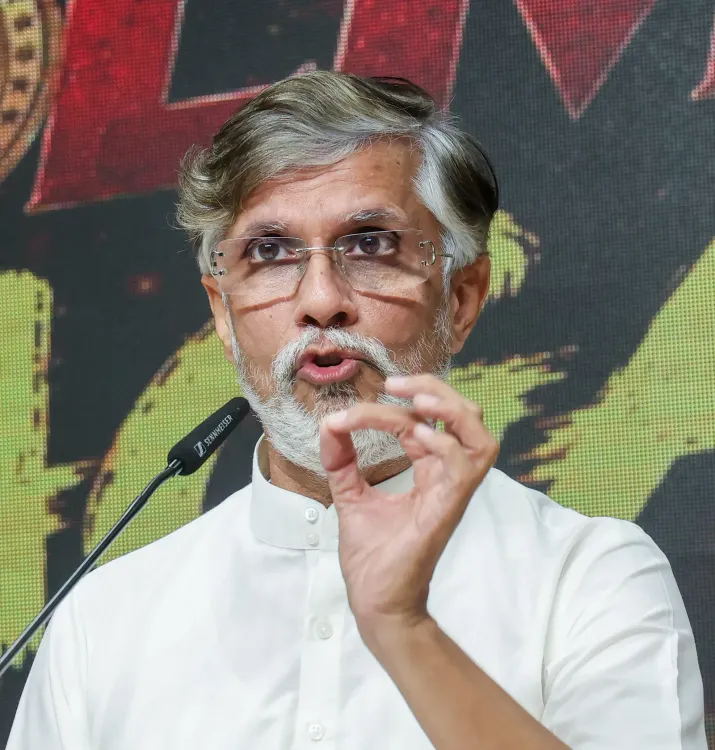
Pawan Khera dares RSS chief Bhagwat to come under Constitution
Synopsis
Congress’s Pawan Khera flipped the RSS’s own ‘show your papers’ rhetoric back at Mohan Bhagwat, demanding the Sangh submit to constitutional oversight — and tied the challenge to a reported threat against Dalit leader Priyank Kharge by BJP MP Ramesh Jigajinagi. It is a pointed ideological provocation, not just a press conference soundbite.
Key Takeaways
Pawan Khera on 18 June publicly challenged RSS chief Mohan Bhagwat to bring the organisation under the Indian Constitution.
Khera posted a video on X , inverting Bhagwat’s own ‘show your papers’ demand back at the Sangh.
BJP MP Ramesh Jigajinagi reportedly attacked Priyank Kharge ; Khera accused Jigajinagi of issuing threats on behalf of the Sangh.
Khera cited Dalit rights and the Nagpur -origin slogans to argue the RSS holds a ‘casteist’ worldview.
He invoked Mahatma Gandhi’s 1948 assassination and the names of Babasaheb Ambedkar and Jawaharlal Nehru to frame the challenge as a constitutional versus ideological contest.
Congress Media and Publicity Department Chairman Pawan Khera on 18 June launched a sharp challenge at Rashtriya Swayamsevak Sangh (RSS) chief Mohan Bhagwat, demanding the organisation submit to the Indian Constitution and publicly demonstrate accountability — mirroring the very 'show your papers' rhetoric Bhagwat has directed at others. The remarks escalated an already charged political exchange between the Congress and the Sangh Parivar.
What Khera Said
In a post on his X handle, Khera shared a video and said, “Mohan Bhagwat ji, you talk about showing papers to the people of India; now you too will have to make your papers and show them.” The Congress leader accused the RSS of harbouring what he called a “casteist and communal” worldview, stating that “it is said you scratch the skin of a Sanghi and you will find a horrible, casteist and communal monster.”
Khera also referenced Bhagwat’s recent observation that Hinduism is not restricted, and turned the argument back on the RSS, questioning why the Sangh itself resists constitutional oversight.
The Jigajinagi Incident and Dalit Question
A significant part of Khera’s attack centred on Karnataka Bharatiya Janata Party (BJP) MP Ramesh Jigajinagi, who reportedly attacked Priyank Kharge during a meeting. Khera characterised the incident as a threat and asked Bhagwat directly: “Is he (Jigajinagi) your man? Is he threatening Priyank Kharge ji and all of us?”
Khera invoked the treatment of Dalits within Sangh ideology, citing the slogans of “one well, one temple, one crematorium” emanating from Nagpur. “How can an educated Dalit raise his head to ask questions of the Sangh? This is your truth,” he said, arguing that constitutional values — not organisational loyalty — must govern public life.
Historical Parallels and Ideological Challenge
Khera drew on historical memory, referencing Mahatma Gandhi’s assassination in 1948 and the alleged role of the Sangh, as well as the slogan “Congress-Mukt Bharat.” He framed the confrontation as a long-running ideological contest between the RSS and the Constitution, invoking Babasaheb Ambedkar and Jawaharlal Nehru as symbols of constitutional values.
Notably, Khera acknowledged the RSS as a 100-year-old organisation but argued that the spirit of Bharat and its constitutional foundations run deeper. “Every time the spirit of Bharat wins. Every time the Constitution wins,” he declared.
The Broader Context
The attack is part of a sustained Congress effort to press the RSS on questions of constitutional accountability — a line of criticism that has intensified following a series of statements from Sangh leaders in recent weeks. This comes amid heightened political temperatures between the ruling BJP–RSS ecosystem and the opposition, with both sides increasingly trading ideological barbs ahead of upcoming state elections. Khera’s framing — turning the “show your papers” demand back on Bhagwat — is a deliberate rhetorical inversion, seeking to put the Sangh on the defensive on its own terms.
How the RSS and BJP respond to the constitutional accountability demand will be closely watched, particularly given the sensitivity around caste politics and the Dalit electorate.
Point of View
That deserves scrutiny independent of the ideological theatre around it. The Dalit framing is the sharpest edge here — it connects abstract constitutional arguments to lived political grievance in a way that could resonate beyond the party faithful. Whether Congress can sustain that focus, or whether it dissolves into the usual BJP-versus-Congress noise cycle, will determine whether this lands as a political moment or just another press clip.
NationPress
18 Sept 2026
Frequently Asked Questions
What did Pawan Khera demand from RSS chief Mohan Bhagwat?
Khera demanded that Bhagwat bring the RSS under the ambit of the Indian Constitution and demonstrate public accountability, turning Bhagwat’s own ‘show your papers’ rhetoric back at the organisation. He made the demand via a post on his X handle on 18 June, sharing a video statement.
What is the Jigajinagi-Priyank Kharge incident?
BJP MP Ramesh Jigajinagi reportedly attacked Congress leader Priyank Kharge during a meeting, an incident Khera characterised as a threat directed at the opposition. Khera asked Bhagwat directly whether Jigajinagi was acting on behalf of the Sangh.
Why did Khera raise Dalit rights in his attack on the RSS?
Khera argued that the RSS harbours a casteist worldview, citing Nagpur-origin slogans about ‘one well, one temple, one crematorium’ and questioning how an educated Dalit can freely challenge the Sangh. He used Dalit rights as a concrete example of why the RSS must be subject to constitutional accountability.
What historical references did Pawan Khera invoke?
Khera referenced Mahatma Gandhi’s assassination in 1948 and the alleged role of the Sangh, alongside the slogan ‘Congress-Mukt Bharat.’ He also invoked Babasaheb Ambedkar and Jawaharlal Nehru to frame the dispute as a long-running contest between constitutional values and Sangh ideology.
What is the broader political context of this confrontation?
The exchange is part of a sustained Congress campaign to press the RSS on constitutional accountability, intensifying after recent statements by Sangh leaders. It comes amid heightened political tensions between the BJP-RSS ecosystem and the opposition ahead of upcoming state elections.