Kishan Reddy hails KETO Motors' first electric bus launch
Synopsis
Union Minister G. Kishan Reddy praised the launch of KETO Motors' first commercial electric bus, calling it a milestone for India's commercial EV ecosystem and a step toward the Viksit Bharat vision.
Key Takeaways
Kishan Reddy , Union Minister of Coal and Mines and BJP Telangana president, welcomed the launch of KETO Motors' first commercial electric bus on 2 August 2026 .
Reddy described the launch as 'an important milestone' reflecting the 'growing strength of India's commercial EV ecosystem.' He linked the development to three outcomes: strengthening public transport, creating employment, and supporting sustainable economic growth.
The milestone connects to a broader policy lineage — the FAME India scheme (2015) and the PLI scheme for automobiles (2021) — designed to grow domestic EV manufacturing.
Reddy explicitly tied the launch to the Viksit Bharat vision of a developed India by 2047 .
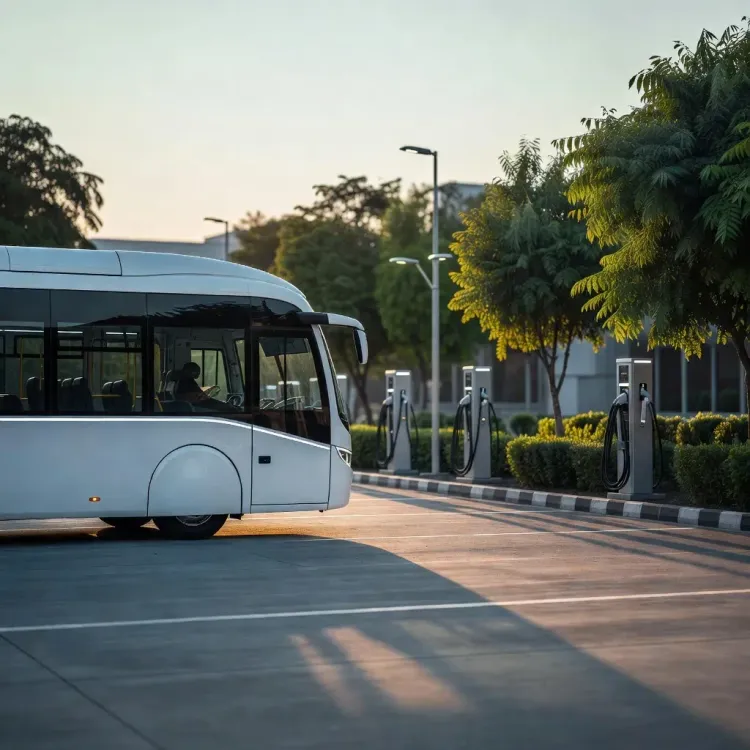
A Telangana startup has just put its first commercial electric bus on the road — and Union Coal and Mines Minister G. Kishan Reddy wants the country to take notice. Replying to a post by Prime Minister Narendra Modi on Sunday, 2 August 2026, Reddy welcomed the milestone as proof that India's homegrown EV ecosystem is gathering real momentum.
Reddy called the launch of KETO Motors' first commercial electric bus 'an important milestone for the company,' adding that it 'reflects the growing strength of India's commercial EV ecosystem.' He specifically highlighted how Telangana enterprises developing indigenous electric mobility solutions are doing triple duty — strengthening public transport, generating employment, and supporting sustainable economic growth.
KETO Motors and the Telangana EV push
KETO Motors is a Telangana-based enterprise whose debut commercial electric bus places it among a growing cohort of state-level manufacturers betting on the domestic bus electrification opportunity. India's push to electrify public transport has been building for years: the FAME India scheme, launched in 2015, seeded early demand for electric and hybrid vehicles, while the Production-Linked Incentive (PLI) scheme for automobiles and auto components, announced in 2021, gave domestic manufacturers a structural cost advantage to scale up. KETO's launch is a downstream payoff of that policy scaffolding.Why buses, why now
Of all EV segments, electric buses carry the highest multiplier effect — each unit removes a diesel vehicle from a fixed urban or inter-city route, cuts recurring fuel import costs, and serves hundreds of passengers daily. India's dependence on crude oil imports makes that calculus urgent. State transport corporations across the country have been placing orders for electric buses, creating a visible commercial runway for manufacturers like KETO. Reddy's framing — linking the launch directly to the government's Viksit Bharat vision of a developed India by 2047 — signals that the Centre views such milestones not as isolated corporate events but as data points in a national self-reliance story. Reddy closed with a pointed message of confidence: 'I extend my best wishes to KETO Motors for their continued success in advancing sustainable mobility and contributing to the vision of a Viksit Bharat.' For a company at the start of its commercial journey, that kind of ministerial endorsement — in a reply to the Prime Minister — is no small thing.Point of View
In a state the party is working hard to reclaim. By invoking Viksit Bharat and indigenous manufacturing in a single breath, he ties a single startup's launch to the Centre's largest economic narrative. It also signals that the government sees commercial electric buses — not just passenger EVs — as the next visible frontier of India's clean-transport story. Watch whether this translates into state transport orders or central procurement support for KETO and peers.
NationPress
16 Sept 2026
Frequently Asked Questions
What is KETO Motors and where is it based?
KETO Motors is a Telangana-based enterprise that recently launched its first commercial electric bus, making it part of India's growing indigenous EV manufacturing sector.
What did Kishan Reddy say about KETO Motors' electric bus?
Kishan Reddy called the launch 'an important milestone' for KETO Motors and said it reflects the growing strength of India's commercial EV ecosystem, while extending his best wishes to the company.
How does the KETO Motors launch connect to Viksit Bharat?
Reddy explicitly linked the launch to the Viksit Bharat vision — the Central government's goal of making India a developed nation by 2047 — framing indigenous EV production as part of that broader self-reliance agenda.
What government schemes support electric bus manufacturing in India?
The FAME India scheme, launched in 2015, and the PLI scheme for automobiles and auto components, announced in 2021, are the two main Central government programmes supporting domestic EV manufacturing including electric buses.
Why are electric buses significant for India's EV push?
Electric buses serve large numbers of passengers on fixed routes, directly cutting diesel consumption and reducing India's crude oil import bill, making them a high-impact segment within the broader EV transition.