Kishan Reddy backs Nasha Mukt Yuva as pillar of Viksit Bharat
Synopsis
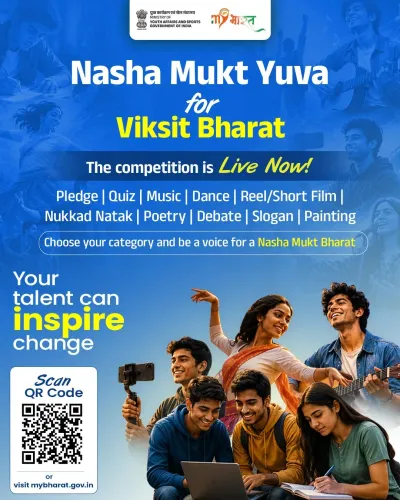
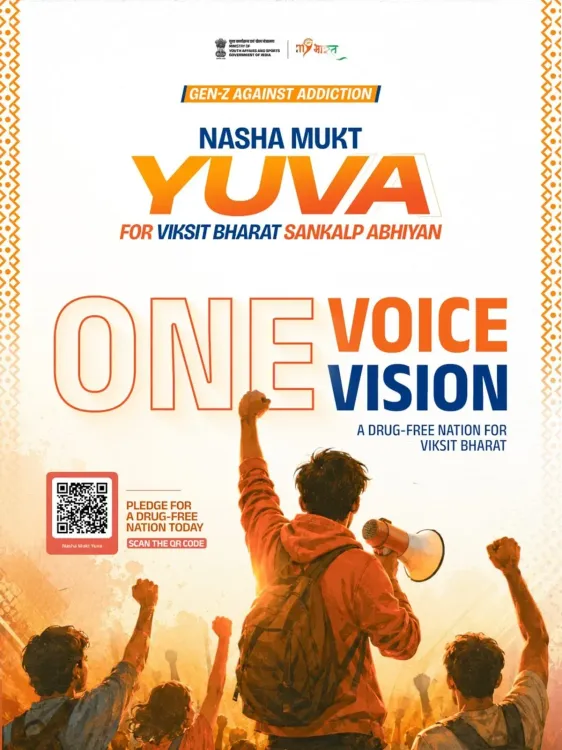
Union Minister G. Kishan Reddy on 2 August 2026 championed the Nasha Mukt Yuva vision, linking youth drug-free pledges to education, entrepreneurship, and the Modi government's Viksit Bharat 2047 goal — framing anti-drug efforts as a national people's movement.
Key Takeaways
Kishan Reddy , Union Minister of Coal and Mines and BJP Telangana president, posted on 2 August 2026 in support of the Nasha Mukt Yuva campaign.
He linked youth drug-free pledges to commitments in education, innovation, fitness, entrepreneurship, and nation-building.
The post frames Nasha Mukt Yuva as a 'people's movement' under PM Narendra Modi 's leadership.
The campaign is rooted in the Nasha Mukt Bharat Abhiyan , launched in August 2020 by the Ministry of Social Justice and Empowerment.
Anti-drug efforts are now explicitly tied to the government's Viksit Bharat 2047 long-term development vision.
India's anti-drug mission is moving from government corridors into the streets — and Union Coal and Mines Minister G. Kishan Reddy wants the country's youth to lead it there. On Sunday, 2 August 2026, Reddy invoked the aspirations of millions of young Indians to frame the Nasha Mukt Yuva vision as far more than a welfare campaign.
Reddy's post declared that young Indians pledging a drug-free life are simultaneously committing to 'education, innovation, fitness, entrepreneurship and nation-building' — tying individual resolve directly to the government's flagship long-term goal of Viksit Bharat 2047, the official national vision to transform India into a fully developed economy by the centenary of Independence.
From Abhiyan to people's movement
The ideological roots of this push trace back to August 2020, when the Ministry of Social Justice and Empowerment launched the Nasha Mukt Bharat Abhiyan — a targeted intervention against drug abuse in the country's most vulnerable districts. What began as a ministry-driven programme has since been repackaged under the Nasha Mukt Yuva banner, with the emphasis shifting from enforcement to youth ownership.
Reddy framed this evolution explicitly, writing that under Prime Minister Narendra Modi's leadership, the vision is 'becoming a people's movement and a powerful foundation for Viksit Bharat 2047.' That phrasing is deliberate — it repositions anti-drug work not as a corrective measure but as a generational investment.
Youth pledges as political architecture
The BJP-led government has consistently used public pledge drives and ministerial amplification to embed social welfare campaigns within the larger Viksit Bharat narrative. Anti-drug efforts are now part of that same architecture — linked rhetorically to economic ambition, not just public health. For Reddy, also the BJP's Telangana state president, championing this cause carries both national and regional resonance in a state where the party is working to expand its footprint.
The real test will come in the state-level rollout: whether youth pledge campaigns translate into integrated policy action — in schools, colleges, and employment programmes — or remain a mobilisation exercise. That gap between momentum and mechanism is exactly what the next phase of Nasha Mukt Yuva will have to close.
Point of View
Fitness, and entrepreneurship in a single breath, Reddy signals that Nasha Mukt Yuva is being positioned as a multi-dimensional youth policy, not a narrow anti-addiction programme. For Reddy specifically, amplifying a Modi-led welfare vision while serving as Telangana BJP president is also a state-level political signal — the party is keen to demonstrate governance credibility in a state it lost in 2023. The critical question is whether the pledge-and-mobilisation model produces measurable outcomes that can sustain this political narrative through 2047.
NationPress
16 Sept 2026
Frequently Asked Questions
What is Nasha Mukt Yuva?
Nasha Mukt Yuva is a government-backed vision promoting a drug-free lifestyle among Indian youth, framed as part of the broader Viksit Bharat 2047 national development goal. It evolved from the Nasha Mukt Bharat Abhiyan launched in August 2020.
What is the Nasha Mukt Bharat Abhiyan?
The Nasha Mukt Bharat Abhiyan was launched in August 2020 by the Ministry of Social Justice and Empowerment to address drug abuse, initially targeting the country's most vulnerable districts.
What is Viksit Bharat 2047?
Viksit Bharat 2047 is the Modi government's official long-term vision to transform India into a fully developed economy by 2047, the centenary of India's Independence.
Who is G. Kishan Reddy?
G. Kishan Reddy is the Union Minister of Coal and Mines in the Modi government and also serves as the BJP's Telangana state president.
How does the anti-drug campaign connect to Viksit Bharat 2047?
The government has explicitly linked youth drug-free pledges to commitments in education, innovation, fitness, and entrepreneurship — framing a drug-free generation as a foundational requirement for achieving the Viksit Bharat 2047 development targets.