Kishan Reddy Backs NIT Raipur-CSIR Push on Critical Minerals
Synopsis
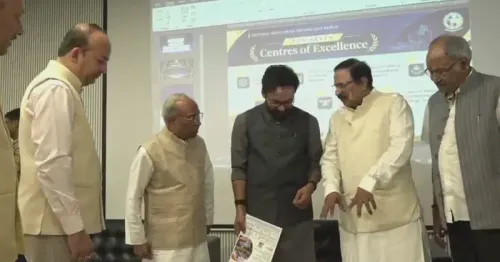
Union Coal and Mines Minister G. Kishan Reddy backed initiatives linking NIT Raipur and CSIR to advance critical mineral research and entrepreneurship among students in Chhattisgarh, framing them as central to PM Modi's vision for scientific temper and Atmanirbhar Bharat.
Key Takeaways
Kishan Reddy endorsed joint initiatives between NIT Raipur (NITRR) and CSIR on November 3, 2026 .
The initiatives aim to nurture scientific temper, advance critical mineral research , and produce student innovators and entrepreneurs.
Chhattisgarh's mineral-rich geography makes NIT Raipur a strategically significant anchor for such research.
The move aligns with National Education Policy 2020 goals of multidisciplinary, application-oriented learning.
India has been scaling up critical minerals research since 2021 to reduce dependence on foreign supply chains.
Specific programme details and investment figures remain to be announced publicly.
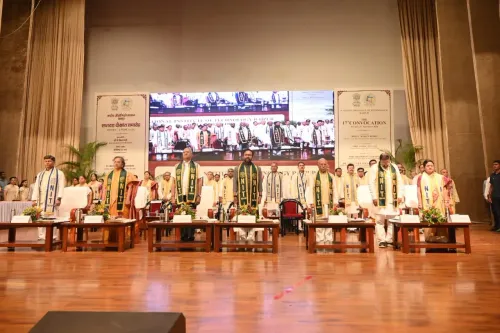
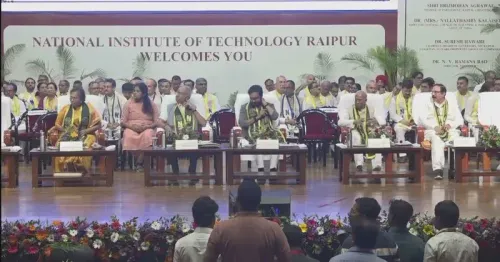
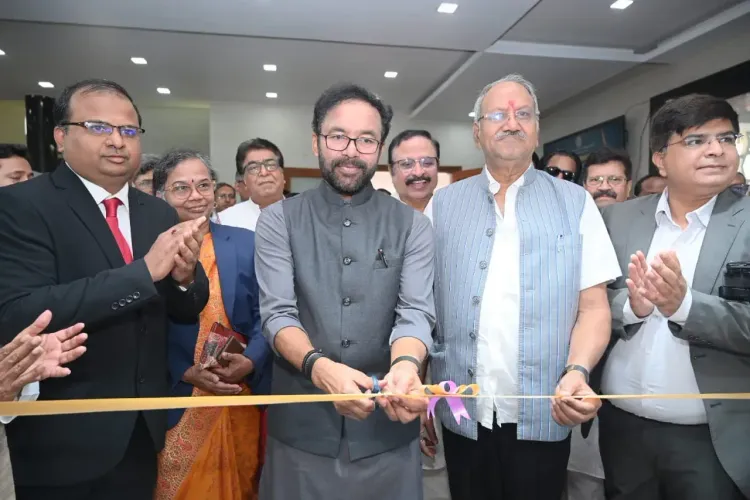
A convergence of academia, strategic mineral research, and entrepreneurship training is taking shape in Chhattisgarh — and Union Coal and Mines Minister G. Kishan Reddy has thrown his weight behind it. On Tuesday, November 3, 2026, the minister amplified a set of initiatives linking NIT Raipur (NITRR) and the Council of Scientific and Industrial Research (CSIR) to the broader national goal of cultivating scientific temper and advancing critical mineral research.
What Kishan Reddy Said — and Why It Signals More Than a Repost
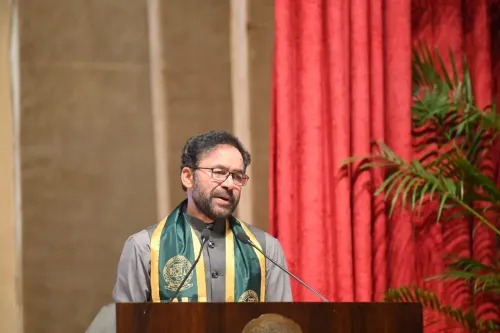
Responding to his own earlier post, the minister framed the initiatives explicitly around Prime Minister Narendra Modi's vision, stating they would 'nurture scientific temper among students, advance critical mineral research and contribute to the socio-economic development of the region while preparing young minds to become innovators and entrepreneurs.' The tagging of @NITRR, @CSIR_IND, and Chhattisgarh BJP MP Brijmohan Agrawal (@brijmohan_ag) signals a deliberate coalition of institutional, political, and regional stakeholders — not a routine ceremonial shoutout.
NIT Raipur, CSIR, and the Critical Minerals Imperative
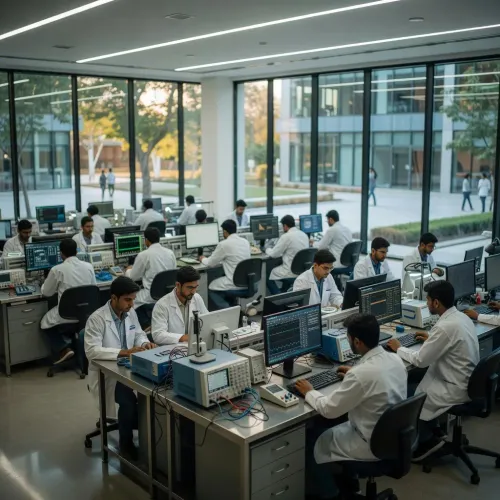
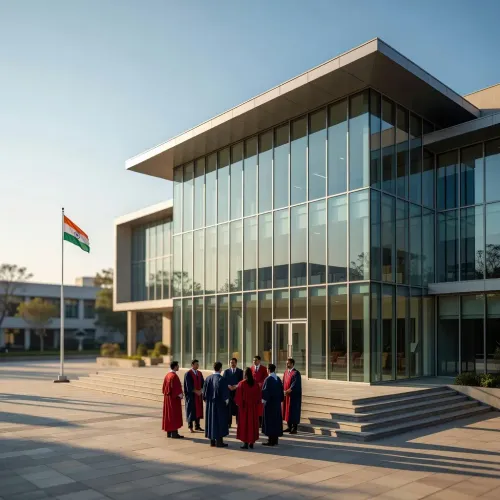
NIT Raipur is a premier technical institute in the heart of one of India's most mineral-rich states. Partnering it with CSIR — the country's largest publicly funded R&D network — on critical minerals is strategically loaded. Critical minerals such as lithium, cobalt, graphite, and rare earths underpin electric vehicles, solar panels, semiconductors, and defence systems. India has been accelerating its domestic exploration and research agenda in this space since 2021, acutely aware of its import dependence on China and other suppliers.
Chhattisgarh sits atop significant mineral reserves, making a research hub anchored at NITRR a logical and consequential choice. The linkage of curriculum to entrepreneurship outcomes — not just lab research — suggests an attempt to build a pipeline from discovery to deployment, in line with the National Education Policy 2020's push for multidisciplinary, application-oriented learning.
Atmanirbhar Bharat's Classroom Dimension
The Atmanirbhar Bharat framework has largely been discussed in terms of manufacturing and supply chains. What the Kishan Reddy endorsement highlights is its quieter classroom dimension: the systematic integration of higher education institutions into strategic sectors. By anchoring scientific temper in students at institutions like NIT Raipur today, the government is betting on a domestically trained cohort of mineral researchers and innovators who reduce long-term dependence on foreign expertise. The socio-economic development angle matters too — Chhattisgarh, despite its mineral wealth, ranks among India's lower-income states, and turning raw-resource abundance into intellectual capital is a generational wager.
Specific programme structures, new research centres, or curriculum updates tied to these initiatives have not yet been made public. The details of what precisely was announced — and the scale of investment — remain the missing chapter in this story.
Whether these initiatives graduate from ministerial endorsement to measurable research output will be the real test — and students in Raipur are now the ones holding the answer paper.
Point of View
Anchoring a critical minerals research initiative at a Chhattisgarh institution carries both policy and political weight, tying a resource-rich BJP-governed state into the Centre's strategic minerals agenda. The framing around 'scientific temper' deliberately echoes the constitutional mandate of Article 51A(h), lending the initiative a civic legitimacy beyond party messaging. At a time when India's critical minerals strategy is moving from policy documents to institutional action, linking academia to the supply-chain imperative is the logical next step — but the gap between ministerial endorsement and funded, functioning research programmes has historically been wide. The real test will be whether NITRR-CSIR outputs translate into verifiable discoveries or patents within a defined timeline.
NationPress
3 Nov 2026
Frequently Asked Questions
What is the NIT Raipur and CSIR initiative on critical minerals?
It is a collaboration between NIT Raipur (NITRR) and the Council of Scientific and Industrial Research (CSIR) aimed at advancing critical mineral research, nurturing scientific temper among students, and building a pipeline of innovators and entrepreneurs in Chhattisgarh, as endorsed by Union Minister G. Kishan Reddy on November 3, 2026.
Why are critical minerals important for India?
Critical minerals such as lithium, cobalt, graphite, and rare earths are essential for electric vehicles, solar energy, semiconductors, and defence systems. India has been working since 2021 to reduce its heavy import dependence — particularly on China — by building domestic exploration and research capacity.
What is G. Kishan Reddy's role in this initiative?
G. Kishan Reddy is India's Union Minister of Coal and Mines and also serves as the BJP's Telangana state president. He endorsed the NITRR-CSIR initiatives as aligned with PM Modi's vision for scientific temper and Atmanirbhar Bharat.
How does the National Education Policy 2020 relate to critical mineral research?
The National Education Policy 2020 prioritises scientific temper and multidisciplinary research in higher education, providing the policy foundation for integrating institutions like NIT Raipur with strategic sectors such as mining and critical minerals.
What is Chhattisgarh's significance in India's minerals sector?
Chhattisgarh is one of India's most mineral-rich states, with substantial reserves of coal and other resources. Hosting a critical minerals research hub at NIT Raipur is designed to convert that geological advantage into intellectual and economic capital for the region.