Kishan Reddy Highlights PM Modi's Mann Ki Baat Call for Handloom
Synopsis
Union Minister G. Kishan Reddy amplified PM Modi's Mann Ki Baat call urging every Indian to buy at least one Khadi or handloom product ahead of National Handloom Day on August 7, spotlighting weaver clusters from Pochampalli to Kutch.
Key Takeaways
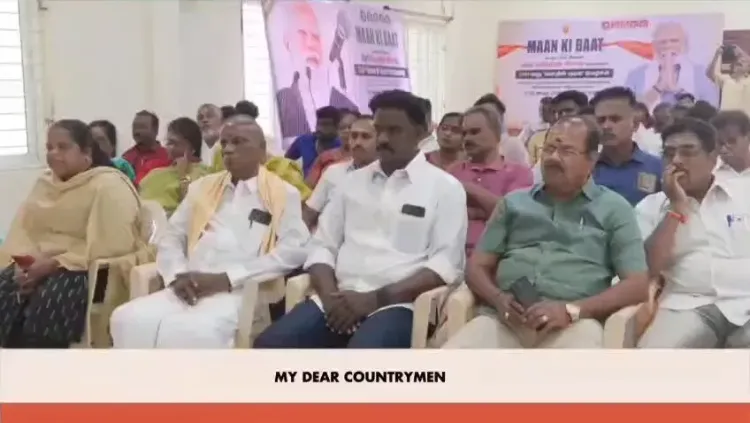
Kishan Reddy shared PM Narendra Modi 's appeal from the Mann Ki Baat episode on July 27, 2026 .
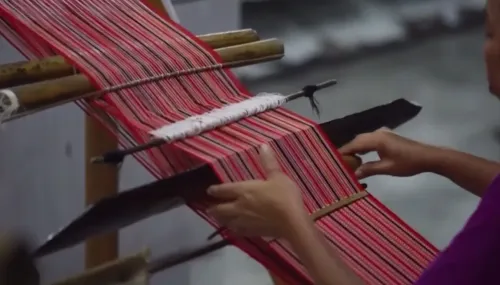
PM Modi highlighted that growing national support for the handloom sector is transforming the lives of weavers across India.
Clusters named include Pochampalli (Telangana) , Patna , Kuthampally , and Kutch (Gujarat) .
PM Modi called on every citizen to purchase at least one Khadi garment or handloom product ahead of National Handloom Day on August 7 .
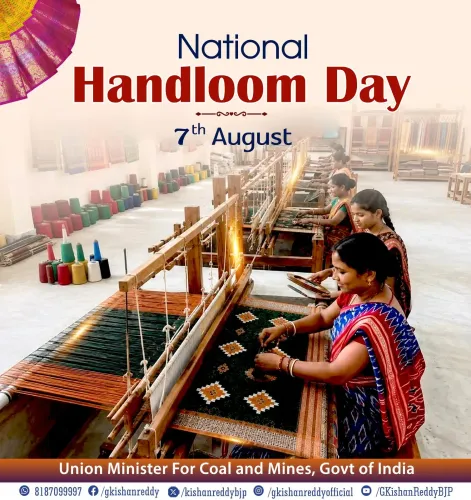
National Handloom Day has been observed since 2015 to mark the centenary of the Swadeshi movement.
The Handloom Reservation Act, 1985 protects certain textiles for exclusive production by handloom units.
Union Coal and Mines Minister and BJP Telangana state president G. Kishan Reddy on Monday, July 27, 2026, shared Prime Minister Narendra Modi's appeal from the latest Mann Ki Baat episode, underlining the growing national support for the handloom sector and its role in transforming weavers' lives across India.
Context
In his post, Kishan Reddy relayed that PM Modi, while addressing the nation through Mann Ki Baat (the Prime Minister's monthly radio address), spoke about how the handloom sector's rising acceptance is 'filling light into the lives of countless weavers.' The Prime Minister cited clusters stretching from Pochampalli in Telangana to Patna, and from Kuthampally to Kutch, as examples of how India's rich handicraft tradition continues to stand as a pillar of support for artisan communities.
Modi also issued a call to action ahead of National Handloom Day on August 7, urging every citizen to purchase at least one Khadi garment or handloom product to actively promote the sector.
Policy Backdrop
National Handloom Day has been observed annually on August 7 since 2015, when it was instituted to mark the centenary of the Swadeshi movement and to galvanise public support for handloom artisans. The date commemorates the formal launch of the Swadeshi movement in 1905, which elevated indigenous textiles as a symbol of national identity.
The Handloom Reservation Act, 1985 provides a statutory framework protecting certain textile categories for exclusive production by handloom units, shielding weavers from industrial competition. These legislative and commemorative pillars together form the backbone of India's handloom promotion architecture.
Stakeholders and Impact
The handloom sector is one of India's largest rural employment generators, with millions of weavers and artisan families dependent on it for their livelihoods. Clusters like Pochampalli in Telangana — celebrated for its distinctive Ikat weave — and Kutch in Gujarat, known for its intricate embroidery and weaving traditions, represent the geographic and cultural breadth of this industry.
Public purchase campaigns of the kind Modi articulated on Mann Ki Baat are designed to directly stimulate demand at the grassroots level, bypassing intermediaries and channelling consumer spending toward artisan communities. For a minister like Kishan Reddy, amplifying this message carries added significance given Telangana's prominent place in the handloom map — with Pochampalli and Kuthampally both named in the Prime Minister's address.
What's Next
With National Handloom Day falling on August 7, 2026, state governments and central agencies are expected to ramp up retail drives, weaver felicitation events, and promotional exhibitions in the run-up to the occasion. Parliamentary discussions on weaver welfare schemes and budget allocations for the textile sector may also gain momentum in the ongoing monsoon session.
The broader pattern of government communication — using platforms like Mann Ki Baat to normalise the purchase of indigenous products — signals a continued push to embed cultural consumption habits into mainstream public behaviour, with handloom as a flagship symbol of that effort.
Point of View
Where central messaging is reinforced by state-level leaders to maximise regional resonance. By specifically naming Telangana's own Pochampalli and Kuthampally clusters, the Prime Minister's address — and Reddy's relay of it — serves a dual purpose: national cultural promotion and local political outreach in a state where the BJP is seeking to expand its footprint. The annual National Handloom Day cycle has become a reliable vehicle for the government to align economic policy goals with cultural nationalism, positioning handloom as both a livelihood issue and an identity statement. Whether this translates into measurable upticks in weaver incomes will be the metric that cuts through the symbolism.
NationPress
25 Oct 2026
Frequently Asked Questions
What did PM Modi say about handloom in Mann Ki Baat?
PM Modi said in his Mann Ki Baat address that the growing national support for the handloom sector is filling light into the lives of countless weavers, citing clusters from Pochampalli in Telangana to Kutch in Gujarat. He urged every citizen to buy at least one Khadi garment or handloom product ahead of National Handloom Day on August 7.
When is National Handloom Day celebrated in India?
National Handloom Day is celebrated every year on August 7 . It was instituted in 2015 to mark the centenary of the Swadeshi movement launched on August 7, 1905.
What is Pochampalli famous for?
Pochampalli is a town in Telangana renowned for its traditional Ikat handloom sarees, which are recognised globally for their distinctive tie-dye weaving technique and are a significant part of India's textile heritage.
Why did Kishan Reddy post about Mann Ki Baat?
As Union Coal and Mines Minister and BJP Telangana state president, G. Kishan Reddy shared PM Modi's Mann Ki Baat message to amplify the government's appeal for citizens to support handloom weavers, with particular relevance given Telangana's prominent handloom clusters like Pochampalli.
What is the Handloom Reservation Act?
The Handloom Reservation Act of 1985 is a central legislation that protects certain categories of textile products for exclusive production by handloom units, shielding traditional weavers from competition with power-loom and mill-made alternatives.