Kishan Reddy Highlights PM Modi's Millet Push in Northeast India
Synopsis
Union Minister G. Kishan Reddy shared PM Modi's Mann Ki Baat Episode 139 remarks on India's millet push, spotlighting Meghalaya's millet-based food products and the revival of traditional cultivation in Nagaland's Kezoma village as proof of a broader rural-economy transformation.
Key Takeaways
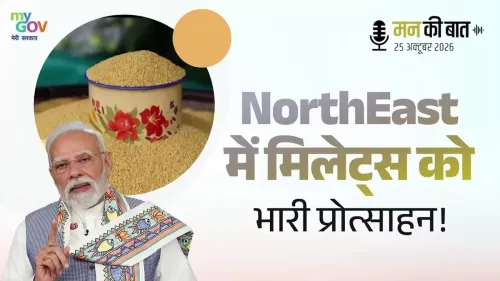
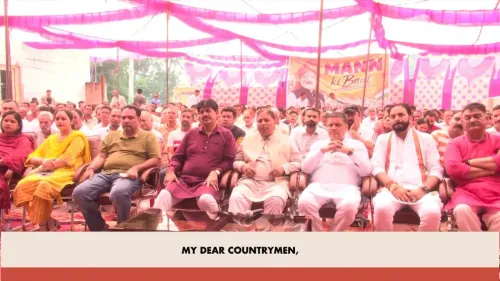
Kishan Reddy amplified PM Modi's Mann Ki Baat Episode 139 on October 25, 2026 , focusing on Northeast India's millet economy.
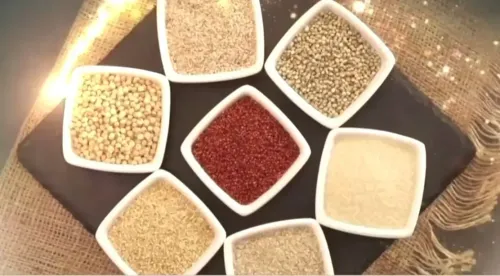
India proposed the UN International Year of Millets in 2023 , boosting global awareness of coarse grains as a nutritional and climate-resilient crop.
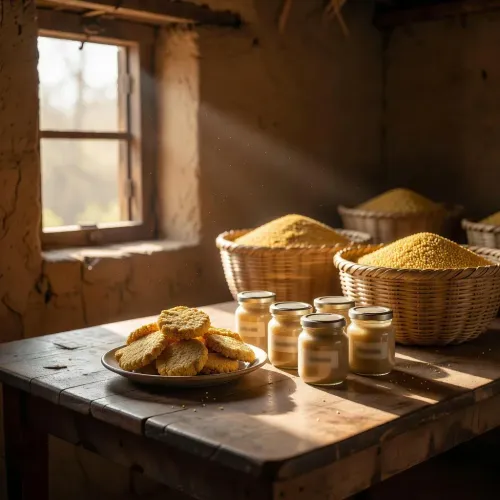
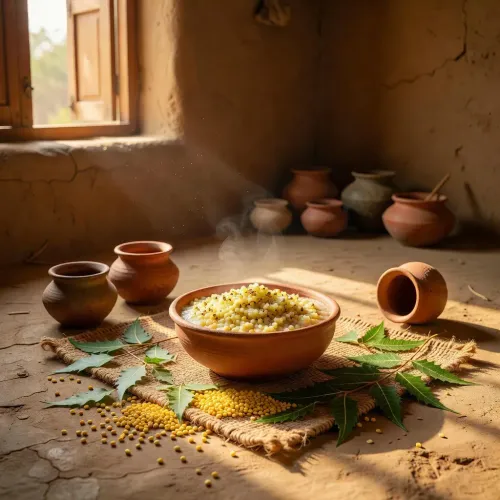
Meghalaya entrepreneurs are producing millet-based cookies, cakes, and nutritious infant food, raising both farmer incomes and consumer demand.
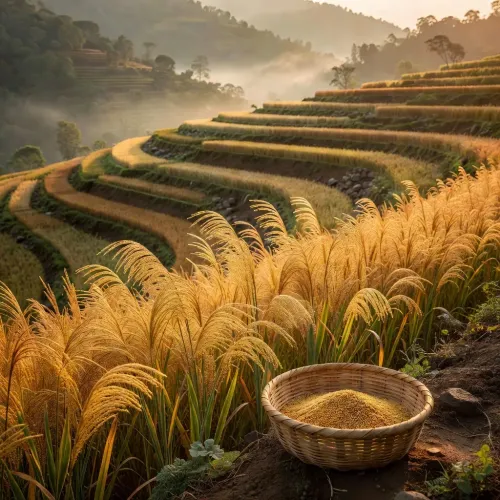
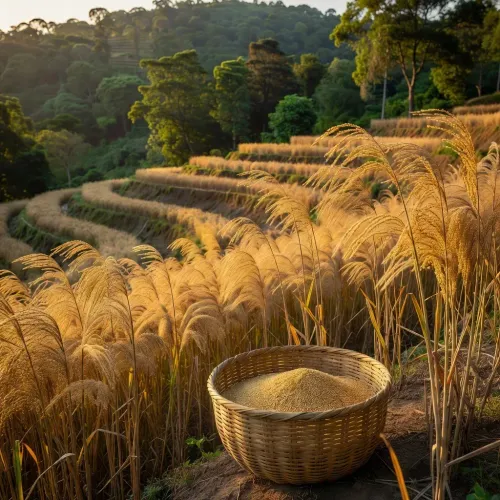
Kezoma village in Nagaland has revived traditional millet cultivation, connecting tribal farming heritage to modern commercial supply chains.
The government's Shri Anna branding campaign, active since 2014 , has repositioned millets from subsistence grain to mainstream superfood through value addition and market linkages.
Rural youth in tribal and rainfed regions are central to the strategy — bridging ancestral crop knowledge with modern food processing and entrepreneurship.
From a village in Nagaland where ancient millet fields are being coaxed back to life, to a kitchen in Meghalaya turning those same grains into cookies, cakes, and infant food — Union Coal and Mines Minister G. Kishan Reddy on Sunday, October 25, 2026, amplified a striking passage from Prime Minister Narendra Modi's Mann Ki Baat Episode 139, spotlighting how India's Northeast is quietly becoming a laboratory for the country's millet revival.
Reddy quoted Modi directly: 'Bharat ke aahwan par varsh 2023 mein 'Antarrashtriya Shriann Varsh' manaya gaya' — 'On India's call, the year 2023 was observed as the International Year of Millets, raising global recognition of coarse grains.' The post goes on to describe how Meghalaya is producing millet-based cookies, cakes, and nutritious baby food, while Kezoma village in Nagaland has revived traditional millet cultivation, boosting farmer incomes and demand simultaneously.
India's Proposal That Put Millets on the World Map
The story has a clear origin point. In 2021, India moved a resolution in the UN General Assembly, which duly declared 2023 the International Year of Millets (IYoM). The designation was not ceremonial — it triggered trade missions, recipe competitions, and export campaigns that repositioned what was once dismissed as 'poor man's food' into a globally traded superfood. India, as the world's largest millet producer, had the most to gain.
Since 2014, the central government has steadily built the policy scaffolding: rebranding coarse grains as Shri Anna (a term PM Modi used in his Union Budget speech), integrating millets into the Public Distribution System, and nudging state governments to create value-addition clusters. The Northeast push is the newest and, arguably, most consequential chapter — because the region's tribal farming communities have cultivated these grains for centuries without commercial reward.
Meghalaya's Millet Kitchen and Nagaland's Village Revival
The two Northeast examples Modi cited are telling in their contrast. Meghalaya represents the processing end — entrepreneurial youth translating raw millet into branded, packaged products with urban and export appeal. Millet cookies and cakes reach health-conscious consumers; millet-based infant food taps into the fast-growing baby nutrition segment. Both add rupees directly to what farmers receive per quintal.
Kezoma village in Nagaland represents the cultivation end — the harder, slower work of convincing farming communities that a crop their grandparents grew can be commercially viable again. Reviving seed varieties, rebuilding agronomic knowledge, and creating a guaranteed buyer are all prerequisites before a single sack leaves the village. That this is reportedly happening in Kezoma signals that at least some of those pieces are in place.
Rural Youth as the Pivot Point
The Prime Minister's framing — and Kishan Reddy's endorsement of it — centres on rural youth as the agents linking tradition to innovation. It is a deliberate political and economic narrative: that young people in tribal and rainfied regions need not migrate to cities if their ancestral crops can be industrialised locally. The millet processing cluster model, if scaled, would create cold chains, packaging units, and logistics jobs in districts that currently export only labour.
The next test is whether state-level procurement targets and processing infrastructure budgets match the rhetorical ambition. Farmer income numbers and export data for the 2026-27 agricultural season will be the earliest hard measure of how far the Northeast millet story has actually travelled from village field to global shelf.
Point of View
Rather than issue an independent statement, also reinforces the party's communication discipline: local leaders amplify the Prime Minister's narrative rather than compete with it. The real stress-test will come when millet farmer income data and Northeast processing-cluster budgets are audited against these promises.
NationPress
25 Oct 2026
Frequently Asked Questions
What did PM Modi say about millets in Mann Ki Baat Episode 139?
PM Modi highlighted that India's call led to the UN designating 2023 as the International Year of Millets , and cited Meghalaya and Nagaland 's Kezoma village as examples of Northeast India reviving and value-adding millet cultivation to raise farmer incomes.
What millet products are being made in Meghalaya?
Entrepreneurs in Meghalaya are producing millet-based cookies, cakes, and nutritious infant food, tapping both urban health-food demand and the baby nutrition market.
What is Shri Anna and why does the government promote it?
Shri Anna is the government's rebranding of coarse grains or millets. Since 2014 , New Delhi has promoted it through public distribution, value-addition schemes, and international diplomacy to raise farmer incomes and improve nutritional outcomes.
What is the International Year of Millets 2023?
The International Year of Millets (IYoM) 2023 was a UN General Assembly -declared designation, proposed by India in 2021 , aimed at raising global awareness of millets' nutritional benefits and climate resilience.
What is happening with millet farming in Nagaland's Kezoma village?
According to PM Modi's Mann Ki Baat address, Kezoma village in Nagaland has revived traditional millet cultivation, reconnecting tribal farming communities with commercial supply chains — though specific production figures remain unverified.