Kishan Reddy Champions Divyangjan Welfare, Cites Modi Govt Reforms

Synopsis
Union Minister G. Kishan Reddy championed Divyangjan welfare on October 25, 2026, citing stronger pension support and the 40% disability threshold as proof of PM Modi's inclusive governance — a message rooted in the Rights of Persons with Disabilities Act, 2016.
Key Takeaways
Kishan Reddy , Union Minister of Coal and Mines and BJP Telangana president, posted on October 25, 2026 in support of Divyangjan welfare under PM Modi.
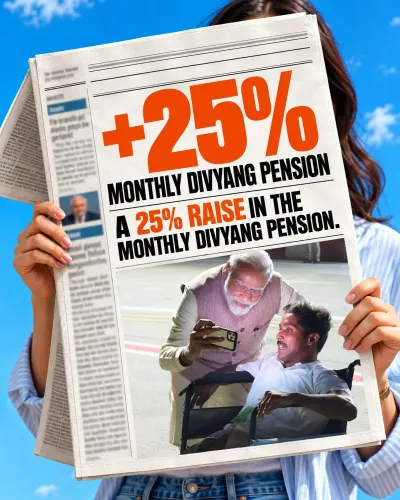
He cited stronger pension support and a 40% disability threshold as key markers of the government's inclusive agenda.
The Rights of Persons with Disabilities Act, 2016 established the 40% benchmark and expanded recognised disability categories from 7 to 21.
The term 'Divyangjan' was introduced by PM Modi as a shift in official language — from welfare recipient to rights-bearing citizen.
State-level pension disbursement and UDID-linked beneficiary data updates are the next measurable milestones for this policy push.
The messaging aligns with the BJP government's broader 'Sabka Saath, Sabka Vikas' inclusive development framework active since 2014.
Dignity for India's differently-abled citizens is not charity — it is a constitutional promise, and Union Coal and Mines Minister G. Kishan Reddy invoked that promise on Sunday, October 25, 2026, amplifying the central government's welfare push for persons with disabilities in a post that drew a direct line between pension reform and inclusive nationhood.
What Kishan Reddy Said — and Why It Matters
The minister's message was pointed: 'A truly inclusive India is one where no Divyangjan is left behind, where dignity is a right, and every individual has the opportunity to live with hope and self-respect.' He specifically highlighted two policy directions under Prime Minister Narendra Modi — stronger pension support for persons with disabilities and a disability threshold set at 40% — as proof of a government that 'puts people first.' The post was accompanied by a video and carried the hashtag #DivyangjanKeSaathModiSarkar ('Modi Government stands with Divyangjan').
The 40% Threshold and the Rights of Persons with Disabilities Act
The 40% benchmark disability threshold has its roots in the Rights of Persons with Disabilities Act, 2016 — a landmark legislation that expanded the number of recognised disability categories from 7 to 21 and set the eligibility floor for government benefits at that level. The Act was a significant legislative shift from the older Persons with Disabilities Act of 1995, broadening the net of who qualifies for state support, reservations, and social security entitlements. Kishan Reddy's framing positions this threshold — and the pension enhancements tied to it — as a live, functioning commitment rather than a legacy line item.
Inclusive Development as a Recurring Government Signal
This post fits a consistent pattern of messaging from the BJP-led central government since 2014: the language of 'Sabka Saath, Sabka Vikas' (Together with all, development for all) applied specifically to disability welfare. The term 'Divyangjan' — coined by PM Modi to replace the older 'viklang' (handicapped) — itself reflects a deliberate shift in official vocabulary, one the government has used to signal a change in the state's relationship with persons with disabilities: from welfare recipient to rights-bearing citizen.
Kishan Reddy, who also serves as BJP's Telangana state president, brings a regional political dimension to the messaging. Telangana, a state the BJP is working to strengthen its base in, has a significant Divyangjan population covered under both central and state social security schemes. The UDID (Unique Disability ID) system — central to linking beneficiaries to entitlements — remains a key administrative lever to watch, with upcoming ministry reports expected to update beneficiary data.
What to Watch: Pension Revision and UDID Roll-out
The specific claim of 'stronger pension support' points to revisions in disability pension amounts — a policy area where the central government periodically revises quantum under schemes such as the Indira Gandhi National Disability Pension Scheme (IGNDPS). State-level roll-out timelines and the alignment of UDID-linked beneficiary data with revised eligibility rules will be the concrete measures that determine whether this messaging translates into ground-level impact for India's millions of Divyangjan.
The numbers, when they arrive, will be the real test of the promise.
Point of View
Keeping inclusive development visible as a voter-facing credential. As BJP's Telangana state president, directing this message at a state where the party is consolidating adds a local electoral undercurrent to what presents as a national welfare statement. The open question — whether 'stronger pension support' reflects a concrete, notified revision or aspirational framing — is precisely the kind of gap that opposition parties and civil society groups tracking disability rights will press on. Until specific revised pension amounts are officially notified, this remains a political signal rather than a policy announcement.
NationPress
25 Oct 2026
Frequently Asked Questions
What is the 40% disability threshold in India?
The 40% benchmark disability threshold, established under the Rights of Persons with Disabilities Act, 2016 , is the minimum level of certified disability required for a person to access most central government benefits, reservations, and social security entitlements in India.
What is the Divyangjan pension scheme in India?
The Indira Gandhi National Disability Pension Scheme (IGNDPS) is a central government scheme providing monthly pension support to persons with severe disabilities living below the poverty line; the quantum is periodically revised by the government.
What did the Rights of Persons with Disabilities Act 2016 change?
The Rights of Persons with Disabilities Act, 2016 expanded recognised disability categories from 7 to 21, set the 40% benchmark disability threshold for government benefits, and reframed disability as a rights issue rather than a welfare charity matter.
Why does PM Modi use the word 'Divyangjan' instead of 'viklang'?
PM Narendra Modi introduced the term 'Divyangjan' (meaning those with divine limbs) to replace the older 'viklang' (handicapped), signalling a shift in the state's approach — recognising persons with disabilities as rights-bearing citizens with inherent dignity rather than passive welfare recipients.
What is the UDID card for persons with disabilities in India?
The Unique Disability ID (UDID) is a central government-issued identity card for persons with disabilities that links their certified disability data to entitlements, pensions, reservations, and other government benefits across states.