Kishan Reddy hails women athletes' 8 Golds at Commonwealth Games
Synopsis
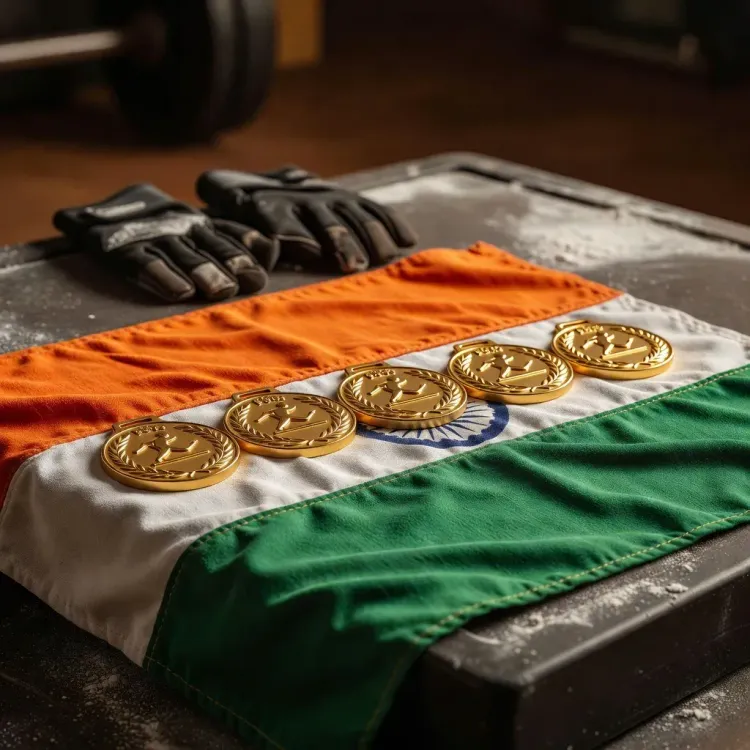
Union Minister G. Kishan Reddy praised India's women athletes for winning 8 of 13 Golds at the Glasgow Commonwealth Games and announced the Cabinet-approved revamped Khelo India Scheme worth ₹36,441 crore for 2026–31, crediting sustained policy investment for the historic medal haul.
Key Takeaways
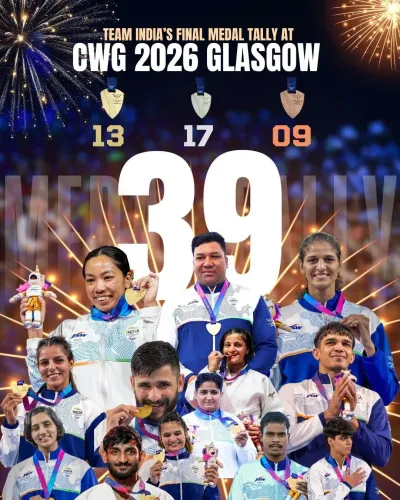
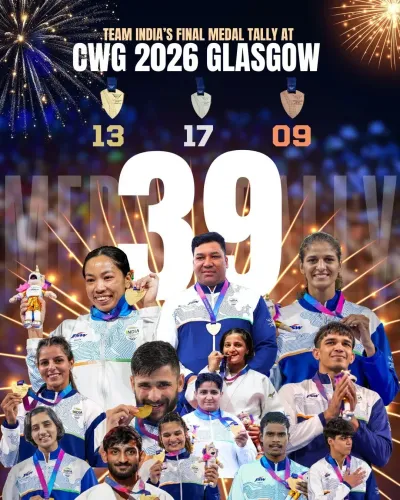
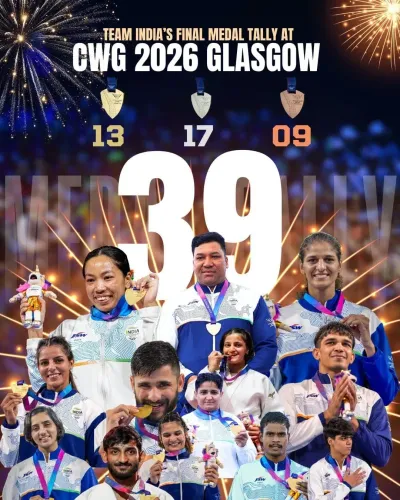
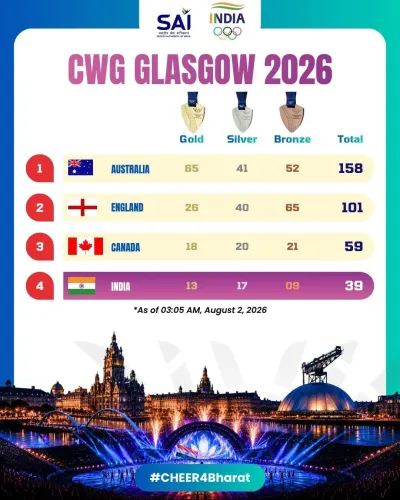
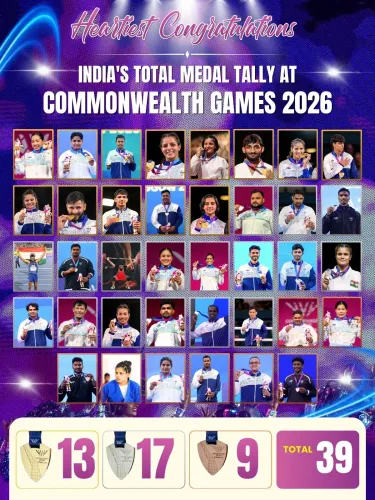
India won 39 medals including 13 Golds at the Glasgow Commonwealth Games.
Women athletes claimed 8 of the 13 Gold medals , led by Asmita Dey (Judo), Mirabai Chanu (Weightlifting), Sharmila Dhankar (Para Shot Put), and five boxing champions.
Asmita Dey is credited with winning India's first-ever Commonwealth Games Judo Gold.
The Union Cabinet approved a revamped Khelo India Scheme with an outlay of ₹36,441 crore covering 2026–27 to 2030–31 .
Both Khelo India (launched 2017) and TOPS (launched 2014) were cited as the policy backbone behind the athletes' success.
Eight gold medals out of thirteen — that is the number that tells the real story of India's Glasgow Commonwealth Games campaign, and Union Coal and Mines Minister G. Kishan Reddy made sure the nation paused to notice it. In a post on Monday, 3 August 2026, the BJP Telangana state president spotlighted how India's women athletes powered the bulk of the country's gold-medal haul, naming each champion by name.
The women who carried India's gold rush
India finished the Glasgow Commonwealth Games with 39 medals overall, including 13 Golds. Of those thirteen, eight were won by women — a statistic Kishan Reddy called a reflection of Nari Shakti (women's power) shining on the global stage. The roll call is striking: Asmita Dey claimed what Reddy described as India's first-ever Commonwealth Games Judo Gold; Mirabai Chanu delivered again in weightlifting; Sharmila Dhankar won Para Shot Put Gold; and the boxing ring produced five golds through Sakshi Chaudhary, Preeti Pawar, Jaismine Lamboria, Priya Ghanghas, and Arundhati Choudhary.
Mirabai Chanu's name alone carries weight — the Manipur-born weightlifter has been one of India's most decorated international athletes across Commonwealth Games and Olympic cycles, and her presence in any medal tally is no surprise. The boxing quintet, however, signals a depth of women's boxing talent that goes well beyond a single star.
₹36,441 crore and the machinery behind the medals
Kishan Reddy framed the athletic success as the dividend of deliberate policy. He pointed to two central government schemes — Khelo India and the Target Olympic Podium Scheme (TOPS) — as the infrastructure behind the performances. Khelo India, launched in 2017, was designed to build grassroots sports infrastructure and identify talent at the district and state level. TOPS, introduced in 2014, channels financial and training support directly to elite athletes with Olympic ambitions.
The minister then announced that the Union Cabinet has approved a revamped Khelo India Scheme with an outlay of ₹36,441 crore for the period 2026–27 to 2030–31 — a five-year commitment that signals the government is doubling down on the model that, it argues, produced this medal tally. That figure, if sustained, would represent one of the largest single sports-development allocations in Indian budgetary history.
A pattern bigger than one Games
The broader arc here is deliberate. Since 2014, Indian sports policy has combined mass-participation programmes with targeted elite funding, and the emphasis on women athletes has grown steadily — through dedicated categories in Khelo India, through TOPS selections, and through successive budgetary increases. The Glasgow results, as Reddy framed them, are not an accident. They are the compounding return on a decade of structured investment.
The next test will be whether the revamped Khelo India's state-level rollout translates Cabinet approval into track time, training camps, and competition exposure for the next generation of athletes. For now, eight golds speak loudly enough on their own.
Point of View
441 crore Khelo India outlay embedded within a celebratory sports post gives the scheme visibility it might not otherwise command. More substantively, the emphasis on women's gold medals fits a broader BJP narrative around Nari Shakti as a governance deliverable, not merely a slogan. Whether the revamped scheme's state-level implementation matches its headline figure will be the real test of whether this medal moment becomes a lasting structural shift.
NationPress
3 Aug 2026
Frequently Asked Questions
How many medals did India win at the Glasgow Commonwealth Games?
According to Union Minister G. Kishan Reddy's post, India won 39 medals in total, including 13 Gold medals , at the Glasgow Commonwealth Games.
Which Indian women athletes won gold at the Commonwealth Games?
Reddy named Asmita Dey (Judo), Mirabai Chanu (Weightlifting), Sharmila Dhankar (Para Shot Put), and boxers Sakshi Chaudhary, Preeti Pawar, Jaismine Lamboria, Priya Ghanghas, and Arundhati Choudhary as gold medallists.
What is the revamped Khelo India Scheme outlay announced in 2026?
The Union Cabinet approved a revamped Khelo India Scheme with an outlay of ₹36,441 crore for the five-year period 2026–27 to 2030–31 , as stated by Minister Kishan Reddy.
What is the Target Olympic Podium Scheme (TOPS)?
TOPS is a Sports Ministry initiative launched in 2014 that provides financial and training support to elite Indian athletes targeting medals at the Summer and Winter Olympics.
Who is Asmita Dey and why is her medal historic?
According to Kishan Reddy's post, Asmita Dey won India's first-ever Commonwealth Games Judo Gold , making her achievement a landmark moment in Indian martial arts history at the multi-sport event.