Rijiju slams Congress over disruptions as two key Bills pass
Synopsis
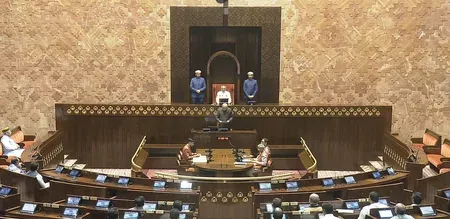
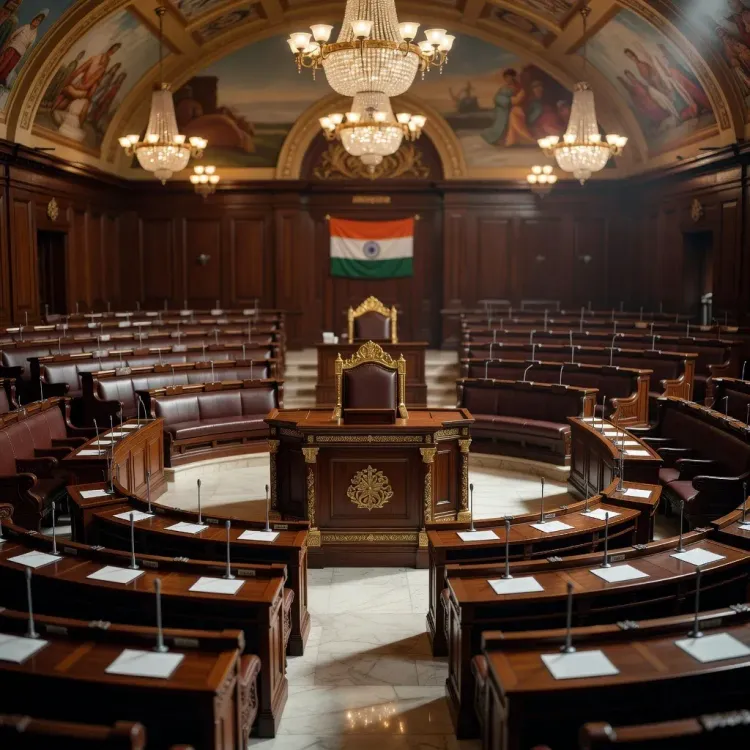
Parliament passed two major bills on August 3 — expanding Supreme Court judge strength in Lok Sabha and reforming MSME regulation in Rajya Sabha — as Parliamentary Affairs Minister Kiren Rijiju publicly rebuked Congress MPs for disrupting the house and skipping both debates.
Key Takeaways
Lok Sabha passed a bill to increase the sanctioned strength of Supreme Court judges on August 3, 2026 .
Rajya Sabha passed the MSME Bill on the same day, targeting reform of India's small and medium enterprise sector.
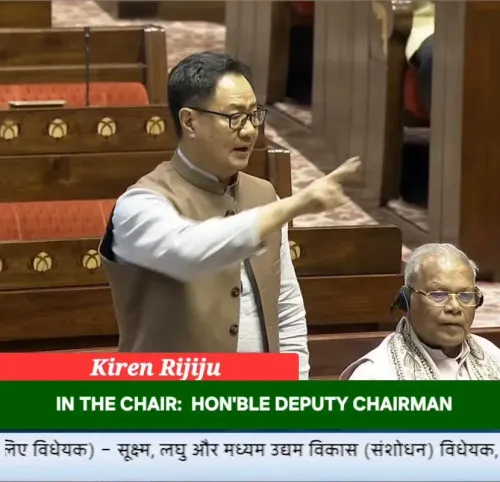
Union Minister Kiren Rijiju accused Congress MPs of disrupting the house and refusing to participate in discussions on both bills.
Rijiju said it was 'very unfortunate that there's no body to guide the Congress MPs,' framing the disruption as a leadership failure within the party.
The Supreme Court's judge strength was previously raised in 2008 from 25 to 31 under the Supreme Court (Number of Judges) Amendment Act.
Implementation notifications for both bills and Congress's parliamentary strategy in the next session remain the key developments to watch.
Two significant pieces of legislation cleared Parliament on Monday, August 3, 2026 — one to expand the strength of the Supreme Court of India, another to reform the MSME sector — but the session ended on a sour note as Union Parliamentary Affairs Minister Kiren Rijiju publicly called out Indian National Congress MPs for disrupting proceedings and sitting out the debates entirely.
Two bills, one session — and a conspicuous absence
Lok Sabha passed the bill to increase the number of Supreme Court judges, while Rajya Sabha cleared the MSME Bill — a legislative double on a single parliamentary day. The Supreme Court's sanctioned judge strength was last raised in 2008, when the Supreme Court (Number of Judges) Amendment Act pushed the bench from 25 to 31. The new bill marks the next step in a long-running effort to align judicial capacity with a mounting caseload.
The MSME Bill, meanwhile, targets one of India's most consequential economic engines — a sector that employs hundreds of millions and forms the backbone of domestic manufacturing and exports. Legislative reform here carries direct stakes for small business owners across every state.
Rijiju's rebuke: 'No body to guide Congress MPs'
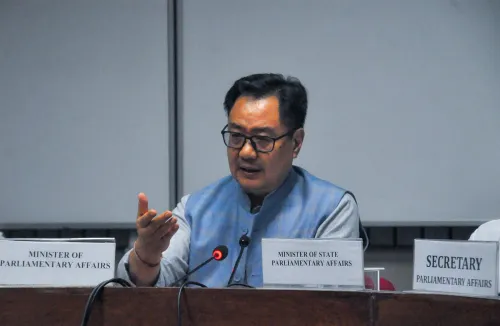
Rijiju did not hold back. 'It's very unfortunate that there's no body to guide the Congress MPs,' he wrote on X, pointing to what he described as deliberate disruption and non-participation in debate on both bills. As the minister responsible for managing the government's legislative business through Parliament, the charge carries institutional weight — it is not merely a political jab but a formal complaint about how the opposition conducted itself during a sitting day.
The remark also lands as a pointed reference to Congress's current leadership dynamics. Parliamentary sessions have repeatedly seen opposition walkouts and floor disruptions across governments, but Rijiju's framing — that Congress MPs lacked anyone to guide them — sharpens the critique into a question of internal party coherence rather than just tactical obstruction.
What the disruptions cost the debate
When opposition MPs walk out or disrupt proceedings, the legislative record loses their scrutiny. Bills pass, but without the adversarial questioning that stress-tests provisions, flags implementation gaps, and creates an accountable public record. For consequential legislation — expanding the apex court, reshaping MSME regulation — that absence matters beyond the day's headlines. The government gets its numbers; the country gets thinner debate.
Implementation notifications for both bills, and whether Congress recalibrates its parliamentary strategy in the next session, are the two threads worth watching now.
Point of View
Not just floor management. More structurally, the episode underscores a recurring tension in Indian parliamentary democracy: consequential bills — judicial capacity, MSME reform — routinely pass with the opposition absent from the record, producing law without the adversarial scrutiny that strengthens implementation. Whether the next session sees Congress re-engage or double down on disruption will test whether this is tactical posturing or a deeper strategic retreat from legislative debate.
NationPress
17 Sept 2026
Frequently Asked Questions
What bills were passed in Parliament on August 3 2026?
Lok Sabha passed a bill to increase the number of Supreme Court judges, and Rajya Sabha passed the MSME Bill on August 3, 2026.
Why did Kiren Rijiju criticise Congress MPs?
Rijiju said Congress MPs disrupted the house and did not participate in discussions on either bill, calling it 'very unfortunate' and saying there was 'no body to guide' them.
How many Supreme Court judges are there currently?
The sanctioned strength was last set at 31 judges under the 2008 amendment. The new bill passed in Lok Sabha seeks to increase that number, though the exact new figure has not been officially confirmed.
What is the MSME Bill about?
The MSME Bill targets legislative reform for India's Micro, Small and Medium Enterprises sector, which is a major driver of employment and domestic manufacturing. Specific provisions of the 2026 bill are subject to official notification.
Is it common for opposition parties to disrupt Parliament during bill debates?
Yes. Parliamentary sessions across successive governments have seen opposition walkouts and disruptions during legislative business, including on judicial and economic bills. The practice is a recurring feature of Indian parliamentary politics.