Rijiju slams Opposition over Monsoon Session washout: 'Can't switch Parliament off'
Synopsis
Kiren Rijiju's op-ed in The Indian Express is a point-by-point indictment of Opposition tactics — backed by session statistics showing Lok Sabha functioned at just 15% capacity and Question Hour at 1%. The piece goes further, challenging Rahul Gandhi's parliamentary record by name, making this less a defence of the government and more a direct political offensive ahead of the next session.
Key Takeaways
Kiren Rijiju published an opinion piece in The Indian Express on 25 August , attacking the Opposition over Monsoon Session disruptions.
The Lok Sabha functioned for just 15% of scheduled time; Question Hour operated for barely 1% in the lower house.
Home Minister Amit Shah reportedly offered a specific time slot for a debate on the Jantar Mantar police action, which Rahul Gandhi allegedly declined.
Rijiju cited Gandhi's 17th Lok Sabha record: 51% attendance, 8 debates, 99 questions — all below national averages.
The Foreign Contribution (Regulation) Amendment Bill was sent to a Joint Parliamentary Committee after Opposition objections, but the Opposition then demanded full withdrawal.
Rijiju argued the electoral mandate 'cannot be suspended whenever defeated parties choose disruption over argument.'
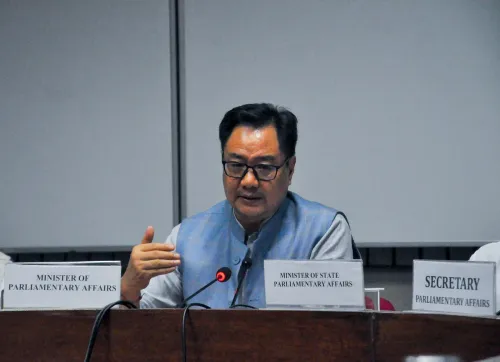
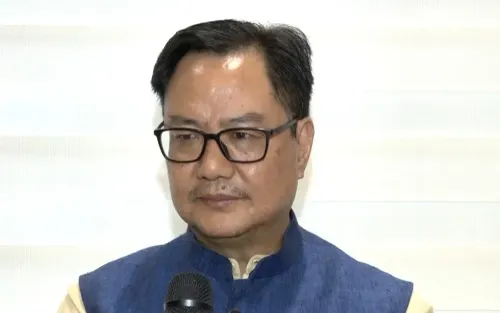
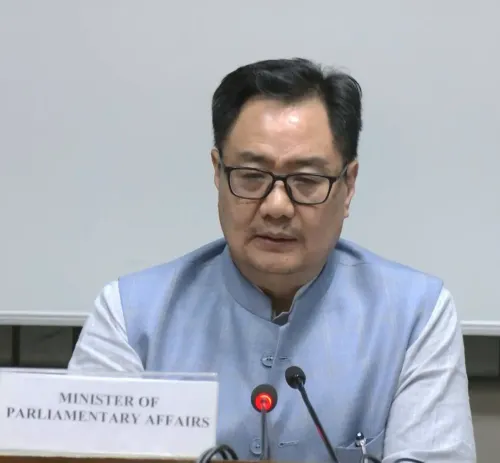
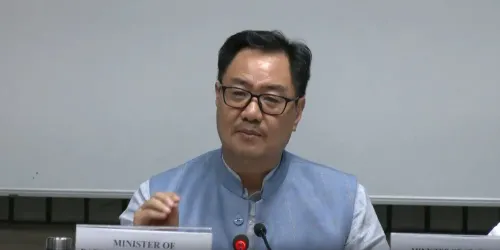
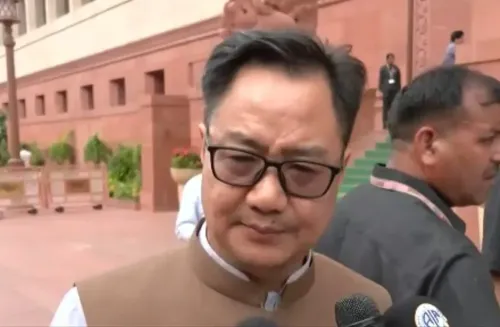
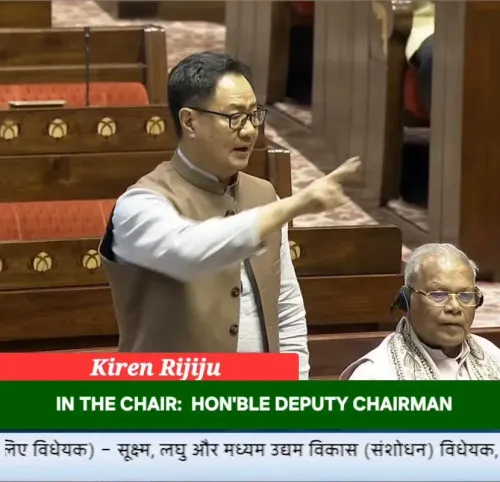
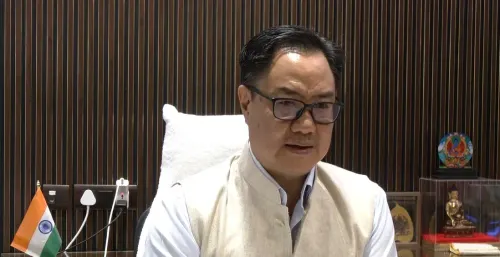
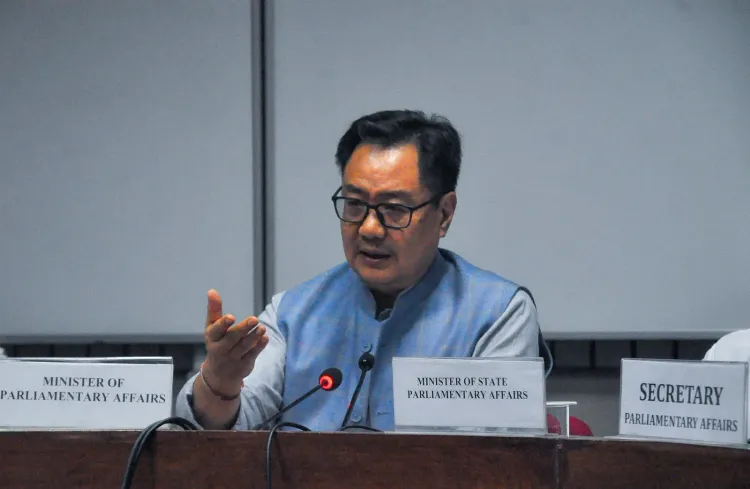
Union Parliamentary Affairs Minister Kiren Rijiju on Tuesday, 25 August launched a sharp attack on the Opposition over repeated disruptions during the Monsoon Session of Parliament, arguing that while the Constitution grants them every right to question the government, it does not authorise them to paralyse proceedings whenever their political demands go unmet. Rijiju made the remarks in an opinion piece published in The Indian Express.
The Monsoon Session by the Numbers
Rijiju cited session data to underscore the scale of the disruption. The Lok Sabha functioned for just 15 per cent of its scheduled time, while the Rajya Sabha managed 33 per cent. Question Hour — a cornerstone of parliamentary accountability — operated for barely 1 per cent of its allotted time in the Lok Sabha and 12 per cent in the Rajya Sabha.
'The Opposition's arithmetic is therefore deeply cynical: First ensure that Parliament cannot function, and then use the resulting loss of time as evidence against the government,' Rijiju wrote.
What the Government Said
Rijiju maintained that the government had repeatedly engaged with Opposition concerns — negotiating on legislation, amending provisions, and accommodating legitimate demands. He cited the Foreign Contribution (Regulation) Amendment Bill as one example, noting it was referred to a Joint Parliamentary Committee after opposition objections were raised. However, he claimed the Opposition subsequently demanded the Bill's complete withdrawal, which he described as demanding surrender rather than consultation.
'For some Opposition parties, consultation no longer means that the government should listen. It means that the government must surrender. Debate is considered meaningless unless the minister accepts the Opposition's conclusions in advance,' he wrote.
The Rahul Gandhi Exchange
On the Opposition's demand for a debate on police action against protesters at Jantar Mantar, Rijiju said Union Home Minister Amit Shah had agreed and offered a specific time frame for the discussion. He claimed that Congress leader and Leader of Opposition in the Lok Sabha Rahul Gandhi rejected the offer, dismissing it as the Home Minister's 'lecture'.
'A leader genuinely denied a debate seizes a 24-hour offer. He does not dismiss it as a lecture. One cannot refuse a full parliamentary discussion and then complain that Parliament has been silenced,' Rijiju wrote.
Rijiju also questioned Gandhi's parliamentary record during the 17th Lok Sabha, claiming he recorded 51 per cent attendance, participated in 8 debates against a national average of 46.7, asked 99 questions against an average of 210, and introduced no Private Member's Bill. 'Yet he now declares that the government has 'destroyed our democracy',' Rijiju wrote, adding that Gandhi's visits to the UK, Germany, and the US to raise democratic concerns contrasted with what he described as a reluctance to engage inside Parliament.
Engagement with Protesters and Civil Society
Rijiju also highlighted the government's outreach beyond Parliament. He referenced the Centre's engagement with students over the NEET examination controversy, and with activist Sonam Wangchuk, who was on a hunger strike. In both cases, he said, Union ministers engaged directly, written assurances were provided, and Parliament subsequently debated the issues.
'Consider the democratic sequence: A protest was held; civil-society concerns were heard; Union ministers engaged with the protesters; written assurances were provided; the Prime Minister responded; Parliament conducted an extensive debate; and legislation was strengthened,' he wrote.
The Core Argument
Rijiju concluded that Parliament belongs neither to the government nor to the Opposition, but to the people of India, and that the electoral mandate cannot be suspended at the Opposition's discretion. 'Slogans outside the House cannot substitute for arguments inside it. Those who cannot defeat a government through debate or the ballot cannot be permitted to defeat Parliament through noise,' he wrote. The Opposition is yet to formally respond to the article.
Point of View
Not just a defence of parliamentary procedure. By publishing it in a national broadsheet rather than issuing a press statement, the government is clearly targeting an audience beyond Parliament — framing the Opposition's disruption strategy as a liability ahead of future sessions. The invocation of Rahul Gandhi's attendance record is telling: it shifts the debate from institutional dysfunction to personal accountability. What the piece does not address is the Opposition's counter-argument — that disruption is sometimes the only tool available when the ruling majority controls committee composition and scheduling. A fuller accounting of the Monsoon Session would require that perspective too.
NationPress
9 Oct 2026
Frequently Asked Questions
Why did Kiren Rijiju criticise the Opposition over the Monsoon Session?
Rijiju argued that the Opposition deliberately disrupted Parliament during the Monsoon Session, with the Lok Sabha functioning at just 15% of scheduled time and Question Hour at barely 1%. He contended that disruption was being used as a political tactic rather than a genuine assertion of constitutional rights.
What did Rijiju say about Rahul Gandhi rejecting a debate offer?
Rijiju claimed that Home Minister Amit Shah had agreed to the Opposition's demand for a debate on the police action at Jantar Mantar and offered a specific time frame, but that Rahul Gandhi rejected it, calling it a 'lecture'. Rijiju argued a leader genuinely seeking debate would not have dismissed a 24-hour offer.
What parliamentary record did Rijiju cite against Rahul Gandhi?
Rijiju claimed Gandhi recorded 51% attendance in the 17th Lok Sabha, participated in 8 debates against a national average of 46.7, asked 99 questions against an average of 210, and introduced no Private Member's Bill. He used this to challenge Gandhi's credibility as a critic of parliamentary dysfunction.
What was the Foreign Contribution (Regulation) Amendment Bill controversy?
Rijiju cited the Bill as an example of government accommodation, saying it was referred to a Joint Parliamentary Committee after Opposition objections. He claimed the Opposition then demanded complete withdrawal of the Bill — which he described as demanding surrender rather than genuine consultation.
What is Rijiju's central argument about parliamentary rights?
Rijiju's core argument is that the Constitution grants the Opposition every right to question, criticise, move amendments, and vote against the government, but does not give it the power to shut Parliament down when its political demands are not met. He said the people's electoral mandate cannot be suspended at the Opposition's discretion.