Parliament Monsoon Session 2026: 5 new bills on income tax, MSME, SC judges

Synopsis
Five bills in one session — from exempting foreign investors on sovereign debt to raising Supreme Court judge strength and tightening MSME payment rules. The Monsoon Session 2026 is shaping up as one of the more consequential legislative fortnights of the current Lok Sabha, with Constitution Amendment Bills on delimitation and women's reservation lurking in the background, contingent on a two-thirds majority the government is still counting.
Key Takeaways
The Monsoon Session of Parliament runs from 20 July to 13 August 2026 — the Eighth Session of the Eighteenth Lok Sabha .
The Income-tax (Amendment) Bill, 2026 replaces an ordinance exempting foreign investors from tax on interest and capital gains from government securities to attract overseas capital.
The Supreme Court (Number of Judges) Amendment Bill, 2026 proposes raising judge strength from 33 to 37 (excluding the Chief Justice) to clear pending cases faster.
The MSME Development (Amendment) Bill, 2026 targets delayed payment redressal and grants greater powers to state governments.
Bills on birth registration (amending the 1969 Act) and national honour (amending the 1971 Act) are also on the agenda.
Constitution Amendment Bills on delimitation and women's reservation are on hold pending a confirmed two-thirds majority .
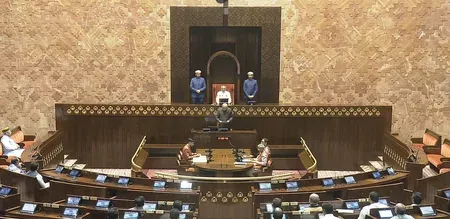
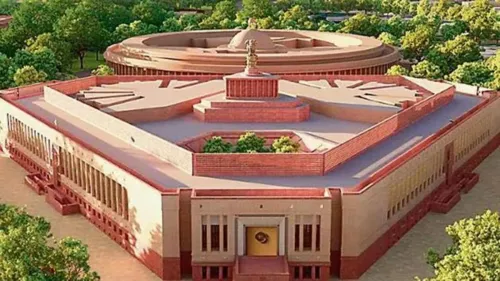
The Centre is set to introduce five new bills when the Monsoon Session of Parliament opens on Monday, 20 July 2026, covering a sweeping legislative agenda that spans income tax reform, Supreme Court expansion, MSME regulation, birth registration rules, and national honour laws. The session, the Eighth Session of the Eighteenth Lok Sabha, runs until 13 August 2026.
Key Bills Being Introduced
The Income-tax (Amendment) Bill, 2026 will replace an ordinance promulgated last month to shield India's sovereign debt market from global volatility. The ordinance — and now the proposed legislation — exempts foreign investors from income tax on interest earnings and capital gains from government securities, a move aimed at attracting overseas capital to ease pressure on the depreciating rupee amid the West Asia crisis, crude oil price swings, and supply chain disruptions.
The Supreme Court (Number of Judges) Amendment Bill, 2026 also replaces an ordinance, and seeks to raise the sanctioned strength of Supreme Court judges from 33 to 37, excluding the Chief Justice of India. The stated objective is faster disposal of the mounting backlog of pending cases before the apex court.
The Micro, Small and Medium Enterprises Development (Amendment) Bill, 2026 targets 'ease of doing business' reforms in the MSME sector, including a strengthened mechanism for addressing delayed payments — a persistent pain point for small businesses — and greater regulatory authority for state governments.
Birth Registration and National Honour Laws
The Registration of Births and Deaths (Amendment) Bill, 2026 proposes stricter and more streamlined rules for delayed registration under Section 13(3) of the original 1969 law, which was previously amended in 2023. The government argues the changes will tighten administrative compliance around vital statistics.
The Prevention of Insults to National Honour (Amendment) Bill, 2026 seeks to amend the 1971 Act, prescribing tougher penalties for acts that disrespect national symbols or are deemed to undermine national honour. This bill is expected to draw pointed debate from Opposition benches.
Bills Already Before Parliament
Beyond the five new introductions, the government will also take up two bills already pending before Parliament: the Foreign Contribution (Regulation) Amendment Bill, 2026, introduced in the Lok Sabha on 25 March 2026, and the Viksit Bharat Shiksha Adhishthan Bill, 2025, tabled on 15 December 2025 and since referred to a Joint Committee of Parliament. The government will additionally present the Demands for Supplementary Grants for 2022-23 for parliamentary discussion and voting.
Political Flashpoints and What to Watch
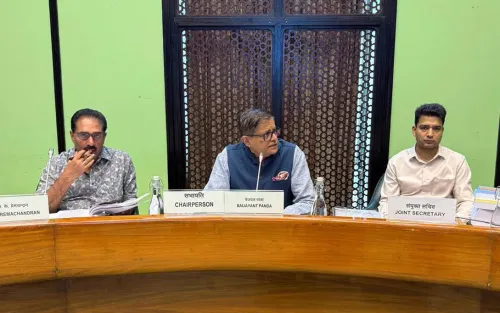
The session is expected to witness sharp exchanges between the treasury and Opposition benches. Leaders of Opposition parties in both Houses are scheduled to meet on the opening day to finalise a joint legislative strategy. Ahead of the session, the government convened an all-party meeting on 19 July to brief political parties on its legislative agenda.
Notably, there has been speculation that the government will proceed with Constitution Amendment Bills on delimitation and women's reservation only after it is confident of securing the requisite two-thirds majority — a threshold that remains uncertain given the current arithmetic in both Houses. How the government navigates that calculus will be among the most closely watched subplots of the session.
Point of View
Not just a monetary one, which is an unusual posture. The Supreme Court expansion to 37 judges is overdue by any measure, but adding four judges does little to address a backlog that runs into lakhs of cases; structural reforms to case management remain absent from the agenda. Most telling is what is not on the list: the delimitation and women's reservation Constitution Amendment Bills, quietly deferred until the numbers are certain. That caution reveals a coalition arithmetic that is tighter than official confidence suggests.
NationPress
18 Oct 2026
Frequently Asked Questions
What are the five new bills being introduced in the Monsoon Session 2026?
The five new bills are: the Income-tax (Amendment) Bill 2026, the Supreme Court (Number of Judges) Amendment Bill 2026, the MSME Development (Amendment) Bill 2026, the Registration of Births and Deaths (Amendment) Bill 2026, and the Prevention of Insults to National Honour (Amendment) Bill 2026. The session runs from 20 July to 13 August 2026.
Why is the Income-tax Amendment Bill 2026 being introduced?
The bill replaces an ordinance that exempted foreign investors from income tax on interest earnings and capital gains from Indian government securities. The objective is to attract global capital, support the sovereign debt market, and ease pressure on the depreciating rupee amid the West Asia crisis and global supply chain disruptions.
How many Supreme Court judges will there be if the amendment bill passes?
The Supreme Court (Number of Judges) Amendment Bill 2026 proposes raising the sanctioned strength from 33 to 37 judges, not counting the Chief Justice of India. The increase is intended to speed up disposal of pending cases at the apex court.
What does the MSME Amendment Bill 2026 change?
The Micro, Small and Medium Enterprises Development (Amendment) Bill 2026 aims to promote ease of doing business in the MSME sector by strengthening the mechanism for resolving delayed payments to small businesses and granting greater regulatory powers to state governments.
Will the Constitution Amendment Bills on delimitation and women's reservation be taken up this session?
According to reports, the government is expected to move ahead with these Constitution Amendment Bills only after it is confident of securing the requisite two-thirds majority in both Houses. No firm date has been announced, and they are not currently listed among the confirmed legislative business for the Monsoon Session.