Amit Shah lays foundation of world's largest Amul curd plant in Kolkata
Synopsis
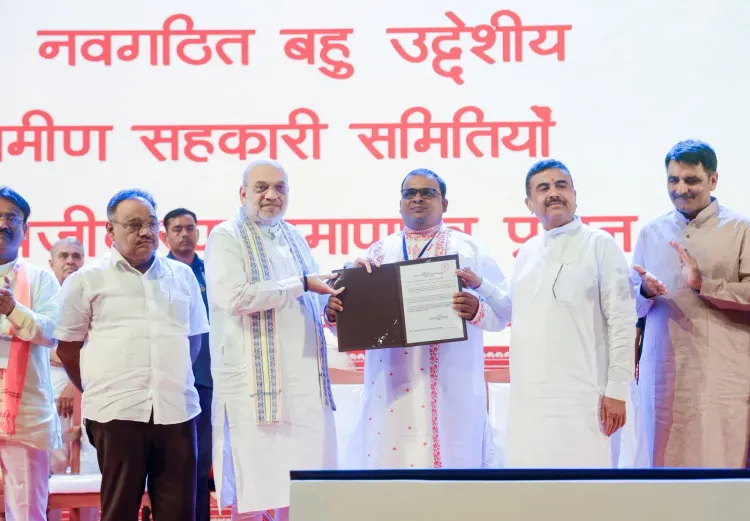
Union Home Minister Amit Shah laid the foundation stone of Amul's ₹700 crore world's largest curd plant in Kolkata on 20 July 2026. The facility will process over 10 lakh litres of milk daily and is projected to benefit 1.20 lakh dairy farmers. An e-RCS portal and a Bharat Taxi–West Bengal MoU were also launched at the event.
Key Takeaways
Amit Shah laid the foundation stone of Amul's world's largest curd plant in Kolkata on 20 July 2026 .
The plant will be built at a cost of ₹700 crore and will process more than 10 lakh litres of milk per day .
Approximately 1.20 lakh livestock farmers and dairy producers are expected to see an increase in income from the project.
The e-RCS portal was launched at the same event to strengthen digital governance in the cooperative sector.
A Memorandum of Understanding (MoU) was signed between Bharat Taxi and the West Bengal government .
The project extends the Amul cooperative dairy model into eastern India, building on a policy lineage dating to Operation Flood (1970) .
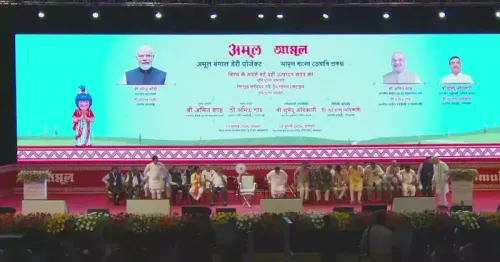
Union Home Minister and Minister of Cooperation Amit Shah on Sunday, 20 July 2026, laid the foundation stone of what is being described as the world's largest curd manufacturing plant by Amul, to be built in Kolkata at an estimated cost of ₹700 crore. The plant is designed to process more than 10 lakh litres of milk per day and is expected to benefit approximately 1.20 lakh livestock farmers and dairy producers across the region.
Context
Shah announced the development on X in a bilingual post in Hindi and Bengali, stating: 'Aaj Kolkata mein ₹700 crore ki lagat se banne wale Amul ke vishwa ke sabse bade dahi plant ka shilanyas kiya' ('Today I laid the foundation stone of Amul's world's largest curd plant to be built in Kolkata at a cost of ₹700 crore'). The post also noted the launch of the e-RCS portal and the signing of a Memorandum of Understanding (MoU) between 'Bharat Taxi' and the West Bengal government at the same event.
Kolkata, the capital of West Bengal, is a major commercial hub in eastern India and the chosen site for this large-scale dairy infrastructure investment. The event marks a significant push by the Union government to extend Amul's cooperative model into eastern India.
Policy Backdrop
Amul is the brand of the Gujarat Cooperative Milk Marketing Federation Ltd (GCMMF), India's largest dairy cooperative and a central outcome of Operation Flood, launched in 1970, which established the country's cooperative dairy model and vastly expanded milk procurement and processing capacity. The new Kolkata plant continues that tradition of scaling cooperative dairy infrastructure beyond Gujarat.
The Ministry of Cooperation, created in 2021 under Shah's charge, was specifically established to strengthen the cooperative sector — including dairy processing and farmer income initiatives. The ministry has since been instrumental in channelling investment and digital governance tools into cooperatives nationwide. The e-RCS portal launched at the same event reflects this emphasis on digital tools for cooperative administration.
Stakeholders and Impact
The primary beneficiaries of the plant are the estimated 1.20 lakh pashupalaks (livestock farmers) and dairy farmers whose milk procurement and income are expected to rise once the facility becomes operational. By integrating small producers into an organised, high-capacity value chain, the project aims to replicate in eastern India the income-stabilising benefits the Amul cooperative model has historically delivered in Gujarat and other western states.
The MoU signed between Bharat Taxi and the West Bengal government was a parallel development at the same event, signalling broader economic cooperation between the Union government-backed initiative and the state administration. The e-RCS portal is intended to strengthen digital governance within the cooperative framework, though its detailed operational scope has not yet been widely documented in public records.
What's Next
Attention will now shift to the pace of construction of the ₹700 crore facility and the timelines for it to become operational. Actual milk procurement volumes and direct farmer payouts will be the key metrics by which the project's impact on the 1.20 lakh intended beneficiaries will ultimately be measured.
The operationalisation of the e-RCS portal and the implementation of the Bharat Taxi–West Bengal MoU will also be closely watched as indicators of how these parallel announcements translate into on-ground outcomes. Broader expansion of the Amul model into other eastern and northeastern states could follow if the Kolkata project demonstrates strong procurement and income results.
Point of View
A state where the ruling party at the Centre has long sought greater political and economic influence. By anchoring a ₹700 crore investment that directly touches 1.20 lakh farmers, Shah is deploying the Ministry of Cooperation — his own portfolio — as an instrument of rural outreach in eastern India. The simultaneous launch of the e-RCS portal and the Bharat Taxi MoU signals that this event was designed as a multi-pronged showcase of cooperative-economy governance rather than a single infrastructure milestone. Taken together, these announcements fit a broader pattern of using cooperative sector expansion to build grassroots economic ties in states that remain politically competitive for the BJP.
NationPress
20 Jul 2026
Frequently Asked Questions
What is the Amul curd plant being built in Kolkata?
It is a dairy processing facility being developed by Amul at a cost of ₹700 crore in Kolkata. It is described as the world's largest curd plant and will process more than 10 lakh litres of milk per day once operational.
How many farmers will benefit from the Amul Kolkata plant?
Approximately 1.20 lakh livestock farmers and dairy producers are expected to see an increase in their income as a result of higher milk procurement through the new facility.
What is the e-RCS portal launched by Amit Shah?
The e-RCS portal was launched at the same Kolkata event as a digital governance tool for the cooperative sector under the Ministry of Cooperation. Its detailed operational scope has not yet been fully documented in public records.
What is the Bharat Taxi MoU signed with the West Bengal government?
An MoU was signed between Bharat Taxi and the West Bengal government at the same event in Kolkata on 20 July 2026. Further operational details of the agreement have not yet been publicly documented.
Why is Amul expanding into West Bengal?
The expansion is part of a broader policy to extend India's cooperative dairy model beyond its traditional base in Gujarat into eastern states, aiming to raise milk procurement volumes and rural incomes for farmers in those regions.