CM Fadnavis chairs meeting on DELTA Act draft for land digitisation
Synopsis
Chief Minister Devendra Fadnavis chaired a meeting at Sahyadri Guest House, Mumbai on 20 July 2026 to review the draft of the proposed DELTA Act — Maharashtra's legislation to digitise land records and introduce a token asset framework — with MoS Madhuri Misal and senior officials in attendance.
Key Takeaways
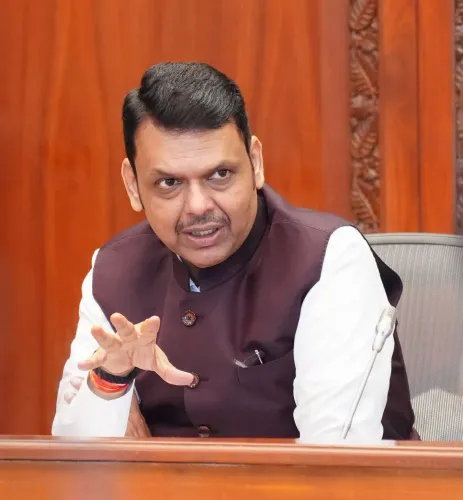
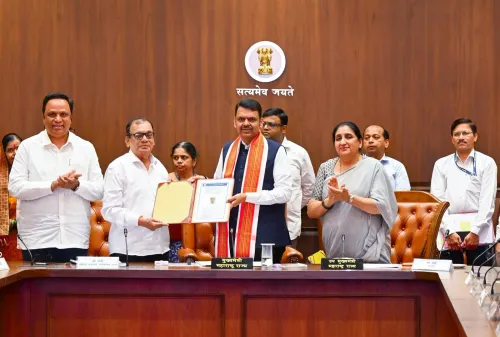
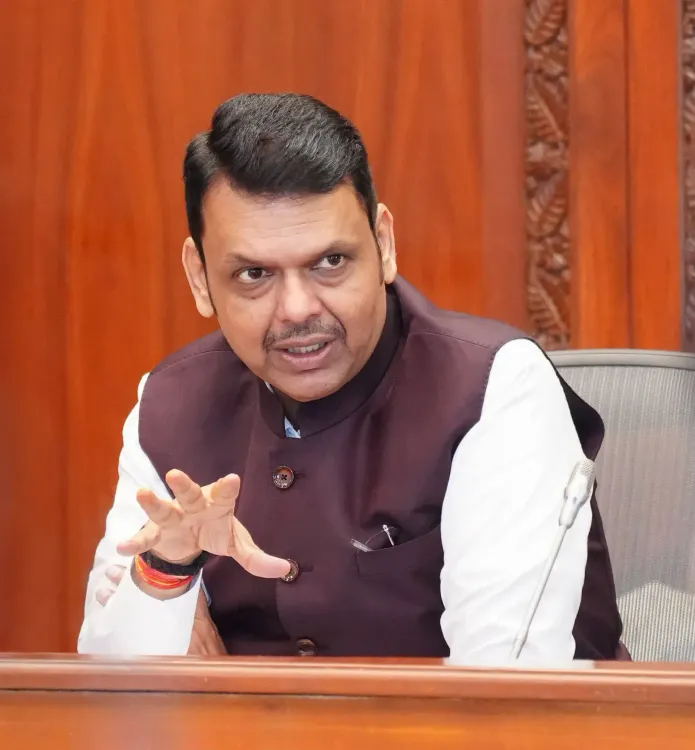
Chief Minister Devendra Fadnavis chaired a meeting on 20 July 2026 at Sahyadri Guest House, Mumbai to review the draft of the proposed DELTA Act .
The Maharashtra Digitisation and Exchange of Land Token Asset Act (DELTA Act) aims to modernise land records through digitisation and a token asset framework.
Minister of State Madhuri Misal and senior government officials attended the meeting.
The legislation is still in its draft stage; introduction in the Maharashtra Legislative Assembly is the next key milestone.
The DELTA Act builds on the national NLRMP (2008) and Digital India (2015) mandates for land records computerisation.
Key beneficiaries include landowners, farmers, and revenue officials across Maharashtra.
The Chief Minister's Office of Maharashtra announced on Monday, 20 July 2026 that Chief Minister Devendra Fadnavis chaired a high-level meeting at Sahyadri Guest House, Mumbai to review the draft of the proposed Maharashtra Digitisation and Exchange of Land Token Asset Act, widely referred to as the DELTA Act. Minister of State Madhuri Misal and senior government officials were present at the meeting, which was held at 1:05 PM.
Context
The DELTA Act is a proposed Maharashtra legislation aimed at modernising the state's land records system through digitisation and the introduction of a token asset framework for land. The draft review signals that the state government is advancing the bill towards its eventual introduction in the Maharashtra Legislative Assembly. The meeting brought together key decision-makers to examine the contours of what could be a significant overhaul of how land ownership and transactions are recorded and exchanged in the state.
Policy Backdrop
Maharashtra's push for land digitisation is rooted in a longer national policy arc. The central government launched the National Land Records Modernization Programme (NLRMP) in 2008 to computerise land records across all states, and the Digital India initiative announced in 2015 further accelerated the drive to digitise government records, including property and land data. Maharashtra has pursued successive computerisation drives under its revenue department, and the DELTA Act appears to build on that foundation by introducing the concept of a digital token asset — aligning with wider state-level exploration of digital land registries.
Chief Minister Fadnavis, who previously served as Maharashtra's Chief Minister from 2014 to 2019, has a track record of prioritising infrastructure and administrative reform. His renewed focus on land digitisation in his current term reflects continuity in the state's e-governance agenda.
Stakeholders and Impact
The DELTA Act, if enacted, would directly affect landowners, farmers, and revenue officials across Maharashtra. For farmers and small landowners, a digitised and tokenised land record system could reduce the risk of disputes, fraudulent mutations, and delays in title verification. Revenue officials would be expected to operate through a modernised digital interface, potentially reducing manual record-keeping and associated errors.
The introduction of a 'token asset' concept in land administration is a relatively novel approach at the state level in India, and its precise provisions remain under deliberation. The presence of MoS Madhuri Misal alongside senior officials suggests a cross-departmental approach to finalising the draft before it moves to the legislative stage.
What's Next
The immediate next step to watch is the formal introduction of the DELTA Act bill in the Maharashtra Legislative Assembly, followed by any notification of rules for implementation. The draft review meeting indicates the legislation is still in its formative stage, with stakeholder consultations and legal vetting likely preceding a tabling in the House. How the state defines and operationalises the 'land token asset' concept will be critical to the law's eventual scope and impact on Maharashtra's land administration ecosystem.
Point of View
A domain where Maharashtra has historically moved in incremental steps under successive national and state digitisation mandates. The inclusion of a 'token asset' framework for land is a conceptually ambitious step that, if well-designed, could place Maharashtra ahead of most Indian states in digital land governance. However, the devil will lie in the draft's definitions and the state's capacity to enforce the new framework at the taluka level, where land disputes are most acute. The meeting's composition — the CM, an MoS, and senior officials — also suggests the government is treating this as a cross-departmental priority rather than a purely revenue department exercise.
NationPress
21 Jul 2026
Frequently Asked Questions
What is the DELTA Act in Maharashtra?
The DELTA Act stands for the Maharashtra Digitisation and Exchange of Land Token Asset Act, a proposed state legislation aimed at modernising land records through digitisation and introducing a digital token asset system for land ownership and transactions.
Who chaired the DELTA Act meeting on 20 July 2026?
Chief Minister Devendra Fadnavis chaired the meeting at Sahyadri Guest House, Mumbai, with Minister of State Madhuri Misal and senior officials also present.
What is the purpose of the DELTA Act for farmers and landowners?
The DELTA Act is expected to benefit farmers and landowners by digitising land records, reducing disputes, preventing fraudulent mutations, and enabling easier online access to title and ownership information.
Has the DELTA Act been passed in the Maharashtra Legislative Assembly?
As of the 20 July 2026 meeting, the DELTA Act is still in its draft review stage and has not yet been introduced or passed in the Maharashtra Legislative Assembly.
How does the DELTA Act relate to India's national land digitisation policy?
The DELTA Act builds on the central government's National Land Records Modernization Programme launched in 2008 and the Digital India initiative of 2015, both of which pushed states to computerise and digitise land and property records.