CM Fadnavis Proposes DELTA Act to Tokenise Maharashtra Property

Synopsis
Maharashtra CM Devendra Fadnavis chaired a meeting on the draft DELTA Act on 20 July 2026, directing officials to build a blockchain-based framework for property tokenisation. An expert committee including SEBI, BSE, and NSE representatives will be constituted to draft comprehensive legislation, aiming to make Maharashtra the first Indian state with such a law.
Key Takeaways
CM Devendra Fadnavis chaired a meeting on 20 July 2026 in Mumbai on the draft DELTA Act (Maharashtra Digitisation and Exchange of Land Token Asset Act).
The Act proposes blockchain-based tokenisation of immovable properties to unlock latent value for public benefit.
An expert committee with representatives from SEBI , BSE , and NSE will be constituted to prepare a comprehensive legislative framework.
The initiative is linked to Maharashtra's target of becoming a US$1 trillion economy by 2030 .
Officials have been directed to study global best practices; Maharashtra aims to be the first Indian state to enact such legislation.
MoS Madhuri Misal and senior state officials were present at the meeting.
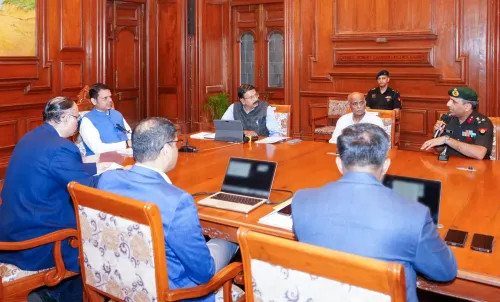
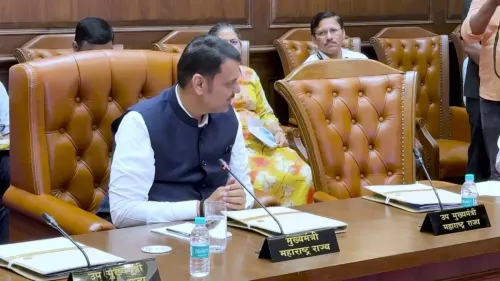
Maharashtra Chief Minister Devendra Fadnavis on Monday, 20 July 2026, chaired a high-level meeting in Mumbai to deliberate on the draft of 'The Maharashtra Digitisation and Exchange of Land Token Asset Act' — popularly referred to as the DELTA Act — a proposed legislation that would make Maharashtra the first Indian state to introduce a blockchain-based framework for immovable property tokenisation.
Context
Fadnavis directed state officials to formally propose the DELTA Act as a mechanism to 'unlock and harness the latent value embedded in immovable properties for public benefit.' The meeting was attended by Minister of State Madhuri Misal and senior government officials. The Chief Minister also directed officials to constitute an expert committee comprising representatives from SEBI, BSE, and NSE, alongside experienced professionals and domain experts, to prepare a comprehensive legislative framework.
The proposed legislation sits within Maharashtra's broader ambition of becoming a US$1 trillion economy by 2030. Fadnavis has framed revenue diversification — rather than increased taxation — as a central pillar of that journey, with property tokenisation positioned as a new source of public revenue.
Policy Backdrop
India's push to digitise land records dates to the Digital India Land Records Modernization Programme, initiated in 2008, which laid the groundwork for state-level digitisation efforts including those in Maharashtra. The national blockchain strategy articulated by the Ministry of Electronics and Information Technology around 2020 further opened the door for pilots linking land administration to distributed ledger technology.
Under the DELTA Act framework as described by Fadnavis, immovable properties would be tokenised using blockchain technology, with transactions carried out through tokens linked to the value of those properties. The entire ecosystem would function through a fully digital, blockchain-enabled platform. Officials have been directed to study global laws, regulations, and best practices from jurisdictions that have already piloted real-estate tokenisation.
Global experiments in markets such as the United States and Singapore have demonstrated fractional ownership models where tokenised real estate allows a broader pool of investors to hold stakes in high-value properties — a model Maharashtra appears to be drawing on as it drafts its own legislation.
Stakeholders and Impact
The primary beneficiaries identified under the proposed framework include property owners, real estate investors, and the state revenue department, which stands to gain new, non-tax revenue streams from the tokenised property ecosystem. Fractional ownership enabled by tokenisation could also open real estate investment to retail participants who previously lacked access to high-value assets.
SEBI, as India's capital markets regulator, would play a pivotal role in determining how property-backed tokens are classified, traded, and supervised. The inclusion of BSE and NSE representatives in the proposed expert committee signals that the state envisions these tokens operating within — or alongside — existing regulated market infrastructure.
The initiative also carries implications for reducing property disputes, a long-standing challenge in Maharashtra, by creating an immutable digital record of ownership and transactions on the blockchain.
What's Next
The immediate milestones to watch are the formal constitution of the expert committee and the release of a draft bill for public consultation or introduction in the Maharashtra state assembly. Any regulatory notifications from SEBI on the legal treatment of property-backed tokens will be equally consequential in determining how quickly the framework can become operational.
Fadnavis framed the initiative as part of 'Maharashtra's legacy of bold policy reforms,' indicating political will at the highest level of the state government. If the legislation moves forward, Maharashtra would set a precedent that other Indian states could follow — positioning the state as a pioneer in fintech-enabled governance at a time when sub-national governments across the country are exploring innovative instruments to meet ambitious growth targets.
Point of View
BSE, and NSE, Fadnavis is framing a complex fintech idea in the language of mainstream economic governance — reducing the political risk of a novel policy. The move fits a broader pattern of Indian sub-national governments competing to attract investment through regulatory innovation rather than fiscal incentives alone. Whether the legislation advances swiftly will depend heavily on SEBI's willingness to define a regulatory category for property-backed tokens, making the central regulator a de facto co-author of Maharashtra's ambition.
NationPress
20 Oct 2026
Frequently Asked Questions
What is the Maharashtra DELTA Act?
The DELTA Act — Maharashtra Digitisation and Exchange of Land Token Asset Act — is a proposed state law that would enable immovable properties to be tokenised using blockchain technology, allowing transactions through digital tokens linked to property value.
How does property tokenisation work under the DELTA Act?
Under the proposed framework, physical immovable properties are represented as digital tokens on a blockchain. These tokens can be transacted digitally, potentially allowing fractional ownership and creating new revenue streams without traditional property sales.
Why is Maharashtra introducing the DELTA Act?
CM Devendra Fadnavis has linked the Act to Maharashtra's goal of becoming a US$1 trillion economy by 2030, positioning property tokenisation as a new, non-tax source of public revenue and a tool to unlock latent value in real estate.
Which regulators are involved in the DELTA Act expert committee?
Fadnavis directed officials to constitute a committee with representatives from SEBI, BSE, and NSE, alongside domain experts, to prepare the comprehensive legislative framework for the Act.
Will Maharashtra be the first state in India to tokenise property?
That is the stated aim. Fadnavis directed officials to study global laws and best practices so that Maharashtra becomes the first Indian state to introduce legislation of this nature.