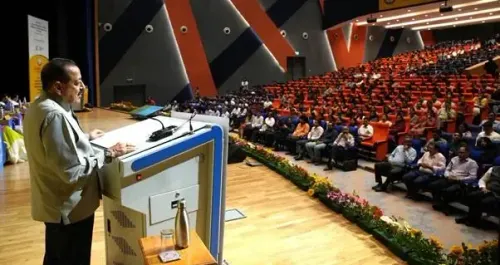
India-Germany Green AI workshop at IIT Delhi targets energy-efficient healthcare models
Synopsis
India and Germany are betting that the next leap in healthcare AI should be greener, not just smarter. A two-day bilateral workshop at IIT Delhi — backed by the IGSTC — brought 30 experts together to design energy-efficient AI for medical imaging, mental health, and multilingual care, setting a roadmap that could reframe how both nations deploy AI in resource-constrained health systems.
Key Takeaways
IIT Delhi hosted the Indo-German Bilateral Workshop on Green AI for Healthcare and Mental Wellness on 4 September .
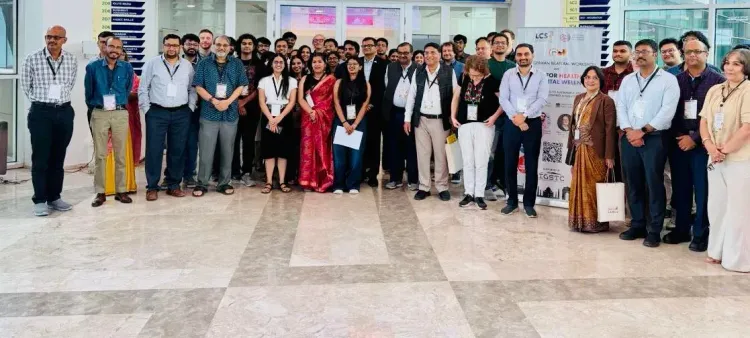
30 experts and early-career researchers from India and Germany participated across keynotes, technical sessions, and panels.
The workshop was sponsored by the Indo-German Science and Technology Centre (IGSTC) , a joint initiative of India's Department of Science and Technology (DST) and its German counterpart.
Focus areas included medical imaging , clinical decision support , mental health , and multilingual healthcare .
Participants committed to a roadmap for joint research, innovation, and capacity-building; concrete project announcements are expected in the coming months.
IIT Delhi hosted a two-day Indo-German Bilateral Workshop on Green AI for Healthcare and Mental Wellness on 4 September, bringing together 30 experts and early-career researchers to advance sustainable, energy-efficient artificial intelligence models for real-world healthcare deployment. The event, sponsored by the Indo-German Science and Technology Centre (IGSTC), laid the groundwork for structured cross-border collaboration on responsible AI in medicine and mental health.
Key Developments
The workshop drew keynotes, technical sessions, panel discussions, and poster presentations focused on reducing the environmental footprint of generative AI while expanding its healthcare applications. Participants examined AI use cases spanning medical imaging, clinical decision support, mental health, and multilingual healthcare delivery — areas where both India and Germany bring complementary research strengths.
The IGSTC is a flagship joint initiative established by India's Department of Science and Technology (DST) and its German counterpart, making this workshop an extension of a long-standing bilateral science diplomacy framework.
What the Organisers Said
Dr. Kusumita Arora, Director of IGSTC, said the centre aims to 'catalyse deeper Indo-German collaboration, bringing together complementary strengths to address shared challenges in Green AI, healthcare and mental wellness.' She expressed hope that the partnerships forged at the workshop will 'translate into sustainable innovations with real-world impact.'
Prof. Tanmoy Chakraborty of IIT Delhi framed the broader ambition: 'The next frontier of AI is not simply about building larger models, but about building intelligent systems that are efficient, sustainable, trustworthy, and accessible. Healthcare and mental wellness provide an important opportunity to turn this vision into real societal impact.'
Scope and Objectives
Beyond technical exchange, the workshop set out to identify infrastructural, regulatory, and ethical challenges in deploying AI across diverse healthcare settings — a critical concern given the vast differences in digital health infrastructure between the two countries. Fostering academic, clinical, and industry linkages between India and Germany was an explicit goal, as was drafting a roadmap for joint research, innovation, and capacity-building initiatives.
Notably, the emphasis on 'Green AI' — building models that consume less energy without sacrificing accuracy — reflects a growing global concern that large AI systems carry a substantial carbon cost. Applying this lens to healthcare, where resource constraints are acute in low- and middle-income settings, adds a dimension of equity to what is typically a purely technical debate.
What Comes Next
The workshop concluded with commitments to pursue joint research proposals and capacity-building programmes under the IGSTC framework. Concrete project announcements are expected in the months ahead as the bilateral roadmap is formalised. The initiative signals an intent to position India as a serious partner in shaping the global governance and design of sustainable AI — not merely a consumer of models built elsewhere.
Point of View
They will only serve wealthy hospitals, deepening existing disparities. The Indo-German pairing is strategically sound — Germany brings regulatory rigour and clinical AI maturity; India brings scale, diversity of patient data, and multilingual complexity. The real measure of this workshop's success will be whether the IGSTC roadmap produces funded, peer-reviewed joint projects within 18 months, or whether it joins the long list of bilateral science communiqués that generate goodwill without generating research.
NationPress
19 Oct 2026
Frequently Asked Questions
What was the Indo-German Green AI workshop at IIT Delhi about?
The two-day workshop, held on 4 September at IIT Delhi, focused on developing sustainable, energy-efficient AI models for healthcare and mental wellness. It brought together 30 experts from India and Germany to exchange knowledge on responsible AI deployment in medical settings.
Who sponsored the Green AI workshop at IIT Delhi?
The workshop was sponsored by the Indo-German Science and Technology Centre (IGSTC), a flagship bilateral initiative established jointly by India's Department of Science and Technology (DST) and its German counterpart.
What healthcare applications were discussed at the workshop?
Participants examined AI applications in medical imaging, clinical decision support, mental health, and multilingual healthcare delivery — areas where both countries have active research programmes.
Why does 'Green AI' matter for healthcare?
Green AI refers to building AI systems that are energy-efficient and sustainable, reducing the carbon cost of large models. In healthcare, this matters because resource-constrained settings — common across much of India — cannot afford to run computationally expensive AI systems, making efficiency a prerequisite for equitable deployment.
What are the next steps following the workshop?
The workshop concluded with a commitment to draft a roadmap for joint research, innovation, and capacity-building under the IGSTC framework. Concrete collaborative project announcements are expected in the months ahead as the bilateral agenda is formalised.