India's first geothermal wells in Ladakh power Net Zero 2070 push
Synopsis
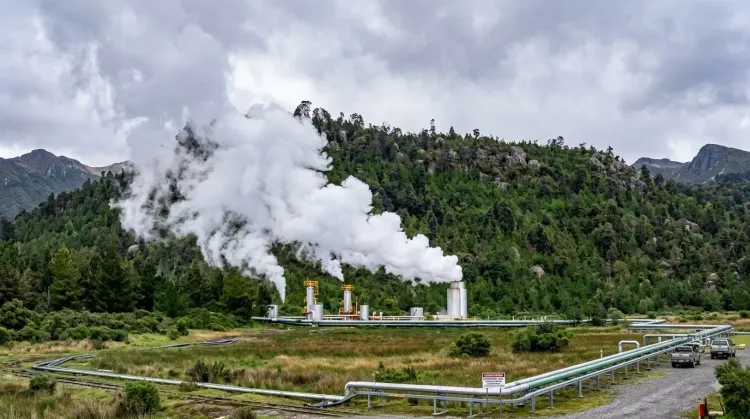
India's clean energy story just got a new chapter. With two 1,000-metre wells drilled in Ladakh's Puga Valley, the country has made its first concrete move into geothermal power — a round-the-clock, low-carbon source that solar and wind cannot match. At a theoretical potential of 10,600 MW across 10 provinces, the real question is how fast reservoir data turns into commercial electricity.
Key Takeaways
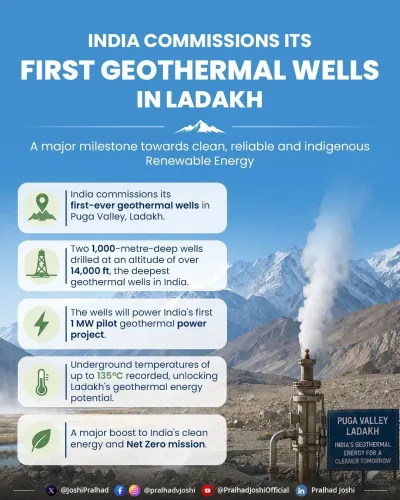
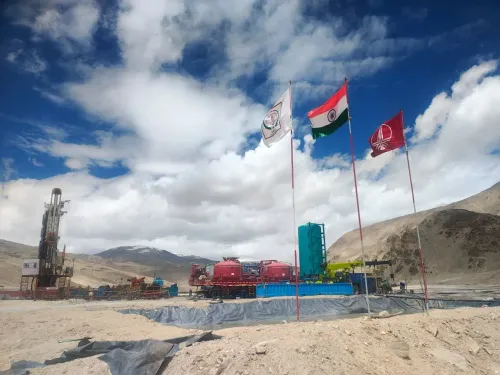
ONGC Energy Centre commissioned India's first two geothermal wells in Puga Valley, Ladakh in July 2026 .
The wells are each 1,000 metres deep and will support reservoir evaluation ahead of a 1-MW demonstration power project .
The government notified the National Policy on Geothermal Energy in September 2025 , with MNRE as the nodal ministry.
The Geological Survey of India (GSI) has mapped 381 hot springs and identified 10 geothermal provinces across India.
India's theoretical geothermal potential stands at nearly 10,600 MW , with 42 sites flagged as promising for power and direct heat use.
Geothermal energy supports India's Net Zero by 2070 target by providing dispatchable, round-the-clock low-carbon power.
India took a landmark step in its clean energy transition when ONGC Energy Centre commissioned the country's first two geothermal wells in Puga Valley, Ladakh, in July 2026, according to a government factsheet released on 4 September 2026. The development positions geothermal energy as a critical pillar of India's drive toward Net Zero emissions by 2070.
The Puga Valley Milestone
Situated at an elevation of over 14,000 feet above sea level, Puga Valley is among India's most geothermally active sites, long recognised for its hot springs and subsurface heat reserves. The two newly drilled wells, each reaching 1,000 metres below ground, will initially support reservoir evaluation studies. They also lay the groundwork for India's first 1-megawatt demonstration geothermal power project — the country's formal entry into geothermal electricity generation.
Policy Framework Behind the Push
The commissioning follows the government's notification of the National Policy on Geothermal Energy in September 2025, which established a structured roadmap for exploring and developing India's geothermal reserves. The Ministry of New and Renewable Energy (MNRE) serves as the nodal ministry for implementation, signalling institutional commitment at the highest level of the energy bureaucracy.
How Geothermal Power Works
Unlike solar and wind, geothermal energy delivers round-the-clock, low-carbon power — a significant advantage for grid stability. Deep wells extract hot water and steam trapped beneath the Earth's surface; the steam drives a turbine connected to a generator in a process similar to conventional thermal generation, but without fuel combustion. After power generation, used water is condensed and reinjected into the reservoir, supporting resource replenishment and long-term sustainability.
Beyond electricity, geothermal heat supports direct-use applications including district heating, agriculture, aquaculture, and space heating and cooling — broadening its economic value well beyond the power sector.
India's Geothermal Resource Base
The Geological Survey of India (GSI) has mapped 381 hot springs across the country and identified 10 geothermal provinces, spanning the Himalayan belt, the Andaman and Nicobar Islands, the Son-Narmada-Tapi (SONATA) corridor, the West Coast, Cambay Graben, Aravalli, Mahanadi, Godavari, South Indian Cratonic regions, and the Naga-Lusai belt. India's theoretical geothermal resource potential stands at nearly 10,600 MW, with 42 sites identified as promising for power generation and direct heat use.
What Comes Next
Growing pilot projects and deepening international collaborations are expected to expand geothermal applications into geo-tourism and agri-processing, according to the government statement. With the policy architecture now in place and the first wells drilled, the sector's trajectory will depend on how quickly reservoir data from Puga Valley translates into a commercially viable demonstration plant — and whether that proof-of-concept unlocks private investment at scale.
Point of View
Yet commercial development barely moved. The Puga Valley wells are a genuine first step, but a 1-MW demonstration project in a sector that requires hundreds of megawatts to matter is a proof-of-concept, not a transition. The harder test is whether the National Policy on Geothermal Energy can attract private capital and international technology partners fast enough to make a dent in India's energy mix before 2070 becomes an inconvenient deadline. With solar and wind already crowding the investment landscape, geothermal needs a differentiated policy pitch — one that monetises its baseload advantage, not just its novelty.
NationPress
4 Sept 2026
Frequently Asked Questions
What is the significance of India's first geothermal wells in Ladakh?
The two wells drilled in Puga Valley, Ladakh in July 2026 mark India's first concrete step into geothermal power generation. They will support reservoir evaluation and pave the way for a 1-MW demonstration geothermal power project — the country's first.
What is India's geothermal energy potential?
India has a theoretical geothermal resource potential of nearly 10,600 MW, according to the Geological Survey of India. The GSI has mapped 381 hot springs and identified 10 geothermal provinces, with 42 sites considered promising for power generation and direct heat use.
What is the National Policy on Geothermal Energy?
The National Policy on Geothermal Energy, notified by the government in September 2025, provides a roadmap for exploring and developing India's geothermal resources. The Ministry of New and Renewable Energy (MNRE) is the nodal ministry for its implementation.
Why is geothermal energy important for India's Net Zero 2070 goal?
Unlike solar and wind, geothermal energy provides round-the-clock, low-carbon power, making it a reliable baseload source that can complement intermittent renewables. Its ability to support direct heat applications in agriculture, aquaculture, and district heating adds further value to India's clean energy transition.
Which regions in India have geothermal potential?
India's 10 identified geothermal provinces span the Himalayan belt, Naga-Lusai, Andaman and Nicobar Islands, the Son-Narmada-Tapi (SONATA) corridor, the West Coast, Cambay Graben, Aravalli, Mahanadi, Godavari, and South Indian Cratonic regions.