Karnataka Dy CM Parameshwara questions GDP growth: India needs jobs, higher incomes
Synopsis
Karnataka Deputy CM Parameshwara has delivered a pointed rebuke of India's GDP growth story — flagging that India's per-capita income of $2,813 trails Bangladesh's $2,911, that the merchandise trade deficit hit $333 billion in 2025-26, and that seven-to-eight per cent growth is failing to reach graduates, workers, and ordinary families.
Key Takeaways
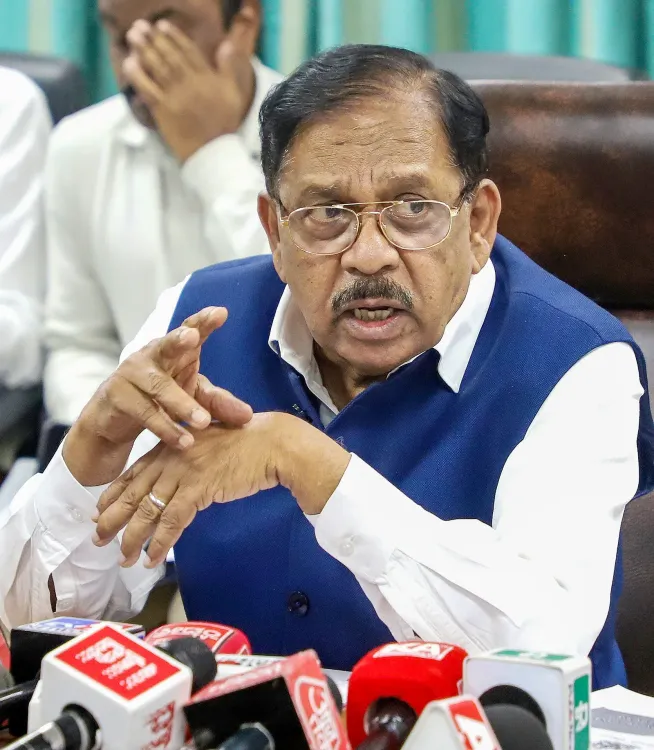
Karnataka Deputy CM G.
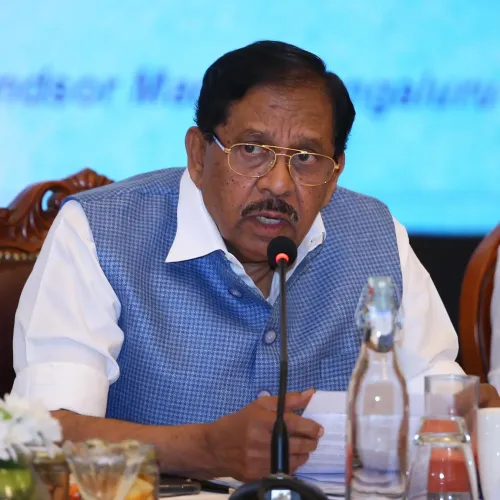
Parameshwara on 4 September challenged the Centre's GDP growth narrative, calling for growth that improves incomes and jobs.
India's per-capita GDP is estimated at $2,813 in 2026, according to IMF data — lower than Bangladesh's $2,911 .
India's merchandise trade deficit reached $333.19 billion in 2025-26 ; the current account deficit stood at $4.2 billion in Q1 2026-27.
Parameshwara questioned the GDP base year revision from 2011-12 to 2022-23 and called for independent scrutiny of growth figures.
He urged a focus on MSME growth, manufacturing jobs, and higher wages rather than headline GDP numbers.
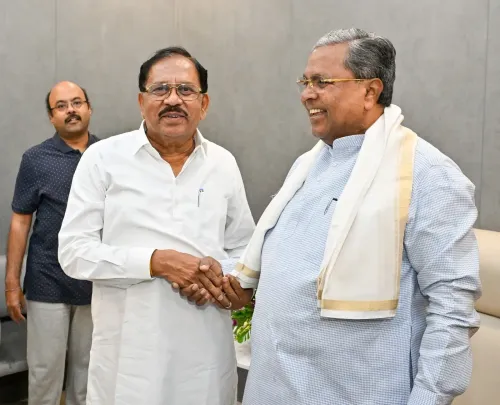
Karnataka Deputy Chief Minister G. Parameshwara on Friday, 4 September challenged the Centre's emphasis on India's high GDP growth, arguing that macroeconomic expansion must translate into tangible gains — better employment, higher wages, and greater economic security — for ordinary citizens, not merely a favourable headline number.
The Core Argument
In a formal statement titled 'India Needs Growth That Reaches Every Indian, Not Just a GDP Number', Parameshwara said a strong GDP figure alone cannot serve as a certificate of national prosperity. He urged the Union government to address structural concerns around employment generation, per-capita income, manufacturing capacity, and household purchasing power.
Parameshwara also questioned the implications of India's recent revision of the GDP base year from 2011-12 to 2022-23, noting changes in methodology, data sources, and estimation techniques. He called for greater transparency and independent scrutiny of growth figures, particularly those benchmarked against the Covid-19-induced economic contraction.
The Per-Capita Income Gap
Citing IMF estimates, Parameshwara pointed out that India's per-capita GDP stands at approximately $2,813 in 2026 — lower than Bangladesh's estimated $2,911. He argued this disparity exposes the limits of using aggregate GDP as a measure of living standards.
He questioned what seven to eight per cent annual growth meant in practice for young graduates unable to find jobs matching their qualifications, for families under pressure on purchasing power, and for workers trapped in low-paid or insecure employment.
Trade Deficits and External Vulnerabilities
The Deputy Chief Minister raised concerns over India's external economic position, citing a current account deficit of $4.2 billion and a merchandise trade deficit of $86.1 billion in the first quarter of 2026-27. He noted that the merchandise trade deficit reached $333.19 billion in 2025-26, leaving the country exposed to oil price volatility, geopolitical disruptions, and import dependence.
Parameshwara also questioned continued reliance on imports in critical sectors despite the Centre's 'Make in India' and 'Atmanirbhar Bharat' initiatives, arguing that genuine economic growth must also reinforce India's economic sovereignty.
What India Needs, According to Parameshwara
Calling for a shift toward employment-oriented growth, he said India required manufacturing capable of generating millions of jobs, stronger MSMEs, higher wages, and expanded opportunities for educated youth. He held up Karnataka's own economic record — driven by technology, innovation, human capital, and global integration — as a model for what sustained, inclusive growth could look like.
'India does not merely need a higher GDP. India needs higher incomes, better jobs, stronger exports, competitive manufacturing and economic security,' Parameshwara said. The real measure of progress, he added, should be whether growth is inclusive and sustainable and improves the lives of ordinary Indians — not just what the headline GDP figure reads.
Political Context
The statement represents a direct political challenge from a senior Congress-led state government to the Bharatiya Janata Party (BJP)-led Centre's economic narrative. It comes as the Union government has highlighted India's status as one of the world's fastest-growing major economies, a claim Parameshwara does not dispute but contextualises sharply with distributional and structural concerns. This is part of a broader pattern of opposition-ruled states pushing back on the Centre's growth messaging ahead of electoral cycles.
Point of View
But opposition leaders have also been selective in invoking it. The deeper question — whether India's growth is generating quality employment at scale — is one that economists across the political spectrum have raised, and one the Centre has yet to answer with granular, verifiable data.
NationPress
4 Sept 2026
Frequently Asked Questions
What did Karnataka Deputy CM Parameshwara say about India's GDP growth?
Parameshwara said that India's high GDP growth must translate into better jobs, higher incomes, and greater economic security for ordinary citizens, not just a favourable headline number. He issued a formal statement arguing that a GDP figure alone cannot be treated as a certificate of national prosperity.
How does India's per-capita income compare to Bangladesh?
According to IMF estimates cited by Parameshwara, India's per-capita GDP stands at approximately $2,813 in 2026, which is lower than Bangladesh's estimated $2,911. He used this comparison to highlight the limits of using aggregate GDP as a measure of living standards.
What concerns did Parameshwara raise about India's trade position?
He cited a merchandise trade deficit of $333.19 billion in 2025-26 and a current account deficit of $4.2 billion in the first quarter of 2026-27. He also flagged continued import dependence in critical sectors despite the Centre's Make in India and Atmanirbhar Bharat initiatives.
Why did Parameshwara question the GDP base year revision?
He raised concerns about the revision of India's GDP base year from 2011-12 to 2022-23, along with changes in methodology, data sources, and estimation techniques. He called for greater transparency and independent scrutiny, particularly of growth rates measured against the Covid-19-era economic contraction.
What kind of growth does Parameshwara say India needs?
He called for employment-oriented growth driven by manufacturing that generates millions of jobs, stronger MSMEs, higher wages, and expanded opportunities for educated youth. He said the real measure of economic progress should be whether growth is inclusive, sustainable, and improves the lives of ordinary Indians.