Amit Shah Breaks Ground for World's Largest Curd Plant in Bengal
Synopsis
Union Home Minister Amit Shah on 19 July 2026 announced the groundbreaking of the world's largest curd production plant in West Bengal, aimed at distributing mishti doi nationally. The project aligns with the Ministry of Cooperation's push to modernise dairy infrastructure in eastern India through the cooperative model.
Key Takeaways
The bhoomi pujan (groundbreaking) of the world's largest curd production plant was held in West Bengal on 19 July 2026 .
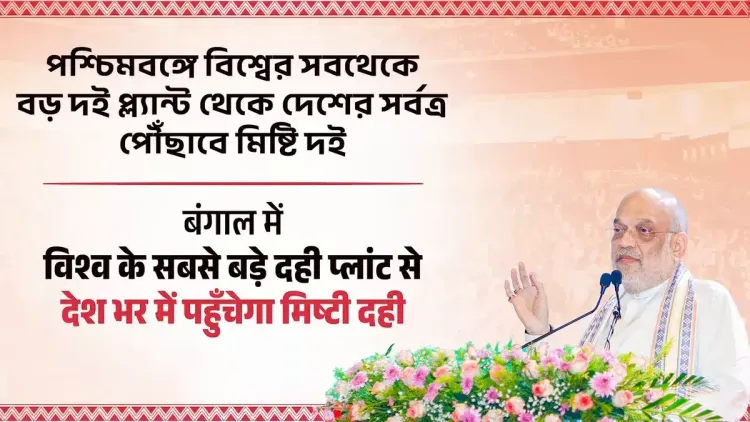
Union Home Minister Amit Shah announced the development via a bilingual Hindi-Bengali post on X.
The plant is intended to supply mishti doi (sweet curd) across India .
The project falls under the mandate of the Ministry of Cooperation , which Shah heads alongside the Home Ministry.
The Dairy Processing and Infrastructure Development Fund (DIDF) , launched in 2017–18 , provides the policy framework for such investments.
West Bengal has been prioritised as per capita milk availability in the state remains below the national average.
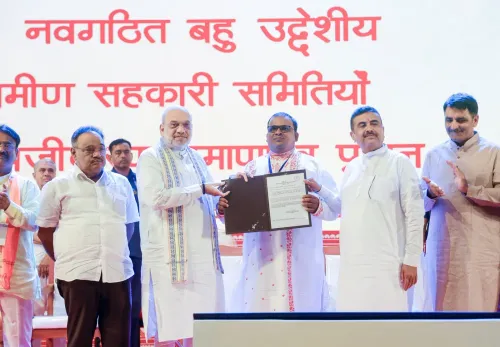
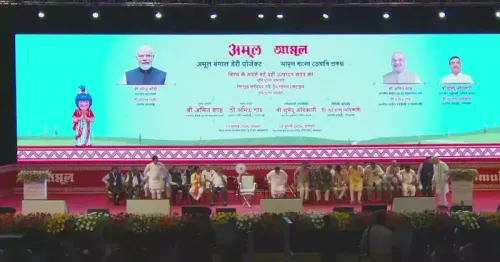
Union Home Minister Amit Shah on Sunday, 19 July 2026 announced the groundbreaking ceremony — bhoomi pujan — of what is being described as the world's largest curd production plant in West Bengal, a facility intended to supply mishti doi (sweet curd) across the country.
Context
Posting in both Hindi and Bengali, Shah wrote: 'Bengal mein aaj vishwa ke sabse bade dahi utpadan plant ka bhoomi pujan hua, jahan se desh bhar mein mishti dahi pahunchega' — 'Today in Bengal, the bhoomi pujan of the world's largest curd production plant was held, from where mishti doi will reach every corner of the country.' The bilingual post — addressing audiences in both languages — underscores the political and cultural significance of the announcement for West Bengal, a state with a deep-rooted tradition of sweet dairy products.
As Union Minister of Cooperation, Shah oversees the cooperative sector, which includes dairy processing infrastructure. The groundbreaking marks a significant step in the central government's push to modernise organised dairy processing in eastern India.
Policy Backdrop
The Ministry of Cooperation, established in July 2021, was created specifically to give dedicated policy focus to India's cooperative movement — including dairy. The ministry has since worked to channel investment into processing infrastructure in states where organised dairy capacity has historically lagged.
The Dairy Processing and Infrastructure Development Fund (DIDF), launched in 2017–18, provides a policy and financing backbone for exactly such projects — modernising milk processing capacity and linking smallholder producers to value-added product markets. West Bengal, where per capita milk availability remains below the national average, has been identified as a priority region under this broader push to reduce regional imbalances in dairy processing.
Stakeholders and Impact
West Bengal's dairy cooperative network and smallholder milk producers stand to benefit directly if the plant is linked to local milk procurement. The facility's stated national distribution ambition — supplying mishti doi across India — could open new income channels for the state's farmers while placing a culturally iconic Bengali product on a pan-India organised retail footing.
The cooperative model, central to the ministry's approach, is designed to ensure that value addition at the processing stage translates into better returns for producers rather than being captured entirely by private intermediaries. If the plant operates under a cooperative structure, it would align with the government's stated goal of increasing farmers' share of consumer spending on dairy.
What's Next
Attention will now turn to the plant's construction timeline, its installed processing capacity, and the mechanisms put in place for milk procurement from West Bengal farmers. State-central coordination will be critical: dairy procurement networks in the state will need to be strengthened to ensure the facility operates at viable utilisation levels once commissioned.
The project also signals the central government's intent to deepen its cooperative-sector footprint in a state that has seen sustained political competition between the BJP and the ruling Trinamool Congress. How the plant's governance and operational model is structured will be closely watched by both dairy sector stakeholders and political observers.
Point of View
Shah signals that the Ministry of Cooperation is being used as a soft-power instrument alongside harder political contest. The project fits a consistent pattern: directing central dairy and cooperative investment toward eastern and opposition-governed states to build grassroots economic linkages. Whether the plant delivers on its national distribution promise will depend on state-level procurement infrastructure that the central government does not fully control — making state-central coordination the real test of this initiative.
NationPress
19 Oct 2026
Frequently Asked Questions
Where is the world's largest curd production plant being built in India?
The plant is being built in West Bengal , as announced during its bhoomi pujan on 19 July 2026 . The specific location within the state has not been officially confirmed in public announcements so far.
What is mishti doi and why is it significant for West Bengal?
Mishti doi is a traditional Bengali sweet curd, typically made with thickened milk and jaggery or sugar. It is a culturally iconic product of West Bengal and is widely consumed across eastern India and among Bengali communities nationwide.
What is the Ministry of Cooperation and what role does Amit Shah play?
The Ministry of Cooperation was established in July 2021 to provide dedicated policy focus to India's cooperative sector, including dairy. Amit Shah serves as its minister, in addition to being Union Home Minister .
What is the Dairy Processing and Infrastructure Development Fund (DIDF)?
The DIDF was launched in 2017–18 to modernise milk processing capacity across Indian states. It provides financing and policy support for building and upgrading dairy processing plants, particularly in regions with underdeveloped organised dairy infrastructure.
How will the West Bengal curd plant benefit local farmers?
If structured as a cooperative-linked facility, the plant could provide West Bengal 's smallholder milk producers with access to organised procurement and better price realisation. The state's per capita milk availability is currently below the national average, making expanded processing infrastructure a potential income-support measure for dairy farmers.