Amit Shah in Bhopal to push White Revolution 2.0, dairy cooperative expansion

Synopsis
Home Minister Amit Shah's Bhopal visit is more than a ribbon-cutting — it is the most visible signal yet that White Revolution 2.0 is being treated as a national mission. With targets of 75,000 new cooperatives, 100 million litres of daily processing by 2029, and Madhya Pradesh quadrupling its milk collection, the Centre is betting that organised dairy can do for rural incomes what PLI is doing for manufacturing.
Key Takeaways
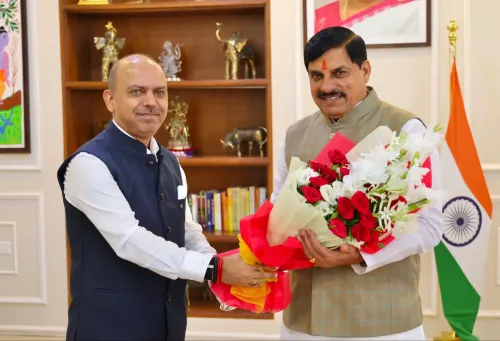
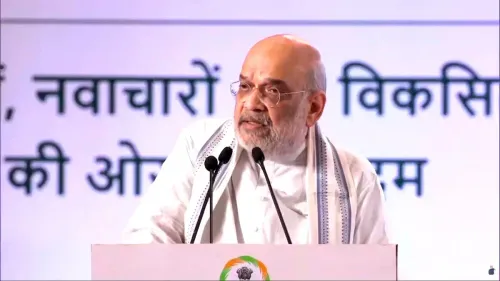
Amit Shah arrived in Bhopal on 2 October 2026 to advance White Revolution 2.0 .
India's milk output grew roughly 70% from 146 million tonnes (2014-15) to 239–249 million tonnes .
White Revolution 2.0 targets 75,000 new dairy cooperative societies and a 50% rise in cooperative milk procurement share by 2029 .
National milk-processing capacity is to double from 66 million litres to 100 million litres per day by 2028-29 .
Madhya Pradesh plans to expand coverage from 7,331 to 26,000 villages , backed by a ₹1,547 crore state Cabinet approval in September 2026 .
Shah will inaugurate a ₹16.80 crore Sanchi brand dairy plant on 3 October , with a Gopalak Sammelan for over 35,000 cattle rearers.
Union Home and Cooperation Minister Amit Shah arrived in Bhopal on Friday, 2 October, to advance the Centre's flagship White Revolution 2.0 initiative — a nationwide drive to bring organised dairy cooperative networks to every panchayat in India. The visit signals the government's determination to make dairy cooperatives a central pillar of inclusive rural growth, with Madhya Pradesh emerging as a key test state for the model.
India's Dairy Growth: Scale and Gaps
India is already the world's largest milk producer, with national output rising from 146 million tonnes in 2014-15 to nearly 239–249 million tonnes — a growth of roughly 70 per cent. Per capita milk availability climbed from 307 grams per day to 471–485 grams per day over the same period. Despite this scale, a significant portion of milk continues to flow through informal, unorganised channels, limiting farmers' earnings and exposing them to price volatility.
What White Revolution 2.0 Targets
White Revolution 2.0 aims to raise the cooperative sector's share of organised milk procurement by 50 per cent by the end of 2029. The plan envisages establishing 75,000 new dairy cooperative societies while strengthening around 46,000 existing ones. Progress so far: more than 24,000 new societies have been formed and over 31,000 existing societies have been reinforced. National milk-processing capacity, currently around 66 million litres per day, is targeted to reach 100 million litres per day by 2028-29.
Madhya Pradesh's Dairy Expansion Plan
Following Shah's repeated urging, Madhya Pradesh has committed to expanding cooperative coverage from 7,331 villages to 26,000 villages within five years. Daily milk collection is projected to rise from 1.2 million kg to 5.2 million kg, while processing capacity is expected to grow from 1.78 million litres to 6.33 million litres per day. In September 2026, the state Cabinet approved approximately ₹1,547 crore for dairy-processing infrastructure to back these targets.
Key Events on 3 October
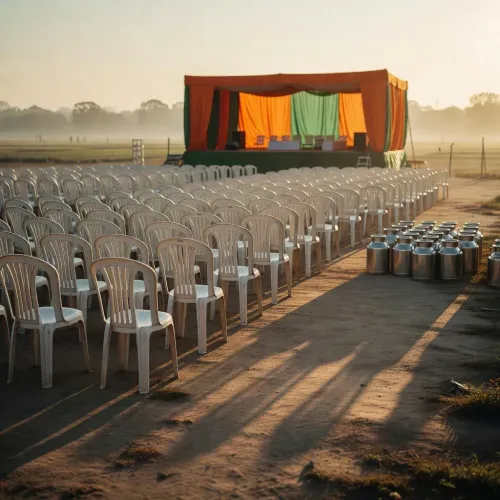
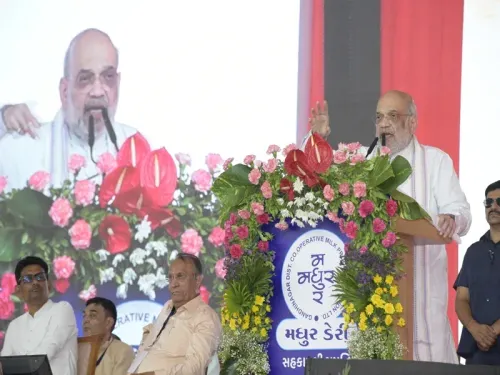
On 3 October, Shah is scheduled to inaugurate a ₹16.80 crore fermented-products dairy plant at the Bhopal Cooperative Milk Union, with a daily processing capacity of 40,000 litres. The plant will manufacture curd, buttermilk, lassi, shrikhand, and mawa under the Sanchi brand. A Gopalak Sammelan, expected to draw more than 35,000 cattle rearers, will also be held, reflecting the programme's emphasis on farmer income and women's empowerment through the cooperative model.
Challenges and the Road Ahead
Infrastructure gaps and the need for professional management remain significant hurdles, particularly in remote areas where the informal milk trade is deeply entrenched. Analysts note that without robust last-mile connectivity and transparent price-discovery mechanisms, the cooperative model's reach will remain limited. Shah's visit underlines the Centre's intent to convert dairy cooperatives from a supplementary rural income source into a primary, organised economic driver — with Madhya Pradesh's five-year expansion as the benchmark to watch.
Point of View
The majority of India's milk still moves through informal channels, suggesting structural resistance that infrastructure spending alone cannot fix. Madhya Pradesh's ₹1,547 crore commitment is meaningful, but scaling cooperative density across 26,000 villages requires deep trust-building with farmers, not just processing plants. The real measure of success will be the share of farmer income versus middlemen — a number the government has yet to commit to publishing transparently.
NationPress
3 Oct 2026
Frequently Asked Questions
What is White Revolution 2.0?
White Revolution 2.0 is the Centre's initiative to raise the cooperative sector's share of organised milk procurement by 50 per cent by 2029, establishing 75,000 new dairy cooperative societies and strengthening 46,000 existing ones. It also targets raising national milk-processing capacity from 66 million litres to 100 million litres per day by 2028-29.
Why has Amit Shah visited Bhopal on 2 October 2026?
Shah arrived in Bhopal to push forward the White Revolution 2.0 agenda, including the inauguration of a new Sanchi brand dairy plant on 3 October and participation in a Gopalak Sammelan for over 35,000 cattle rearers. He has been repeatedly urging chief ministers to add dairy cooperatives in mission mode so every panchayat gets access to organised milk collection.
What is Madhya Pradesh's role in White Revolution 2.0?
Madhya Pradesh is expanding cooperative coverage from 7,331 to 26,000 villages within five years, with daily milk collection projected to rise from 1.2 million kg to 5.2 million kg. The state Cabinet approved approximately ₹1,547 crore for dairy-processing infrastructure in September 2026.
What will be inaugurated at the Bhopal Cooperative Milk Union on 3 October?
Home Minister Amit Shah will inaugurate a ₹16.80 crore fermented-products dairy plant with a daily processing capacity of 40,000 litres. The plant will produce curd, buttermilk, lassi, shrikhand, and mawa under the Sanchi brand.
What challenges does the dairy cooperative expansion face?
A significant portion of India's milk still moves through informal channels despite strong production growth. Infrastructure gaps and the need for professional management in remote areas remain key obstacles, with analysts noting that last-mile connectivity and transparent pricing are critical for the cooperative model to succeed at scale.