Parliament Monsoon Session from July 20: Key Bills on agenda for 19 sittings
Synopsis
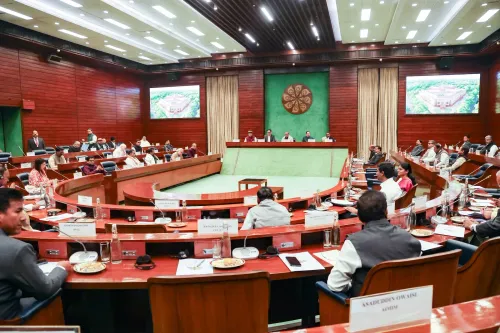
Parliament's Monsoon Session 2026 opens on 20 July with a packed legislative agenda — women's reservation, One Nation One Election, and a bill that could automatically strip sitting PMs and CMs of office if jailed for 30 days. Add a fractured opposition and a Speaker ruling on rebel MP mergers, and this four-week session could redraw both the law and the political map.
Key Takeaways
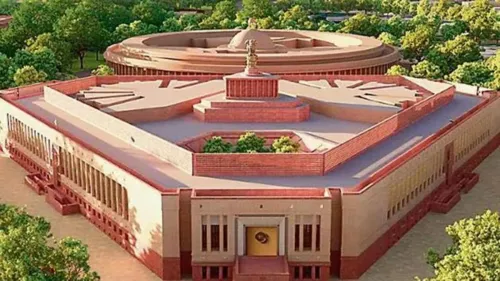
Parliament Monsoon Session 2026 will run from 20 July to 13 August , spanning 19 sittings .
President Droupadi Murmu approved the summoning of both Houses on the recommendation of the government.
The 131st Constitution Amendment Bill on women's reservation and delimitation , rejected in the previous session, is expected to be prioritised.
The 130th Constitution Amendment Bill proposes automatic removal of the PM, CMs, and ministers if in judicial custody for 30 consecutive days .
Speaker Om Birla will rule on the merger of 20 rebel TMC MPs with NCPI and 6 Uddhav Sena MPs with Shinde's Shiv Sena.
The DMK has sought separate seating from the Congress , reflecting deepening cracks in the INDIA bloc .
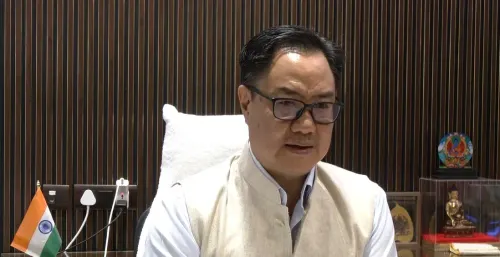
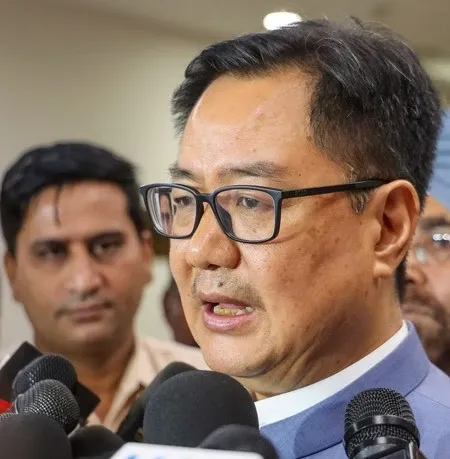
Union Parliamentary Affairs Minister Kiren Rijiju on Saturday, 4 July 2026 announced that the Parliament Monsoon Session 2026 will begin on 20 July and run through 13 August, covering 19 sittings over four weeks. President Droupadi Murmu has approved the summoning of both Houses on the recommendation of the government, Rijiju confirmed in a post on X.
What Rijiju Said
In his post, Rijiju quoted the official communication: 'The session will commence on 20 July, 2026 and continue till 13 August, 2026 for meaningful debate, discussion and decisions on issues of National Importance.' The announcement confirms the schedule that had been widely anticipated ahead of the legislative calendar's busiest stretch.
Key Bills Expected in This Session
The session is shaping up to be one of the most legislatively dense of the current term. The 131st Constitution Amendment Bill on women's reservation and delimitation — which was turned down in the previous session — is expected to be prioritised. The government is also likely to table the 130th Constitution Amendment Bill, which proposes the automatic removal of chief ministers, ministers, and the Prime Minister from office if they remain in judicial custody or are detained for 30 consecutive days in cases involving serious crimes.
The One Nation, One Election Bill is also expected to feature on the Centre's agenda. Additionally, the FCRA Bill, the Viksit Bharat Shiksha Adhishthan Bill, and the Anti-Doping Bill are among the measures likely to be presented. Bills related to the Code on Wages Central Rules, Corporate Law, and a Securities Market Code may also be introduced, along with a proposal to replace the ordinance that expands the number of Supreme Court judges.
Shifting Parliamentary Arithmetic
The composition of Parliament is expected to undergo notable changes before the session begins. Lok Sabha Speaker Om Birla is set to rule on the proposed merger of 20 rebel Trinamool Congress MPs with the lesser-known NCPI, and separately on the merger of six Uddhav Sena MPs with Eknath Shinde's Shiv Sena. Internal divisions within the All India Trinamool Congress (TMC), a rift between the Dravida Munnetra Kazhagam (DMK) and the Indian National Congress, and MP departures from the Uddhav Sena are collectively expected to alter the floor strength of the Opposition INDIA bloc.
The ruling National Democratic Alliance (NDA) anticipates a net gain in numbers, while the INDIA bloc faces a likely reduction in its effective parliamentary count.
DMK-Congress Seating Row
In a notable development reflecting the strains within the opposition alliance, the DMK has written to Speaker Birla requesting separate seating arrangements for its MPs — distinct from those of the Congress — following the Congress's alliance with the TVK in Tamil Nadu. The move signals a public distancing that could complicate coordinated opposition strategy on the floor of the House.
What to Watch
With the women's reservation bill, the One Nation, One Election Bill, and the controversial automatic disqualification bill all potentially on the table, the Monsoon Session 2026 could be among the most consequential in recent years. Whether the opposition — fractured and numerically weakened — can mount effective resistance will be a key test for the INDIA bloc's cohesion heading into the next electoral cycle.
Point of View
The opposition's ability to resist is structurally compromised before the session even begins: rebel mergers, the DMK-Congress rupture, and Uddhav Sena defections hand the NDA a numerical cushion it did not have a session ago. The real story here is not the bills — it is whether the INDIA bloc can hold together long enough to debate them.
NationPress
3 Oct 2026
Frequently Asked Questions
When does the Parliament Monsoon Session 2026 begin and end?
The Parliament Monsoon Session 2026 will commence on 20 July 2026 and conclude on 13 August 2026, covering 19 sittings over four weeks. The schedule was announced by Union Parliamentary Affairs Minister Kiren Rijiju on 4 July 2026.
What is the 131st Constitution Amendment Bill on women's reservation?
The 131st Constitution Amendment Bill deals with women's reservation and delimitation in legislative bodies. It was rejected in the previous parliamentary session and is expected to be prioritised when the Monsoon Session begins on 20 July 2026.
What does the 130th Constitution Amendment Bill propose?
The 130th Constitution Amendment Bill proposes the automatic removal of chief ministers, ministers, and the Prime Minister from office if they are detained or under judicial custody for 30 consecutive days in cases involving serious crimes. It is expected to be introduced in the Monsoon Session 2026.
Why has the DMK sought separate seating from Congress in Parliament?
The DMK has written to Lok Sabha Speaker Om Birla requesting seating arrangements separate from the Congress, following the Congress's alliance with the TVK in Tamil Nadu. The move reflects a deepening rift between the two parties within the Opposition INDIA bloc.
How will rebel MP mergers affect Parliament's composition?
Speaker Om Birla is expected to rule on the merger of 20 rebel Trinamool Congress MPs with the NCPI and 6 Uddhav Sena MPs with Eknath Shinde's Shiv Sena. These moves, combined with the DMK-Congress rift, are expected to reduce the INDIA bloc's effective strength while boosting the NDA's numbers.