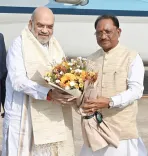
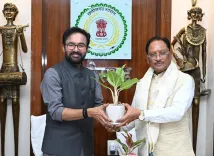
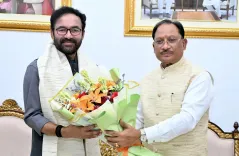
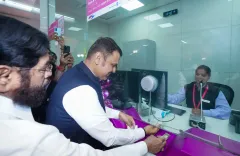
Kishan Reddy Inaugurates 7 Centres of Excellence at NIT Raipur
Synopsis
Union Coal and Mines Minister G. Kishan Reddy inaugurated seven Centres of Excellence at NIT Raipur on November 3, covering AI, critical minerals, space exploration, and tribal innovation, in the presence of CSIR Director General N. Kalaiselvi and MP Brijmohan Agrawal.
Key Takeaways
Seven Centres of Excellence were inaugurated at NIT Raipur on November 3, 2026 by Union Coal and Mines Minister G.
The centres cover Artificial Intelligence, Critical Minerals, Computational Mechanics, Rural and Tribal Innovation, Space and Interplanetary Exploration, Aerospace and Autonomous Technologies, and Nanoscience and Sustainable Energy Technologies .
Kalaiselvi , Director General of CSIR and Secretary of DSIR , attended — signalling potential lab-to-industry collaboration.
The Critical Minerals centre is strategically sited in mineral-rich Chhattisgarh , aligning academic research with the Ministry of Mines' national priorities.
The centres are intended to strengthen the link between technical education, research, and the mining and minerals sector , creating capacity-building opportunities.
The initiative aligns with the National Education Policy 2020 and India's Science, Technology and Innovation Policy push for interdisciplinary research hubs at NITs.
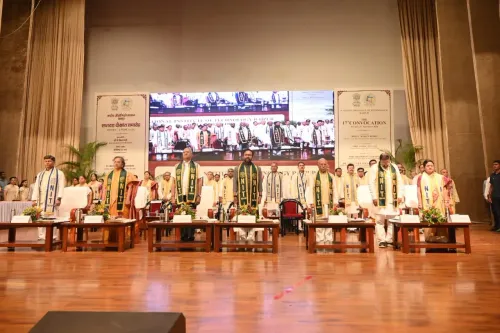
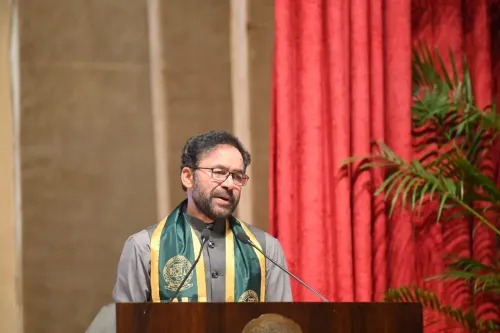
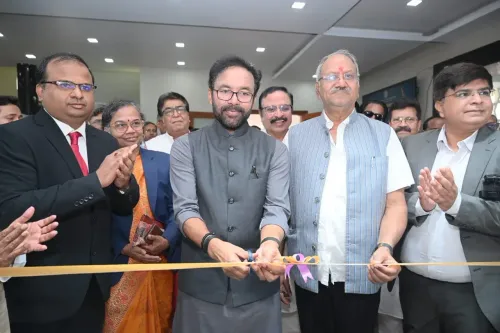
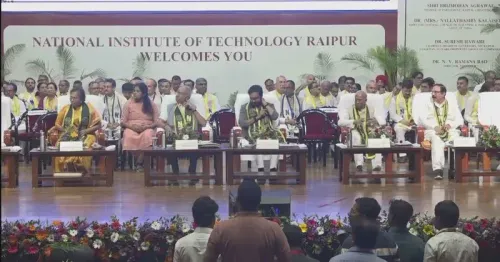
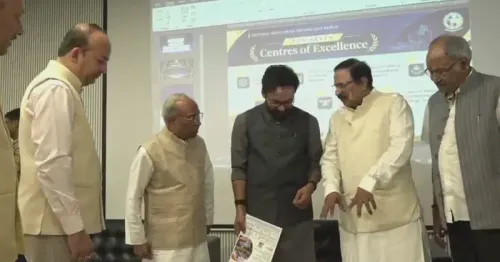
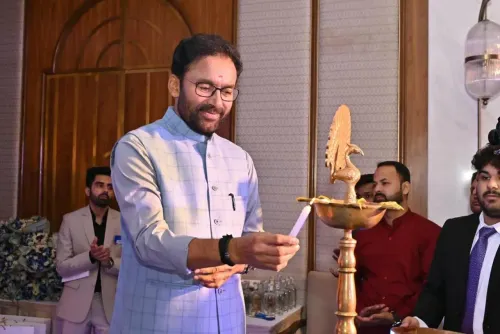
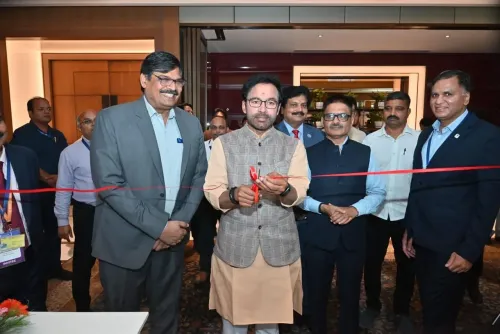
Seven new Centres of Excellence opened their doors at National Institute of Technology (NIT), Raipur on Tuesday, November 3, 2026 — and the domains they cover read like a map of India's most urgent national priorities. Union Coal and Mines Minister G. Kishan Reddy inaugurated the centres in a ceremony that brought together parliamentary, scientific, and academic leadership under one roof.
Seven domains, one strategic intent
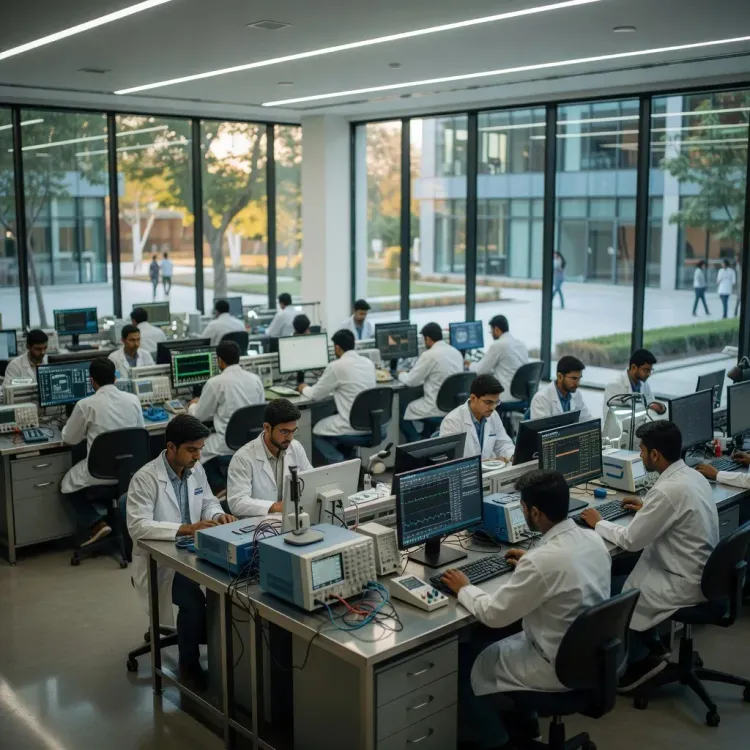
The centres span Artificial Intelligence, Critical Minerals, Computational Mechanics, Rural and Tribal Innovation, Space and Interplanetary Exploration, Aerospace and Autonomous Technologies, and Nanoscience and Sustainable Energy Technologies. That is a deliberately wide spread — from the cutting edge of deep-space ambition to the grounded urgency of tribal innovation. Each centre is designed to sharpen the link between classroom research and industrial application, particularly in the mining and minerals sector that Reddy's own ministry oversees.
Also present at the inauguration were Brijmohan Agrawal, Member of Parliament, and Dr. N. Kalaiselvi, Director General of CSIR (Council of Scientific and Industrial Research) and Secretary of DSIR. Kalaiselvi's presence is significant: CSIR is India's largest publicly funded R&D organisation, and its engagement signals that these centres are being positioned for genuine lab-to-industry translation, not just academic flag-planting.
Why Critical Minerals and NIT Raipur are a natural fit
Chhattisgarh sits atop some of India's richest mineral belts — iron ore, coal, bauxite, tin. Locating a Critical Minerals Centre of Excellence in Raipur is therefore less a coincidence and more a considered policy signal. For a government that has flagged critical mineral security as a strategic imperative — essential for electric vehicles, defence electronics, and the clean-energy transition — building research capacity right at the source makes hard economic sense.
India's broader push to expand applied research infrastructure in NITs and IITs has accelerated under the National Education Policy 2020, which called for interdisciplinary centres and stronger research ecosystems in technical institutions. Successive Science, Technology and Innovation Policy frameworks have reinforced that direction, particularly in AI and sustainable energy.
Rural and tribal innovation: the quiet headline
Among the seven, the Centre for Rural and Tribal Innovation may prove the most consequential for the communities around NIT Raipur. Chhattisgarh has a large tribal population, and the persistent challenge of keeping research institutions connected to local realities — rather than catering only to urban industry — has long dogged Indian technical education. A dedicated centre signals institutional intent to close that gap, even if delivery will take years to assess.
The gathering of the Dean, faculty, and students at the ceremony underscores that the audience for this investment is as much the next generation of engineers and researchers as it is industry partners. These seven centres, if adequately resourced and linked to CSIR laboratories and private sector players, could materially strengthen NIT Raipur's research output and graduate employability in high-growth sectors.
The real test begins now: whether MoUs with industry and CSIR labs follow, whether funding pipelines from the Ministry of Mines and the Ministry of Education are formalised, and whether the students walking into these labs today walk out with patents, startups, and solutions. The inauguration is the easy part.
Point of View
Particularly critical mineral security and the clean-energy transition. The involvement of CSIR's Director General points to an intent to bridge the historically wide gap between academic research and industrial application. For the Coal and Mines Ministry, anchoring a critical minerals research hub in Chhattisgarh's mineral heartland is also a soft-power move — demonstrating that the extractive economy can generate knowledge infrastructure, not just raw output. The durability of these centres will depend on follow-through: industry MoUs, sustained funding, and faculty with real research mandates.
NationPress
3 Nov 2026
Frequently Asked Questions
What are the seven Centres of Excellence inaugurated at NIT Raipur?
The seven centres cover Artificial Intelligence, Critical Minerals, Computational Mechanics, Rural and Tribal Innovation, Space and Interplanetary Exploration, Aerospace and Autonomous Technologies, and Nanoscience and Sustainable Energy Technologies.
Who inaugurated the Centres of Excellence at NIT Raipur?
Union Coal and Mines Minister G. Kishan Reddy inaugurated the centres on November 3, 2026, alongside MP Brijmohan Agrawal and CSIR Director General Dr. N. Kalaiselvi.
What is CSIR's role in the NIT Raipur Centres of Excellence?
CSIR Director General Dr. N. Kalaiselvi was present at the inauguration, indicating a potential collaboration between CSIR laboratories and NIT Raipur to translate academic research into industrial applications.
Why is a Critical Minerals centre being set up in Raipur?
Chhattisgarh is one of India's richest mineral-bearing states, making Raipur a strategic location for critical minerals research that can directly support the mining and clean-energy sectors.
How do these NIT Raipur centres relate to the National Education Policy 2020?
The National Education Policy 2020 called for strengthening interdisciplinary research ecosystems in technical institutions including NITs; these seven centres are a direct expression of that policy direction.