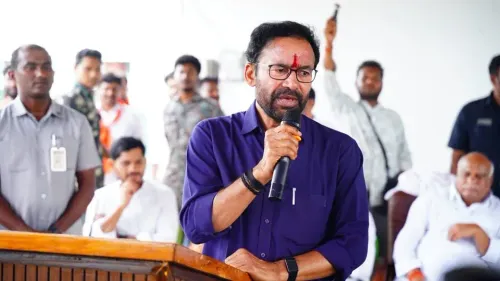
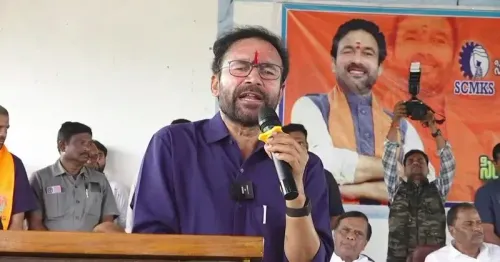
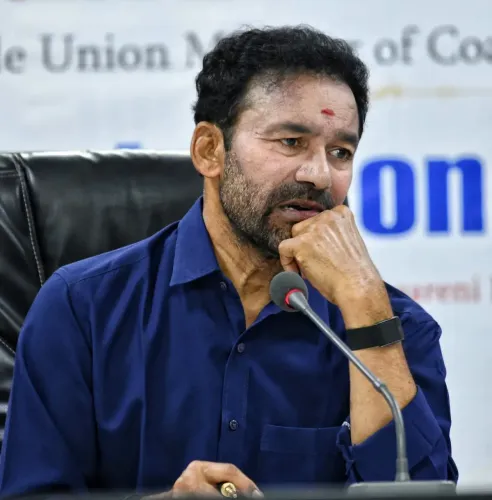
Kishan Reddy Visits KTK-8 Coal Mine in Telangana
Synopsis
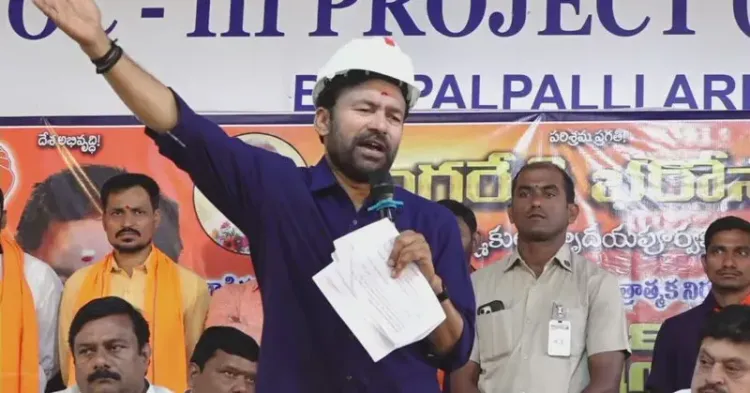
Union Coal and Mines Minister G. Kishan Reddy visited the KTK-8 underground coal mine in Jayashankar Bhupalpally district of Telangana on 14 July 2026, live-streaming the inspection as part of ministerial oversight of SCCL operations and domestic coal production targets.
Key Takeaways
Kishan Reddy , Union Minister of Coal and Mines, conducted a live-streamed visit to KTK-8 Mine in Jayashankar Bhupalpally, Telangana on 14 July 2026 .
The KTK-8 Mine is operated by Singareni Collieries Company Limited (SCCL) , jointly owned by the central and Telangana state governments.
The Godavari valley coalfield is a key source of thermal coal for power utilities across southern India.
The visit aligns with central government policy to raise domestic coal output, underpinned by the Coal Mines (Special Provisions) Act, 2015 and commercial mining auctions launched in 2020 .
Ministerial inspections assess production targets, worker safety compliance, and community rehabilitation obligations under the Mines Act .
Any directives or announcements from the inspection could affect mine development plans in the Godavari valley and SCCL's operational roadmap.
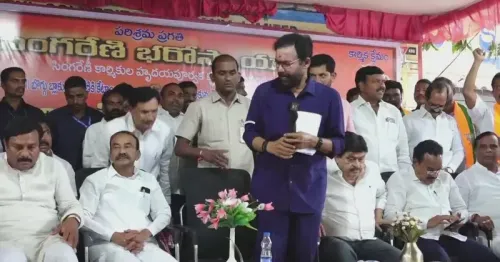
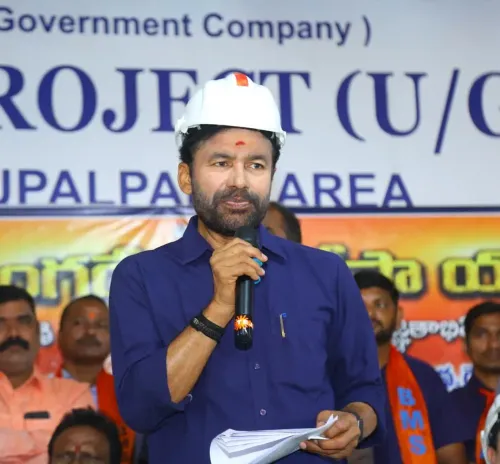
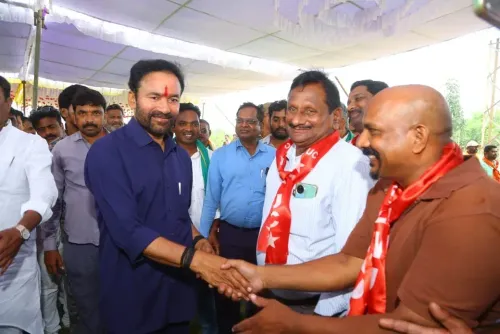
Union Coal and Mines Minister G. Kishan Reddy conducted a live visit to the KTK-8 Mine in Jayashankar Bhupalpally district of Telangana on Tuesday, 14 July 2026, broadcasting the inspection in real time on social media. The visit signals active ministerial oversight of coal operations in the Godavari valley coalfield, one of the country's key thermal coal-producing belts.
Context
The KTK-8 Mine is an underground coal mine operated by Singareni Collieries Company Limited (SCCL), a public sector undertaking jointly owned by the Government of India and the Government of Telangana. Jayashankar Bhupalpally, a district in northern Telangana, sits at the heart of the Godavari valley coalfield and hosts a significant portion of the state's active mining operations. SCCL mines in this region supply thermal coal primarily to power utilities across southern India.
Ministerial site visits to active mines serve multiple purposes: assessing production targets, reviewing worker safety compliance under the Mines Act, and evaluating rehabilitation obligations for affected communities. A live broadcast of such a visit is notable for its transparency dimension, allowing public and industry stakeholders to follow proceedings in real time.
Policy Backdrop
The visit comes against the backdrop of a sustained central government push to raise domestic coal output and reduce India's dependence on coal imports. The Coal Mines (Special Provisions) Act, 2015 broke the longstanding monopoly of Coal India Limited by enabling competitive auctions of coal blocks. In 2020, the Ministry of Coal extended commercial mining auctions to private players, a structural shift aimed at closing the gap between domestic supply and thermal power demand.
As the minister responsible for this policy architecture, G. Kishan Reddy holds direct oversight over both production ramp-up targets and the regulatory framework governing mine safety and environmental compliance. Telangana's mines, particularly those operated by SCCL, have been central to the southern grid's fuel security strategy, making field-level monitoring by senior ministry officials significant for both policy and optics.
Stakeholders and Impact
The primary stakeholders in the KTK-8 ecosystem include coal miners and their families, local communities in Jayashankar Bhupalpally, and power utilities in southern states that depend on SCCL's output to run thermal generation plants. Any assessment of operational health at mines like KTK-8 directly affects fuel supply chains for electricity generation in the region.
For the broader mining community in Telangana, a visit by the Union Minister can also surface ground-level concerns — from worker welfare and mechanisation to pending infrastructure upgrades — that may not be visible in aggregate production statistics. Local communities near mining zones often raise concerns around land use, dust pollution, and resettlement, issues that ministerial visits can bring into sharper focus.
What's Next
Observers will watch for any official statement or directive emerging from the minister's inspection, including potential announcements on mine development proposals for the Godavari valley coalfield. The Ministry of Coal releases monthly coal production statistics, and any revision to output targets or safety protocols at SCCL mines would be reflected in subsequent disclosures. The visit may also precede broader policy announcements on expanding underground mining capacity in Telangana as part of the national coal production roadmap.
Point of View
Particularly useful for a BJP leader who also heads the party in Telangana, where SCCL's workforce represents a significant political constituency. The visit fits a broader pattern of the central government asserting active stewardship over coal assets even in states governed by rival parties, reinforcing New Delhi's role in shaping energy security outcomes. For the Ministry of Coal, field visits by the minister also serve as a pressure mechanism on public sector undertakings to meet production and safety benchmarks. The live-stream dimension adds a layer of public accountability that routine inspection reports rarely achieve.
NationPress
12 Oct 2026
Frequently Asked Questions
What is KTK-8 Mine and where is it located?
KTK-8 is an underground coal mine operated by Singareni Collieries Company Limited, located in Jayashankar Bhupalpally district in northern Telangana, which is part of the Godavari valley coalfield.
Why did Kishan Reddy visit KTK-8 Mine?
Union Coal and Mines Minister G. Kishan Reddy visited KTK-8 Mine on 14 July 2026 as part of ministerial oversight of coal production targets, mine safety compliance, and operational health of SCCL facilities in Telangana.
What is Singareni Collieries Company Limited (SCCL)?
SCCL is a public sector undertaking jointly owned by the Government of India and the Government of Telangana that manages coal extraction operations in Telangana, supplying thermal coal primarily to power utilities in southern India.
What is the significance of the Godavari valley coalfield?
The Godavari valley coalfield in Telangana is one of India's important thermal coal-producing regions, with SCCL mines supplying fuel to power plants across southern states, making it critical to the southern electricity grid's fuel security.
What policies govern coal mining oversight in India?
Coal mining oversight is governed by the Mines Act and shaped by the Coal Mines (Special Provisions) Act, 2015, which enabled competitive block auctions, and the 2020 commercial mining reforms that opened the sector to private players to boost domestic output.