Kishan Reddy Holds Mining Sector Talks in Raipur
Synopsis
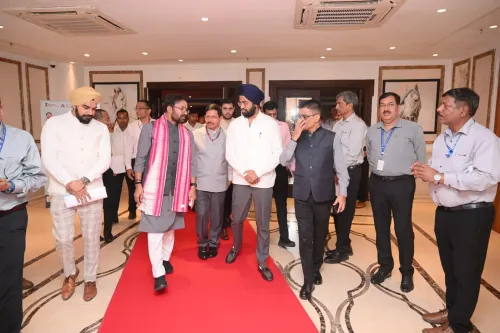
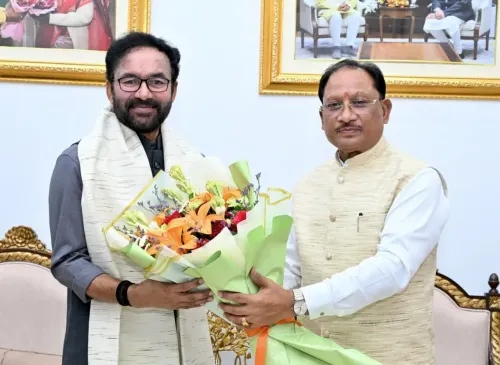
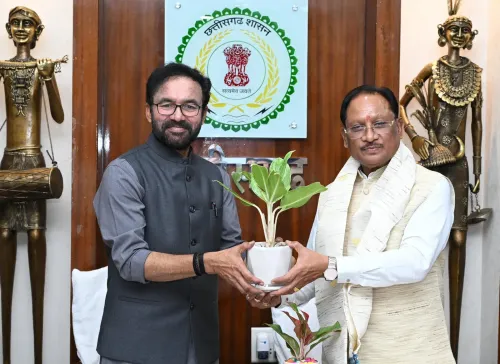
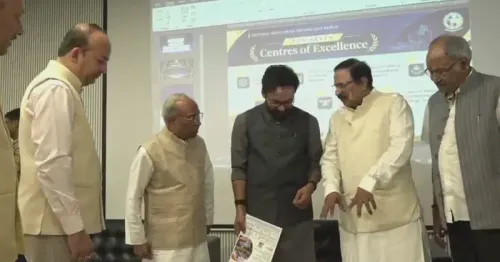
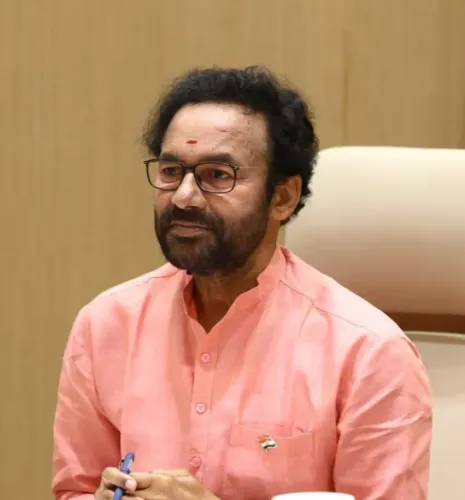
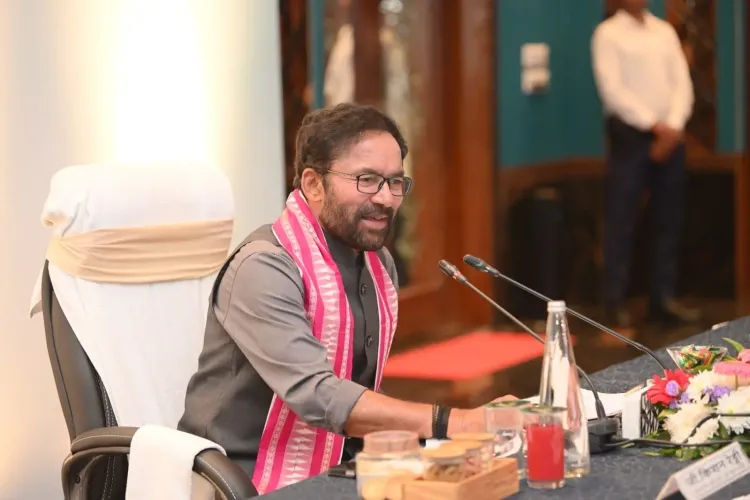
Union Coal and Mines Minister G. Kishan Reddy held a stakeholder consultation with mine operators and industry representatives in Raipur on November 3, deliberating on key issues and emerging priorities for India's mining sector in a state central to national coal and mineral production.
Key Takeaways
Kishan Reddy , Union Minister of Coal and Mines, held a stakeholder meeting in Raipur, Chhattisgarh on November 3, 2026 .
Attendees included mine operators and industry representatives to discuss key issues and emerging priorities in the mining sector.
Chhattisgarh is one of India's largest coal and mineral producing states, making it a strategic venue for central policy consultations.
Commercial coal mining was opened to private players in 2020 , prompting ongoing rounds of stakeholder engagement to address implementation challenges.
The Mines and Minerals (Development and Regulation) Amendment Act, 2021 remains a key policy framework shaping lease provisions and state revenue from mineral auctions.
Follow-up policy moves — such as new mineral block auctions or revised clearance norms — may emerge from these consultations.
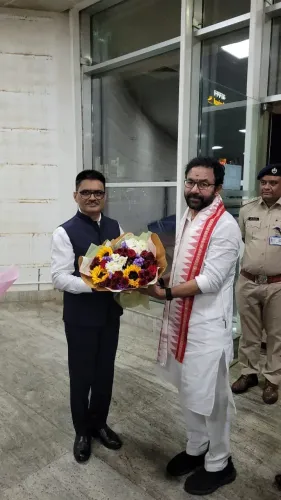
In the heart of India's coal country, Union Coal and Mines Minister G. Kishan Reddy sat down with mine operators and industry representatives in Raipur on Tuesday, November 3 — a deliberate stop in one of the nation's most mineral-rich states to take stock of where the sector stands and where it needs to go.
The Minister described the interaction as 'constructive,' focused on 'key issues and emerging priorities concerning the mining sector.' The choice of Raipur, capital of Chhattisgarh, is telling: the state sits atop some of India's densest coal and mineral reserves, making it a perpetual flashpoint where central policy, state administration, environmental clearances, and industry interests converge.
Why Chhattisgarh is Ground Zero for Mining Policy
Chhattisgarh is not just another coal-producing state — it is a bellwether. Decisions made in its mining corridors ripple outward into national energy supply chains and state revenue calculations. Central government consultations held here carry weight precisely because the ground-level realities of lease management, logistics, and local compliance are most acute in this terrain.
The meetings fit a well-established pattern. Since commercial coal mining was opened to private players in 2020, the Ministry of Coal and Mines has pursued successive rounds of block auctions paired with stakeholder consultations — a two-track approach designed to accelerate domestic production and curtail import dependence. The Mines and Minerals (Development and Regulation) Amendment Act, 2021 further streamlined lease provisions and bolstered state revenues from mineral auctions, adding new urgency to getting industry feedback on implementation.
What Mine Operators Bring to the Table
Stakeholder meetings of this kind are typically where bottlenecks surface — stalled environmental clearances, infrastructure gaps, lease renewal timelines, or disputes over royalty computation. Mine operators and industry bodies carry firsthand intelligence on where policy intent diverges from field reality, and a Cabinet-level minister's direct engagement signals that the Centre is in listening mode ahead of potential policy adjustments or fresh auction cycles.
Whether the Raipur meeting produces concrete follow-up — new mineral block auctions, revised clearance timelines, or updated operational guidelines — will be the real measure of its impact. The kicker: in a sector this foundational to India's energy and industrial economy, a 'constructive' conversation is only as good as the decisions it unlocks.
Point of View
Not a routine stop: it is where the friction between central policy ambition and state-level implementation is most visible. The consultation fits a broader arc in which the Ministry of Coal and Mines has moved from legislating reform to actively managing its adoption. Whether this meeting translates into fresh auction cycles or regulatory adjustments will signal how seriously the ministry is treating industry's concerns.
NationPress
4 Nov 2026
Frequently Asked Questions
Why did Kishan Reddy visit Raipur for mining talks?
Kishan Reddy visited Raipur because Chhattisgarh is one of India's most significant coal and mineral producing states. The meeting aimed to gather direct feedback from mine operators and industry representatives on key sector issues and emerging priorities.
What is the Mines and Minerals (Development and Regulation) Amendment Act 2021?
The MMDR Amendment Act 2021 introduced provisions for easier mining lease renewals, end-to-end auction processes, and increased state revenues from mineral block auctions, forming a key pillar of India's mining sector reform.
When was commercial coal mining opened to private companies in India?
Commercial coal mining was opened to private players in 2020 as part of broader reforms aimed at boosting domestic production and reducing India's dependence on coal imports.
What issues are typically discussed at mining stakeholder consultations?
These meetings typically surface operational bottlenecks such as delayed environmental clearances, infrastructure gaps, lease renewal timelines, royalty disputes, and feedback on auction processes — issues that bridge the gap between policy design and field implementation.
What could follow from Kishan Reddy's Raipur mining meeting?
Potential outcomes include new mineral block auction announcements, revised operational or clearance guidelines, or updated policy positions on lease management — though no specific decisions have been announced yet.