Kishan Reddy meets coal miners in Raipur to boost output
Synopsis
Union Coal and Mines Minister G. Kishan Reddy held a stakeholder roundtable with captive and commercial coal miners in Raipur on November 3, focusing on production efficiency, industry concerns, and advancing the Aatmanirbhar Bharat self-reliance agenda for India's energy sector.
Key Takeaways
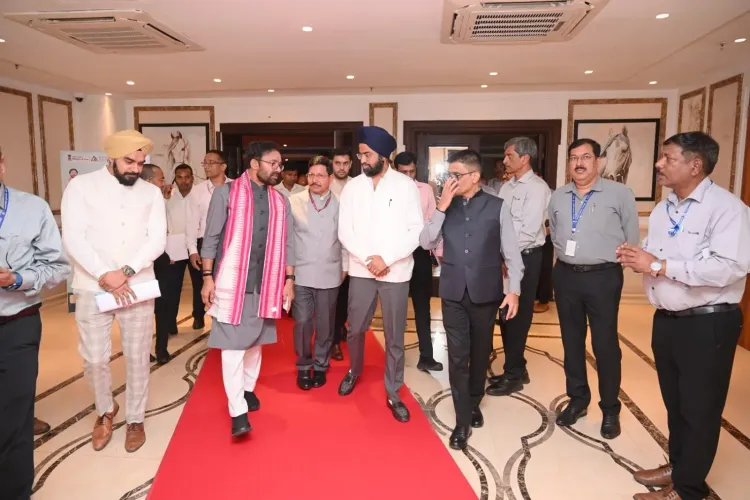
Kishan Reddy met captive and commercial coal miners in Raipur, Chhattisgarh on November 3, 2026 .
Talks centred on operational progress, industry concerns, stakeholder coordination, and lifting coal production and efficiency.
The minister reaffirmed the government's commitment to the Aatmanirbhar Bharat vision for energy self-reliance.
Commercial coal mining was liberalised in 2020 under the Atmanirbhar Bharat package, opening the sector to private players for the first time at scale.
The meeting aligns with the government's broader strategy to reduce costly coal imports by boosting domestic output through both captive and commercial mining.
The next round of coal block auctions and quarterly production figures will be key indicators of whether Raipur's discussions translate into policy action.
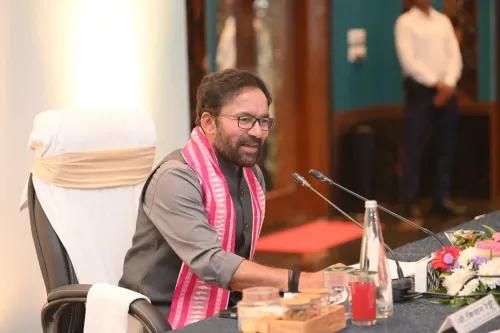
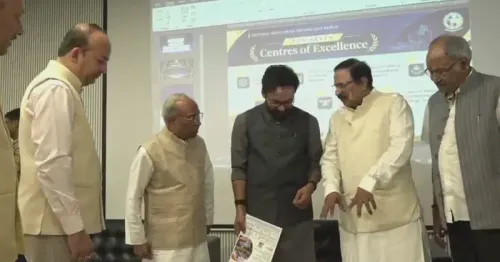
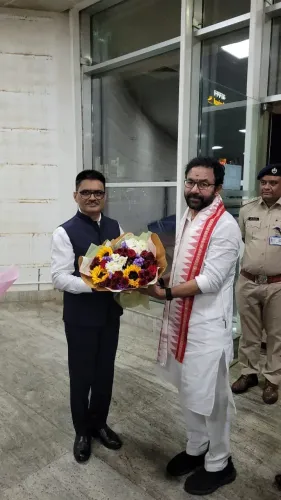
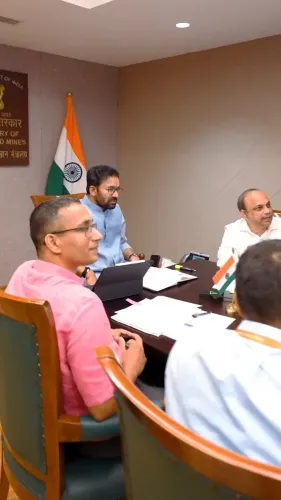
India's coal sector got a high-level check-in on Tuesday, November 3, when Union Coal and Mines Minister G. Kishan Reddy sat down with key captive and commercial coal miners in Raipur, Chhattisgarh — one of the country's most coal-rich states — to review operations and sharpen the push for greater domestic energy self-sufficiency.
What the Raipur roundtable put on the table
The discussions spanned operational progress, industry pain points, and concrete steps to lift both production volumes and efficiency across mine sites. Raipur, the capital of Chhattisgarh, is a natural staging ground for such a conversation — the state sits atop some of India's largest coal reserves and hosts a dense cluster of captive and commercial mining operations.
Reddy said the talks focused on 'addressing industry concerns, strengthening stakeholder coordination and promoting a robust, efficient and sustainable coal ecosystem to meet India's growing energy requirements.' The minister also 'reaffirmed commitment to facilitating the sector's growth' — language that signals the Centre intends to keep auction pipelines and regulatory clearances moving.
Commercial coal mining's six-year journey since liberalisation
The meeting sits inside a larger policy arc that began in 2020, when the government opened commercial coal mining to private players as part of the Aatmanirbhar Bharat package — a structural break from the decades-old regime that had kept the sector almost entirely in public hands. Amendments to the Mines and Minerals Act that same year triggered a new wave of block auctions, drawing in both end-user captive miners and purely commercial operators for the first time.
Coal India Limited still dominates output, but the liberalisation was designed to plug a persistent gap: India's electricity demand has grown faster than public-sector mines could supply, forcing costly imports. Private participation — in both captive blocks for power and steel producers and commercial blocks for open-market sale — is the government's chosen lever to close that gap.
Why miner-minister dialogue matters now
Direct industry consultations of this kind are typically a precursor to policy fine-tuning: revised auction terms, faster environmental clearances, or revised revenue-sharing formulas. With the next round of coal block auctions on the horizon and quarterly production figures closely watched by power producers and traders, stakeholders were looking for clear signals from the ministry. The Raipur session was designed to surface exactly those concerns before they calcify into bottlenecks.
India's power sector remains coal-heavy well into the mid-2020s, even as renewable capacity scales up, meaning any efficiency gain at the mine face translates directly into grid stability and electricity tariffs that ordinary consumers pay.
The road from Raipur's conference rooms to the mine face is short — what matters now is whether the commitments made on November 3 show up in the next round of auction schedules and production data.
Point of View
Operational efficiency at domestic mines carries direct macroeconomic weight. The minister's dual role as BJP's Telangana president adds a political dimension: Telangana is a significant coal-consuming state, and visible pro-sector activism by Reddy signals both policy intent and constituency outreach. Watchers should track whether this consultation translates into faster clearance timelines or revised auction terms in the coming quarter.
NationPress
4 Nov 2026
Frequently Asked Questions
Why did Kishan Reddy visit Raipur for a coal sector meeting?
Raipur, the capital of Chhattisgarh, is a hub for coal mining operations. Minister G. Kishan Reddy met captive and commercial miners there on November 3, 2026, to review operational progress and discuss measures to boost production and efficiency.
What is the difference between captive and commercial coal mining in India?
Captive coal mining refers to blocks allocated to end-users such as power plants or steel makers for their own consumption, while commercial coal mining — opened to private players in 2020 — allows companies to mine and sell coal on the open market.
What is Aatmanirbhar Bharat's role in India's coal sector?
The Aatmanirbhar Bharat initiative launched in 2020 included opening commercial coal mining to private sector participation and launching new block auctions, aiming to boost domestic output and reduce India's dependence on coal imports.
What are India's coal production targets and who oversees them?
The Ministry of Coal oversees coal policy, production targets, and block allocations. Production targets are reviewed quarterly, with Coal India Limited remaining the dominant producer alongside growing private captive and commercial miners.
What outcomes are expected from the Raipur coal stakeholder meeting?
While specific outcomes were not announced, industry consultations of this nature typically feed into upcoming coal block auction terms, clearance process improvements, and possible revisions to revenue-sharing or operational norms.