Kishan Reddy mourns passing of former Army Chief Gen Vishwa Nath Sharma
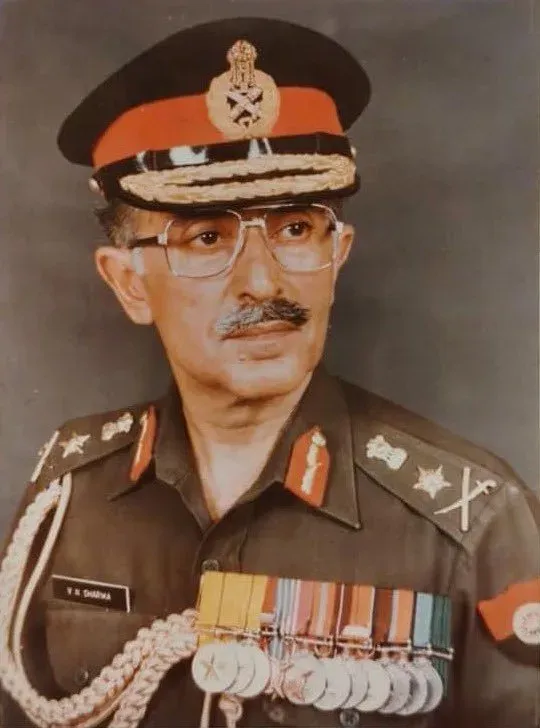
Synopsis
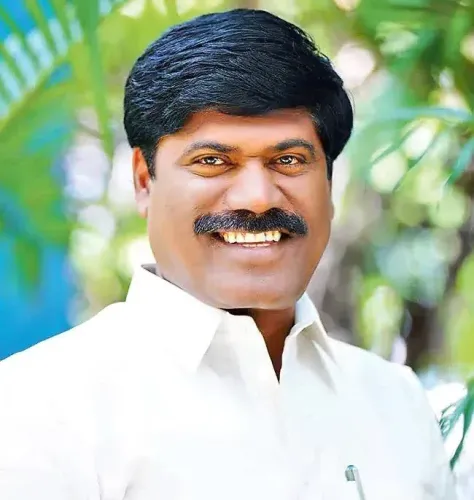
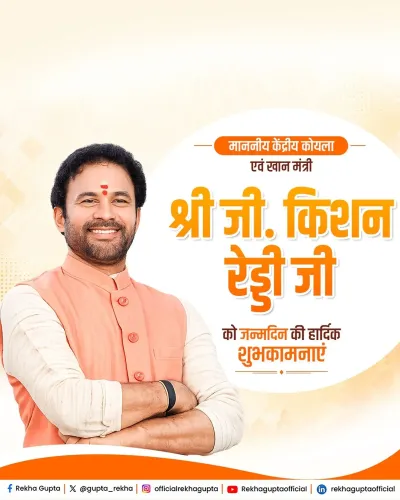
Union Coal and Mines Minister G. Kishan Reddy paid tribute to former Chief of the Army Staff General Vishwa Nath Sharma, praising his courage, professionalism, and lifelong commitment to safeguarding India's sovereignty, and offered condolences to the General's family.
Key Takeaways
Kishan Reddy expressed deep grief over the passing of General Vishwa Nath Sharma , former Chief of the Army Staff.
The Minister described General Sharma as 'an outstanding military leader' whose life was dedicated to national service.
Reddy highlighted the General's 'courage, professionalism and unwavering commitment to safeguarding India's sovereignty.' The statement extended condolences to General Sharma's family and loved ones.
Formal statements from the Ministry of Defence and funeral arrangements are expected to follow.
A soldier who gave his life to the defence of India's borders is gone, and the tributes are arriving from across the political spectrum. Union Coal and Mines Minister G. Kishan Reddy on Friday, July 31, 2026, expressed deep grief over the passing of General Vishwa Nath Sharma, former Chief of the Army Staff of the Indian Army.
In his condolence message posted on X, Minister Reddy wrote: 'General Sharma was an outstanding military leader whose life was dedicated to the service of the Nation. His courage, professionalism and unwavering commitment to safeguarding India's sovereignty earned him the respect and admiration of the entire country.'
A career defined by service to the nation
General Vishwa Nath Sharma served in senior operational and command roles across the Indian Army, rising to its highest uniformed office as Chief of the Army Staff. His tenure placed him among the custodians of India's national security at the highest level, a responsibility that demands both strategic acumen and personal courage.
Reddy's tribute underscored the General's legacy not as a political figure but as an institutional one — a soldier whose example, in his words, 'will continue to inspire generations to come.' The Minister extended heartfelt condolences to General Sharma's family and loved ones, closing his message with Om Shanti — a traditional invocation of peace for the departed.
Across party lines, the armed forces command uniform respect
The tribute reflects a well-established pattern in Indian public life: the passing of a former service chief draws condolences from leaders across the political divide, a quiet but consistent signal of institutional respect for the armed forces. The Ministry of Defence and the Chief of Defence Staff are expected to issue formal statements and announce funeral arrangements in the coming hours.
General Sharma leaves behind a legacy that belongs not to any government or era, but to the institution he served — and to the country whose sovereignty he spent a lifetime protecting.
Point of View
Issued in his capacity as both a Union Minister and BJP's Telangana chief, reflects the broader political consensus that the armed forces occupy a space above partisan contestation. Such condolences also carry a subtle forward signal: they reinforce the ruling establishment's positioning as custodians of military honour ahead of any formal state funeral proceedings. The legacy of a service chief, once invoked publicly, becomes part of the ongoing national conversation about defence preparedness and institutional pride.
NationPress
31 Jul 2026
Frequently Asked Questions
Who was General Vishwa Nath Sharma?
General Vishwa Nath Sharma was a former Chief of the Army Staff of the Indian Army, who served in senior operational and command roles and was known for his leadership and commitment to national defence.
What did G. Kishan Reddy say about General Vishwa Nath Sharma?
Minister G. Kishan Reddy called General Sharma 'an outstanding military leader' and praised his courage, professionalism, and unwavering commitment to safeguarding India's sovereignty, extending condolences to the General's family.
When did G. Kishan Reddy post the condolence message?
The condolence message was posted on Friday, July 31, 2026 , on the social media platform X.
Who is G. Kishan Reddy?
G. Kishan Reddy is the Union Minister of Coal and Mines in the Government of India and serves as the BJP's Telangana state president.
What happens after a former Army Chief passes away in India?
Typically, the Ministry of Defence and the Chief of Defence Staff issue formal condolence statements, and official funeral arrangements with state honours are announced in the hours following the news.