CM Dhami Reviews Monsoon Disaster Readiness With NDRF in Gadarpur

Synopsis
Uttarakhand CM Pushkar Singh Dhami visited Gadarpur on July 31, 2026, to meet NDRF personnel and review monsoon disaster preparedness. The state government reaffirmed its commitment to public safety as the peak monsoon window intensifies across the flood-prone Himalayan state.
Key Takeaways
CM Pushkar Singh Dhami visited Gadarpur in Udham Singh Nagar district on July 31, 2026 to review monsoon preparedness with NDRF personnel.
The state government declared its commitment to 'ensuring public safety under all circumstances.' Gadarpur lies in the Terai foothills, a zone historically vulnerable to flash floods and waterlogging during the monsoon season.
Central-state disaster coordination through the NDRF is mandated under the Disaster Management Act, 2005 .
Pre-positioning NDRF teams in vulnerable districts is standard practice for Himalayan states during the June–September monsoon window.
The Chief Minister's direct field visit signals high political priority on disaster readiness ahead of peak monsoon weeks.
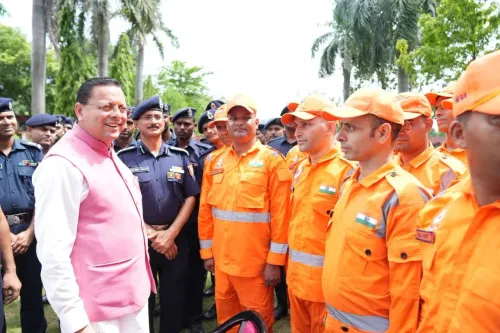
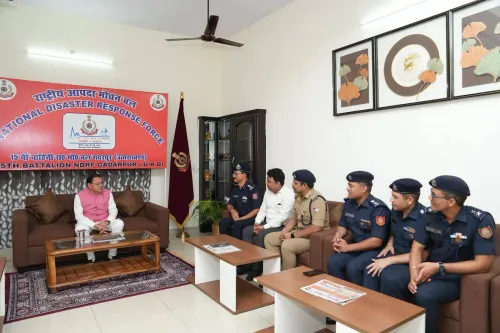
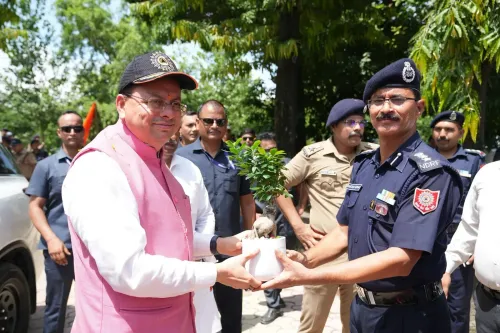
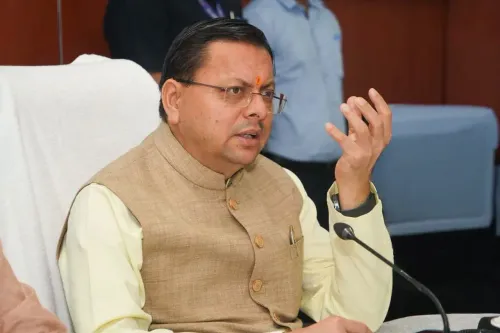
With the monsoon bearing down on one of India's most disaster-prone Himalayan states, Uttarakhand Chief Minister Pushkar Singh Dhami travelled to Gadarpur on Friday, July 31, 2026 to meet National Disaster Response Force (NDRF) personnel and assess the state's preparedness on the ground.
Posting on X, CM Dhami said he 'met with NDRF personnel in Gadarpur and took stock of preparations in view of the monsoon,' adding that the state government 'is committed to ensuring public safety under all circumstances.' The visit signals that Uttarakhand's disaster machinery is in active-review mode, not standby.
Why Gadarpur — and Why Now
Gadarpur, a town in Udham Singh Nagar district, sits in the Terai belt at the foothills of the Himalayas — a zone historically exposed to flash floods and waterlogging when monsoon rains intensify upstream. A ground-level review here, rather than a conference-room briefing in Dehradun, underscores the administration's intent to assess real deployment conditions.
The June–September monsoon window is the most critical period for Uttarakhand's disaster calendar. Floods, landslides, and cloudbursts have repeatedly disrupted life and claimed lives across the state's hills and plains alike. Pre-season and in-season coordination between state governments and NDRF units is mandated under the Disaster Management Act, 2005, which created the NDRF and established the framework for central-state response coordination.
NDRF's Role in Uttarakhand's Disaster Grid
The NDRF, operating under the Ministry of Home Affairs, is India's frontline specialized force for disaster response. In Himalayan states, NDRF teams are typically pre-positioned in vulnerable districts ahead of peak monsoon weeks — a practice that has become standard since the catastrophic 2013 Kedarnath floods exposed the cost of reactive rather than proactive deployment.
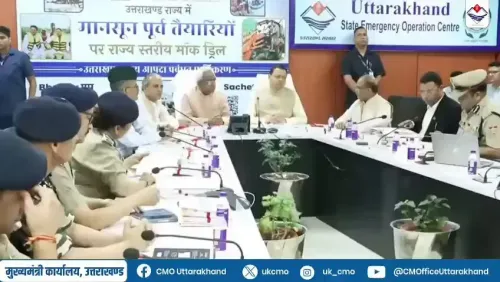
Such field reviews typically cover equipment positioning, communication readiness, and coordination protocols with district administrations. The presence of the Chief Minister at such a review — rather than a junior official — sends a clear signal about the political priority attached to disaster preparedness this season.
Uttarakhand's terrain makes it uniquely vulnerable: narrow river valleys amplify flood surges, and road connectivity — critical for rescue operations — is frequently the first casualty of a cloudburst. Getting NDRF teams and equipment in place before an event, not after, is the difference between response and rescue.
As the monsoon progresses through August, all eyes will be on whether this on-ground review translates into faster deployment orders when the next weather alert comes in.
Point of View
Not just an administrative routine. For a BJP-governed state that has staked credibility on strong administration in a geographically challenging terrain, being seen on the ground with NDRF units mid-monsoon carries both operational and electoral logic. The broader arc here is the institutionalisation of proactive disaster management across Himalayan states, driven by the 2005 Act and reinforced by repeated flood disasters. Whether ground-level reviews translate into measurable response-time improvements remains the real test.
NationPress
31 Jul 2026
Frequently Asked Questions
Why did CM Dhami visit Gadarpur to meet NDRF?
CM Dhami visited Gadarpur to meet NDRF personnel and assess the state's disaster preparedness in view of the ongoing monsoon season, as Udham Singh Nagar district is vulnerable to floods and waterlogging.
What is the NDRF and what does it do in Uttarakhand?
The National Disaster Response Force (NDRF) is India's specialised disaster response force under the Ministry of Home Affairs. In Uttarakhand, NDRF teams are pre-positioned in flood- and landslide-prone districts during the monsoon season to enable rapid rescue and relief operations.
Is Gadarpur prone to flooding during the monsoon?
Yes. Gadarpur, located in Udham Singh Nagar district in Uttarakhand's Terai belt, is historically exposed to flash floods and waterlogging when monsoon rains intensify in the Himalayan foothills.
What law governs disaster preparedness coordination in India?
The Disaster Management Act, 2005 created the NDRF and mandated state-level coordination for disaster preparedness, including annual monsoon reviews and central-state response protocols.
What should Uttarakhand residents watch for after this review?
Residents should watch for state government announcements on NDRF deployments, positioning of rescue equipment in vulnerable districts, and any emergency contact information issued by district administrations ahead of peak monsoon weeks.