CM Dhami Pushes Apple, Kiwi Missions to Lift Uttarakhand Farmers
Synopsis
Uttarakhand CM Pushkar Singh Dhami has highlighted the state's Apple Mission and Kiwi Mission, which supply hill farmers with improved plant varieties, technical guidance, and subsidies, alongside polyhouse grants to protect crops from adverse weather and raise rural incomes.
Key Takeaways
Apple Mission and Kiwi Mission are active state programmes providing Uttarakhand farmers with improved saplings, technical support, and multi-head subsidies.
The government is offering polyhouse subsidies to help farmers protect crops from Himalayan weather volatility and improve produce quality.
Both missions align with the central government's Mission for Integrated Development of Horticulture , launched in 2014 .
CM Pushkar Singh Dhami framed the schemes as a path to farmer self-reliance ( aatmanirbhar ) by shifting income toward high-value fruit cultivation.
Uttarakhand's approach pairs crop-specific missions with protected-cultivation infrastructure — addressing both crop choice and climate risk simultaneously.
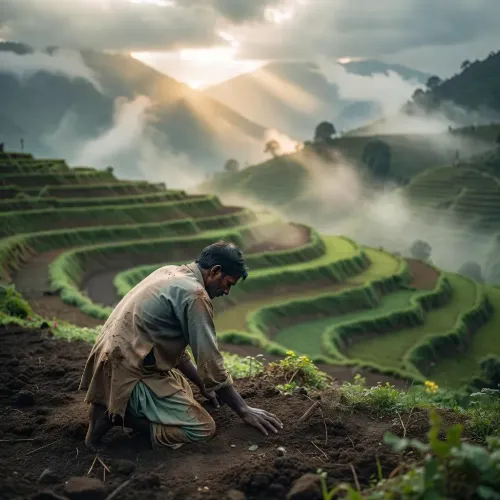
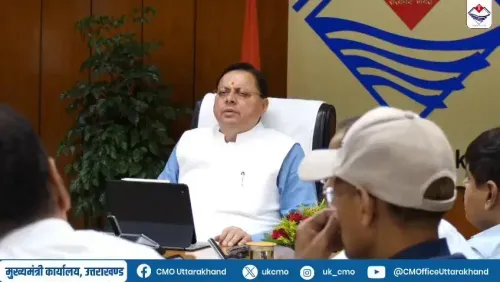
In the terraced hills of Uttarakhand, where thin soils and unpredictable weather have long kept farmers tethered to subsistence crops, Uttarakhand Chief Minister Pushkar Singh Dhami is betting on apples and kiwis to rewrite the equation. On 31 July 2026, CM Dhami outlined his government's push to expand high-quality horticulture across the state through dedicated missions — and to shield those harvests from the climate itself.
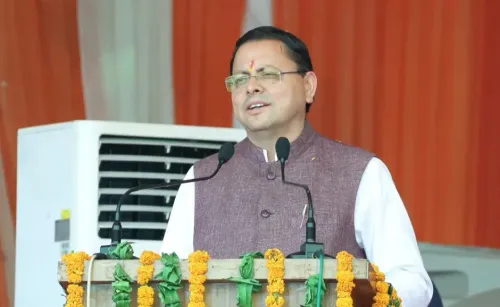
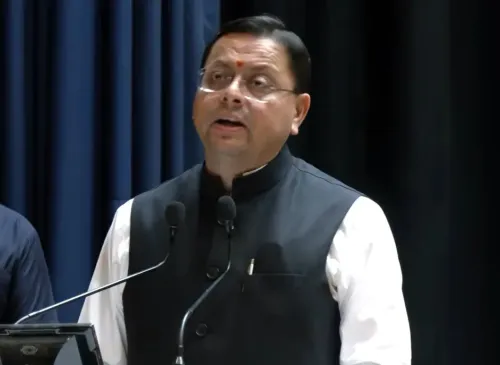
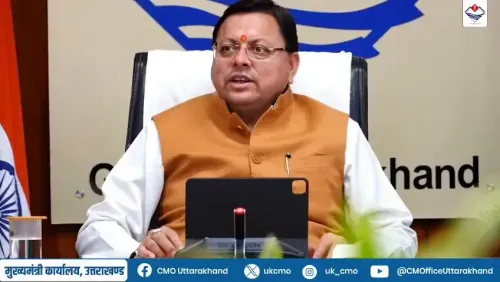
In his post, Dhami wrote: 'एप्पल मिशन एवं कीवी मिशन के जरिए प्रदेश में उच्च गुणवत्ता वाली बागवानी को बढ़ावा दिया जा रहा है' — 'High-quality horticulture is being promoted across the state through the Apple Mission and the Kiwi Mission.' The government, he said, is supplying farmers with improved plant varieties, technical guidance, and subsidies across multiple heads to draw them toward more profitable fruit cultivation alongside traditional farming.
Apple Mission and Kiwi Mission: What Farmers Are Getting
The Apple Mission and Kiwi Mission are Uttarakhand's state-level programmes aimed at introducing improved varieties and modern cultivation practices to hill farmers. Under these schemes, growers receive saplings of superior cultivars, hands-on technical support, and financial grants to offset the steep upfront cost of switching crops. The kiwi programme specifically targets zones in the state where altitude and rainfall create conditions suited to the fruit — a crop that commands strong market prices relative to traditional staples.
Both missions draw on the architecture of the central government's Mission for Integrated Development of Horticulture, launched in 2014, which was designed to help states accelerate fruit crop promotion with structured subsidy pipelines. Uttarakhand's state-level missions layer additional support on top of that framework.
Polyhouses: Farming Against the Weather
Perhaps the most consequential piece of Dhami's announcement is the push for polyhouse farming. The government is actively encouraging farmers to set up polyhouses — climate-controlled growing structures — through subsidies, so that adverse weather does not wipe out a season's effort. For Himalayan farmers, where hailstorms, unseasonal frost, and erratic monsoons can devastate open-field crops, this is not a luxury. It is insurance.
Dhami framed the entire package — plant subsidies, protected cultivation support, and horticulture grants — as a route to farmer self-reliance (aatmanirbhar). The logic is straightforward: a farmer who earns more from a kiwi orchard or a polyhouse vegetable crop is less dependent on price-volatile staple markets and government procurement.
Uttarakhand's Horticulture Bet in a Broader National Pattern
Uttarakhand is not alone in this pivot. Across India's hill states, governments have increasingly turned to horticulture diversification as the answer to terrain and climate constraints that make large-scale grain farming unviable. What distinguishes Uttarakhand's current approach is the pairing of crop-specific missions with protected-cultivation infrastructure — addressing both what farmers grow and how they protect it.
The state's horticulture sector supports a significant share of rural livelihoods in its upper districts. Whether the Apple and Kiwi Missions translate into measurable income gains will depend on adoption rates, market linkages, and the scale of subsidy disbursement in coming seasons — numbers that will test how far the policy ambition reaches into the hills.
For now, the signal from Dehradun is clear: Uttarakhand is staking its agricultural future on the fruit of its mountains, not just the grain of its plains.
Point of View
Giving the party a tangible, crop-specific story to tell in a state where rural hill constituencies matter electorally. The pairing of mission-based subsidies with polyhouse infrastructure signals a shift from passive income support to productivity-led intervention — a more durable political argument. However, the real test will come when adoption figures and income-change data emerge; without verified outcomes, the missions risk remaining aspirational branding rather than transformative policy. Uttarakhand's model, if it produces measurable results, could become a template other hill states cite in their own horticulture pushes.
NationPress
31 Jul 2026
Frequently Asked Questions
What is the Apple Mission in Uttarakhand?
The Apple Mission is a state government scheme in Uttarakhand that provides farmers with improved apple varieties, technical guidance, and subsidies to promote high-quality apple cultivation in hill districts.
What is the Kiwi Mission in Uttarakhand?
The Kiwi Mission supports the introduction and expansion of kiwi cultivation in Uttarakhand zones where altitude and climate are suitable, offering farmers saplings, technical support, and financial grants.
What polyhouse subsidy is Uttarakhand offering farmers?
The Uttarakhand government is encouraging farmers to set up polyhouses — protected growing structures — through subsidies, helping shield crops from adverse Himalayan weather and improve produce quality.
How does Uttarakhand's horticulture push connect to central government schemes?
Uttarakhand's Apple and Kiwi Missions build on the central government's Mission for Integrated Development of Horticulture, launched in 2014, which provides a framework for fruit crop promotion and subsidy support across states.
What did CM Dhami say about farmer welfare on 31 July 2026?
CM Pushkar Singh Dhami stated that his government is continuously working through various schemes to improve farmer welfare and income, with Apple Mission, Kiwi Mission, and polyhouse subsidies as key instruments for shifting farmers toward more profitable horticulture.