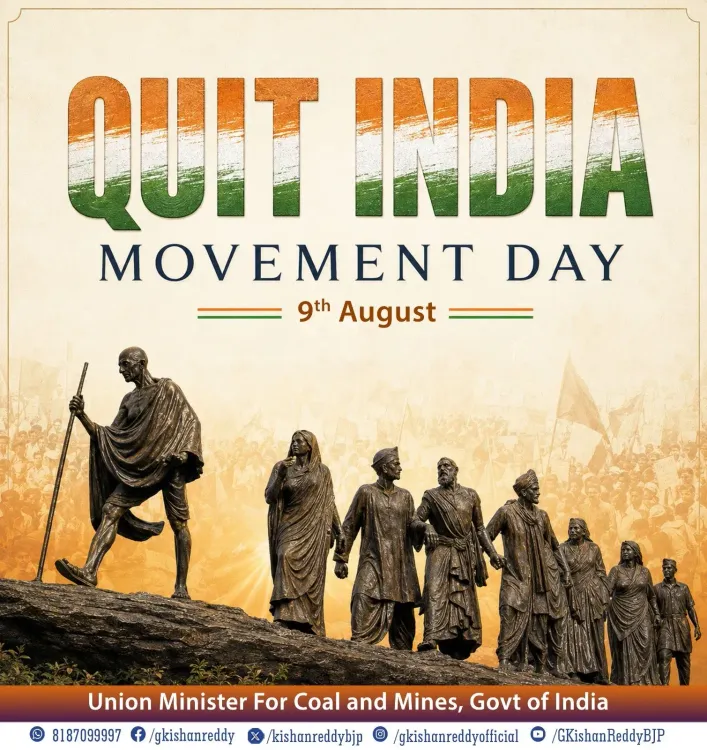
Kishan Reddy Pays Tribute on 84th Quit India Movement Anniversary
Synopsis
On the 84th anniversary of the Quit India Movement, Union Minister G. Kishan Reddy honoured the freedom fighters who answered Gandhi's 'Do or Die' call in 1942, linking their sacrifice to the government's Viksit Bharat vision for 2047.
Key Takeaways
9 August 2026 marks the 84th anniversary of the Quit India Movement, launched on 8 August 1942 .
Union Coal and Mines Minister G.
Kishan Reddy paid tribute to freedom fighters and invoked Mahatma Gandhi's 'Do or Die' call.
The Quit India Movement was a mass civil disobedience campaign demanding immediate British withdrawal from India.
Reddy linked the historical sacrifice to the Viksit Bharat vision of transforming India into a developed nation by 2047 .
The tribute comes days before Independence Day on 15 August , a period of heightened patriotic commemoration.
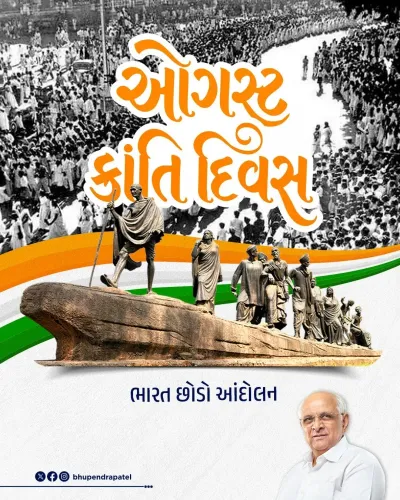
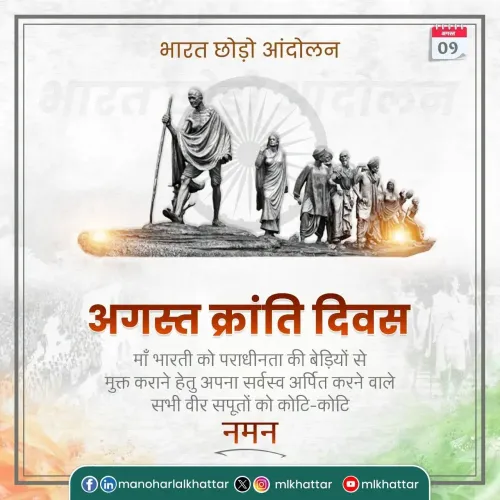
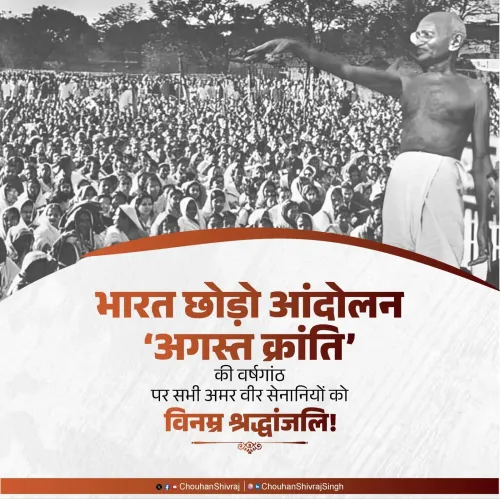
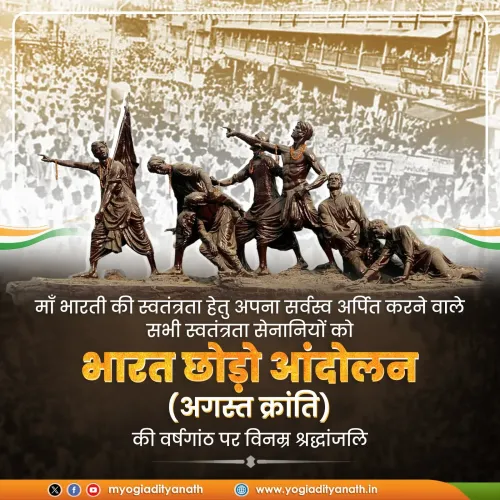
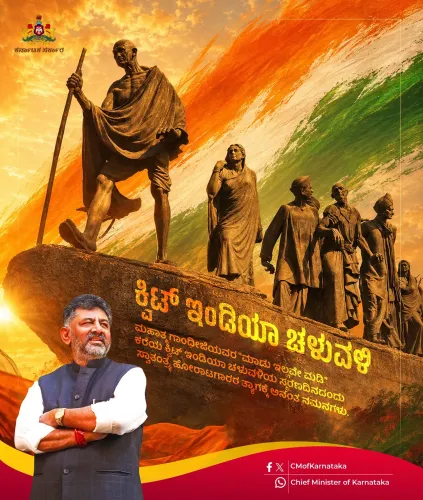
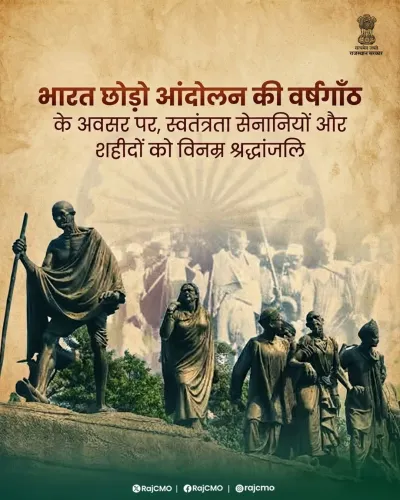
Eighty-four years after Mahatma Gandhi issued his electrifying 'Karo ya Maro' ('Do or Die') call from Bombay's Gowalia Tank Maidan, Union Coal and Mines Minister G. Kishan Reddy on Sunday, 9 August 2026 paid tribute to the freedom fighters whose sacrifice set that historic movement in motion.
Reddy's message invoked the Quit India Movement — launched on 8 August 1942 by the Indian National Congress — as a 'defining milestone' in the nation's journey to independence, drawing a direct line from the courage of those fighters to the present-day ambition of a Viksit Bharat.
The 1942 Call That Shook an Empire
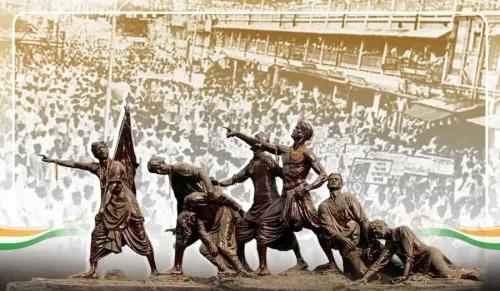
The Quit India Movement was among the most sweeping acts of mass civil disobedience in colonial history. Gandhi's 'Do or Die' ultimatum demanded immediate British withdrawal and unleashed a nationwide wave of protests, strikes, and underground resistance that the colonial administration met with mass arrests — including Gandhi himself. Tens of thousands were imprisoned. The movement did not end British rule overnight, but it made the cost of staying unmistakably clear.
That legacy is why 9 August — formally observed as Quit India Day — draws tributes from across India's political spectrum every year, with ruling-party leaders in particular linking the freedom struggle's spirit to current national goals.
Viksit Bharat: History as a Forward Mandate
Reddy closed his tribute with a call to 'honour their legacy by reaffirming our commitment to building a strong, united and Viksit Bharat.' The phrase is shorthand for the BJP government's flagship vision: transforming India into a fully developed nation by 2047 — the centenary of independence. By anchoring that future target to the sacrifice of 1942, the messaging frames development not merely as economic policy but as a patriotic obligation owed to those who fought for the country's freedom.
As Independence Day 2026 approaches on 15 August, such commemorations are likely to intensify — each one threading the same needle between historical reverence and contemporary national ambition.
Point of View
Such messaging also sets the emotional register for the government's annual August showcase of national achievement.
NationPress
9 Aug 2026
Frequently Asked Questions
When was the Quit India Movement launched?
The Quit India Movement was launched on 8 August 1942 by the Indian National Congress at the call of Mahatma Gandhi , who issued his famous 'Do or Die' ultimatum demanding immediate British withdrawal from India.
What is the significance of 9 August in India?
9 August is observed as Quit India Day in India, commemorating the day the mass civil disobedience movement of 1942 began in earnest following Gandhi's call the previous evening.
What is Viksit Bharat and how is it connected to the freedom struggle?
Viksit Bharat is the BJP government's vision to transform India into a fully developed nation by 2047 , the centenary of independence. Leaders like Kishan Reddy frequently invoke the freedom struggle to frame this goal as a patriotic obligation.
Who is G. Kishan Reddy?
G. Kishan Reddy is India's Union Minister of Coal and Mines and the BJP's Telangana state president . He regularly issues statements on national commemorations and policy matters.
What did Gandhi mean by 'Do or Die'?
Gandhi's 'Do or Die' ( Karo ya Maro ) call urged Indians to either win independence or die in the attempt — a rallying cry that launched the Quit India Movement in August 1942 and triggered mass protests and arrests across British India.