Tharoor Jabs BJP Over Absence in South India
Synopsis
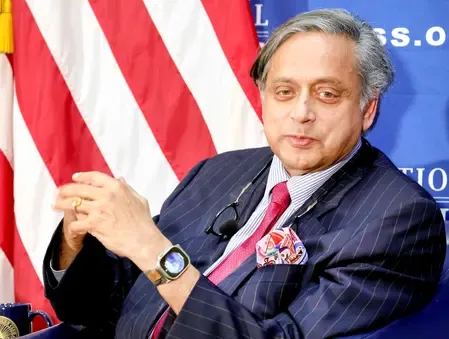
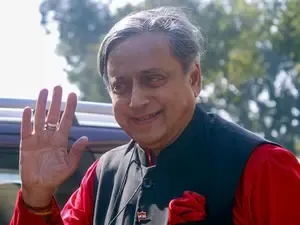
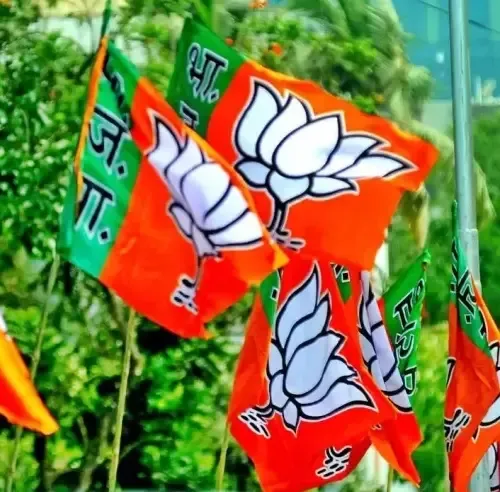
Congress MP Dr. Shashi Tharoor took a pointed dig at the BJP on 9 August 2026, noting that the ruling party holds no state government in South India — a political reality that has persisted since the BJP's national rise in 2014, with Kerala, Tamil Nadu, Andhra Pradesh and Telangana remaining outside its grasp.
Key Takeaways
Shashi Tharoor , Congress MP from Thiruvananthapuram , posted on 9 August 2026 highlighting the BJP's absence from South Indian state governments.
The BJP has held power at the Centre since 2014 but has not formed governments in Kerala, Tamil Nadu, Andhra Pradesh or Telangana .
Karnataka is the only southern state where the BJP has held government, and even that has been contested across election cycles.
The 2021 assembly elections in Kerala and Tamil Nadu reinforced the BJP's limited legislative footprint in the region.
Regional parties, Left formations and Congress-led alliances continue to dominate southern state politics, reflecting distinct voter preferences.
A pointed three-line post from Congress MP Dr. Shashi Tharoor on Sunday, 9 August 2026 cut straight to one of Indian politics' most durable fault lines: the Bharatiya Janata Party's persistent struggle to govern in South India.
Tharoor wrote, 'He is in the South. You would be hard pressed to find a BJP Government there!' — a crisp dig at the ruling party's thin footprint in a region that accounts for five states and a substantial share of the national electorate. The referent of 'He' was not specified in the post, but the political barb was unmistakable.
A Map That Has Long Resisted Saffron
The numbers tell the story plainly. Since the BJP swept to power at the Centre in 2014, it has repeatedly failed to translate that national momentum into state governments across Kerala, Tamil Nadu, Andhra Pradesh and Telangana. The 2021 assembly elections in Kerala and Tamil Nadu underscored the point: the Left Democratic Front retained Thiruvananthapuram's home state comfortably, and the Dravidian bloc in Chennai showed no sign of yielding ground.
Karnataka remains the one significant exception — the party has held and lost the state more than once — but even there the story is contested. Across the Deccan and further south, regional parties, Left formations, and Congress-led alliances have held the political centre of gravity for over a decade.
Tharoor's Home Turf, and the Broader Pattern
For Tharoor, the MP from Thiruvananthapuram, the observation carries local weight. Kerala has not had a BJP chief minister, and the party's vote share in the state, while growing incrementally, has not translated into legislative power. His remark feeds into a wider Congress narrative: that the BJP's claim to be a pan-India party is undermined by its near-absence from state capitals south of the Vindhyas.
The BJP has invested heavily in organisational expansion in the South — alliances with regional outfits, high-profile rallies, leadership appointments — yet voter preferences in these states have so far reflected distinct linguistic, cultural and political identities that resist easy alignment with the national ruling party's platform.
The next round of southern assembly elections will be the real test of whether that gap is narrowing — or whether the map stays exactly as Tharoor described it.
Point of View
Prompting alliance experiments and organisational drives that have yet to yield state-level power in four of five southern states. For the opposition, keeping that fact visible — especially when a senior BJP figure is physically in the region — is a low-cost, high-visibility reminder of the party's federal limits. Whether the BJP closes that gap in the next cycle of southern elections will determine whether this line of attack retains its sting.
NationPress
23 Sept 2026
Frequently Asked Questions
Does the BJP have any government in South India?
As of recent assembly terms, the BJP has not held government in Kerala, Tamil Nadu, Andhra Pradesh or Telangana. Karnataka is the one southern state where the party has formed a government, though it has alternated with the Congress there.
Why is the BJP weak in South India?
Southern states have strong regional party identities — Dravidian parties in Tamil Nadu, the Left in Kerala, and regional formations in Andhra Pradesh and Telangana — that have historically resisted the BJP's national platform, reflecting distinct linguistic and cultural voter preferences.
What did Shashi Tharoor say about the BJP and South India?
On 9 August 2026, Tharoor posted on X: 'He is in the South. You would be hard pressed to find a BJP Government there!' — a jab at the ruling party's thin state-level footprint in the region.
Which southern states does the BJP not govern?
The BJP does not govern Kerala, Tamil Nadu, Andhra Pradesh or Telangana, all of which are held by regional parties or Congress-led alliances.
Is Shashi Tharoor from South India?
Yes. Dr. Shashi Tharoor is the Congress MP from Thiruvananthapuram, the capital of Kerala, and has represented the constituency since 2009.