Kishan Reddy Pays Tribute to Bankim Chandra Chatterjee
Synopsis
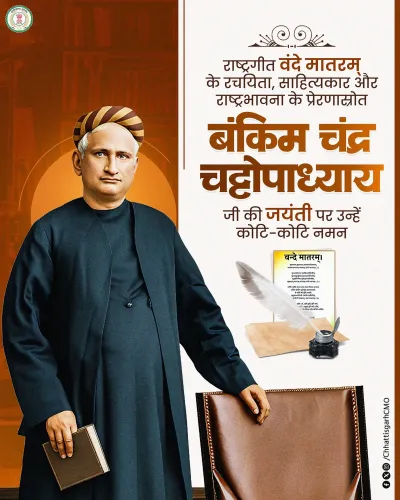
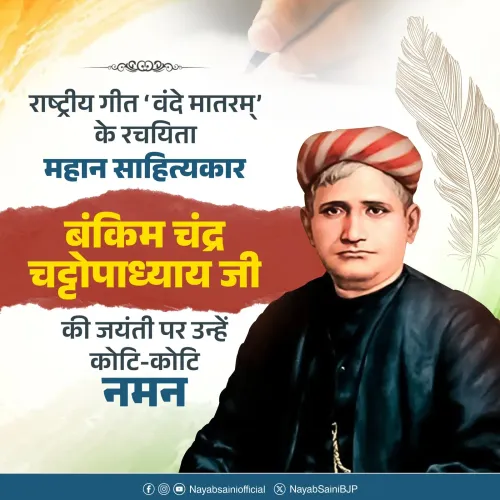
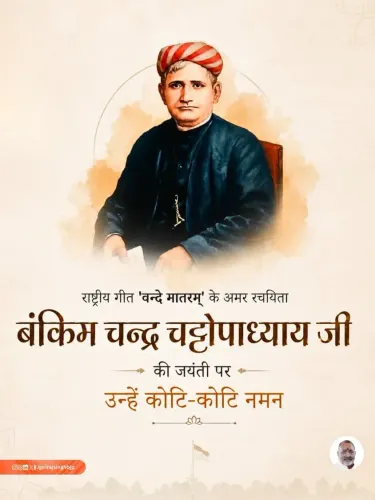
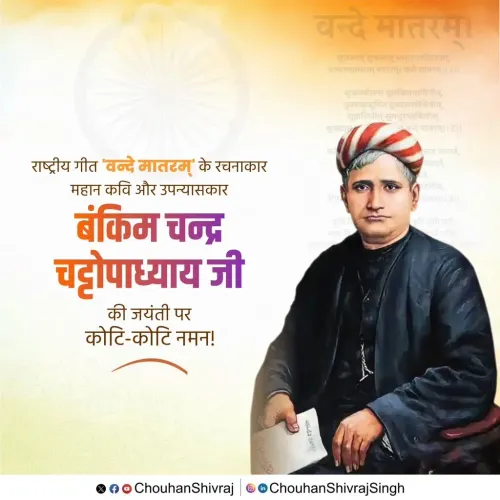
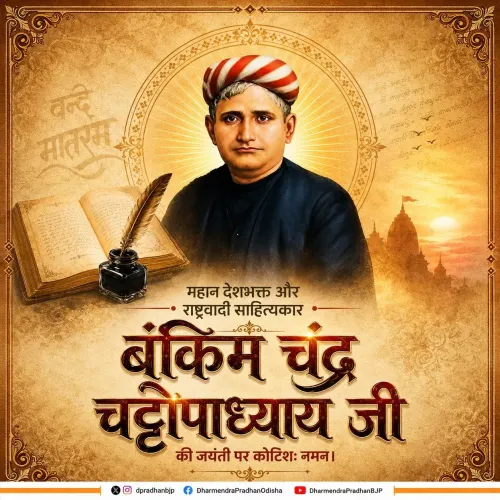
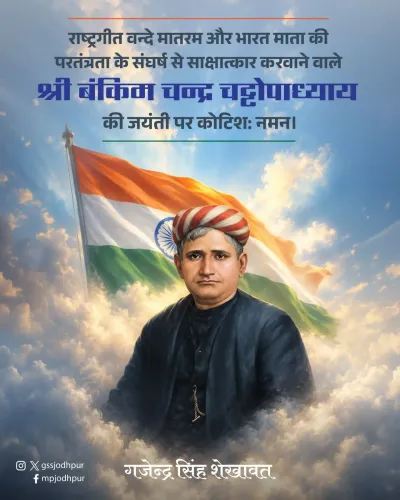
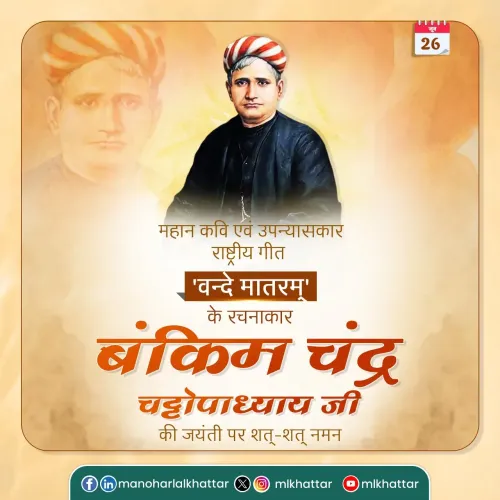
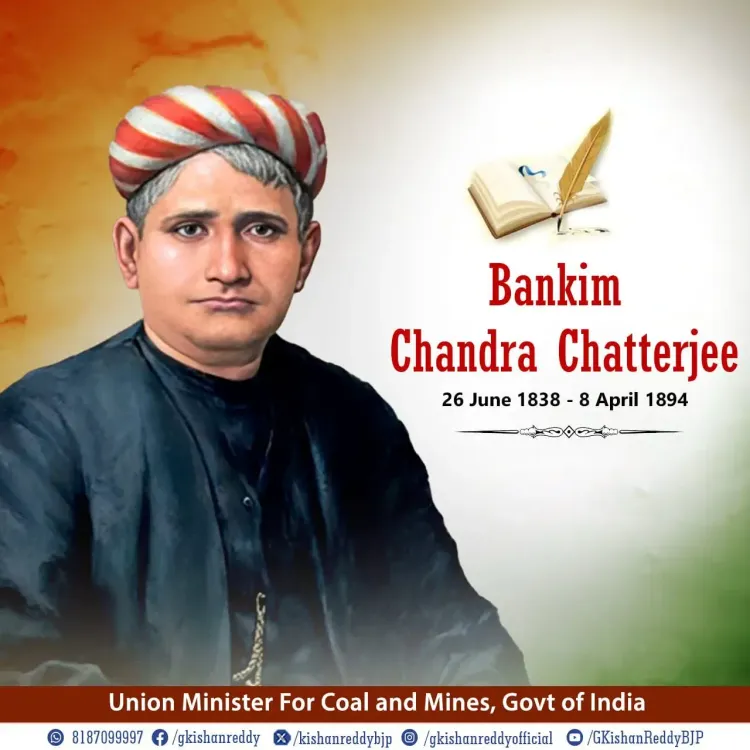
Union Coal and Mines Minister G. Kishan Reddy marked the birth anniversary of Bankim Chandra Chatterjee on 26 June 2026, honouring the 19th-century Bengali writer whose Vande Mataram became India's national song and a defining anthem of the freedom movement.
Key Takeaways
Kishan Reddy , Union Minister of Coal and Mines and BJP Telangana state president, paid tribute to Bankim Chandra Chatterjee on his birth anniversary on 26 June 2026 .
Bankim Chandra Chatterjee authored the novel Anandamath ( 1882 ), which contained the song Vande Mataram , a central anthem of India's nationalist movement.
The Constituent Assembly adopted Vande Mataram as India's national song in 1950 .
Reddy described Chatterjee's legacy as continuing to 'strengthen our commitment to national unity, cultural pride, and service to the Motherland.' Indian ministers routinely mark the birth anniversaries of independence-era literary figures with public tributes, reinforcing cultural-nationalist themes.
Union Coal and Mines Minister G. Kishan Reddy on Friday, 26 June 2026 paid tribute to 19th-century Bengali writer and nationalist thinker Bankim Chandra Chatterjee on his birth anniversary, honouring the author's enduring influence on India's freedom movement and cultural identity.
Context
Reddy's tribute acknowledged Chatterjee as 'one of the foremost literary luminaries and nationalist thinkers of India,' crediting his writings — particularly Vande Mataram — with igniting 'a spirit of patriotism and inspiring generations in the nation's quest for freedom.' The post reflects a longstanding practice among Indian ministers and party leaders of publicly marking the birth anniversaries of figures central to India's independence heritage.
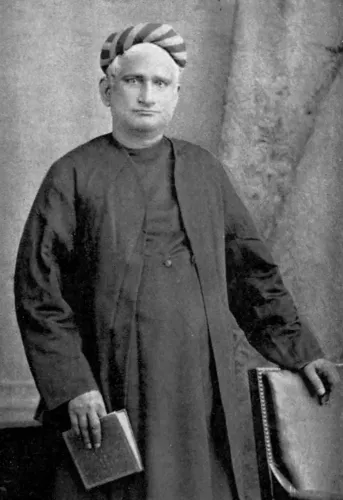
Bankim Chandra Chatterjee was a pioneering Bengali novelist of the 19th century whose novel Anandamath (1882) contained the song Vande Mataram, which became one of the most powerful anthems of the nationalist movement against British rule.
Policy Backdrop
The significance of Vande Mataram extends beyond literature into constitutional history. The Constituent Assembly formally adopted it as India's national song in 1950, cementing Chatterjee's place in the republic's foundational identity. Since independence, successive governments have promoted the song through official events and school curricula as a symbol of cultural continuity and nation-building.
Reddy, who also serves as BJP Telangana state president, framed Chatterjee's legacy as a living force, stating that it 'continues to strengthen our commitment to national unity, cultural pride, and service to the Motherland' — language that aligns closely with the ruling party's broader cultural-nationalist messaging.
Stakeholders and Impact
The tribute is directed at Indian citizens broadly, particularly those engaged with the country's literary and independence heritage. For Bengalis and students of Indian literature, Chatterjee remains a towering figure — the author credited with coining the term Vande Mataram ('I bow to thee, Mother') as a rallying cry that transcended regional boundaries.
Public commemorations of this kind carry symbolic weight in the political landscape, reinforcing connections between contemporary governance and the cultural icons who shaped modern India's identity. Ministry of Culture programmes and state-level commemorations have been noted as areas to watch around this period.
What's Next
Cultural ministries and state governments across India typically organise readings, seminars, and school-level events around the birth anniversaries of major independence-era figures. Chatterjee's anniversary is likely to be marked by such programmes, reinforcing the broader governmental emphasis on literary nationalism as a pillar of civic education and cultural pride.
Point of View
Such gestures also serve a regional political function, connecting the party to a pan-Indian literary heritage in a state where it is seeking to expand its footprint. The tribute is ceremonial in form but politically deliberate in its framing.
NationPress
26 Jun 2026
Frequently Asked Questions
Who was Bankim Chandra Chatterjee?
Bankim Chandra Chatterjee was a pioneering 19th-century Bengali novelist best known for writing the song Vande Mataram in his 1882 novel Anandamath. The song became a defining anthem of India's nationalist movement against British rule and was adopted as India's national song by the Constituent Assembly in 1950.
What is Vande Mataram and why is it significant?
Vande Mataram is a patriotic song written by Bankim Chandra Chatterjee, meaning 'I bow to thee, Mother.' It served as a rallying cry during India's independence movement and was adopted as the national song in 1950. It holds equal constitutional status with the national anthem Jana Gana Mana.
Why did G. Kishan Reddy post a tribute to Bankim Chandra Chatterjee?
G. Kishan Reddy posted the tribute to mark the birth anniversary of Bankim Chandra Chatterjee on 26 June 2026, honouring his contributions as a literary figure and nationalist thinker whose writings, particularly Vande Mataram, inspired India's freedom movement.
What is G. Kishan Reddy's current role?
G. Kishan Reddy currently serves as Union Minister of Coal and Mines in the Government of India. He is also the BJP state president for Telangana.
When was Vande Mataram adopted as India's national song?
The Constituent Assembly of India adopted Vande Mataram as the national song in 1950, shortly after India became a republic. The song had already been a powerful symbol of the independence movement for decades before this formal recognition.