Giriraj Singh calls states key to India's textile hub goal
Synopsis
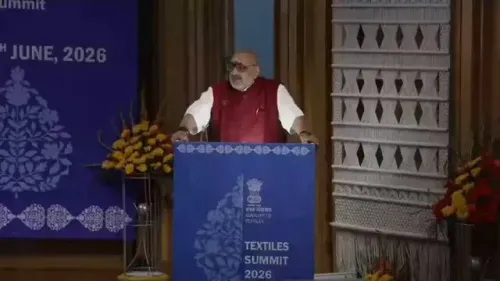
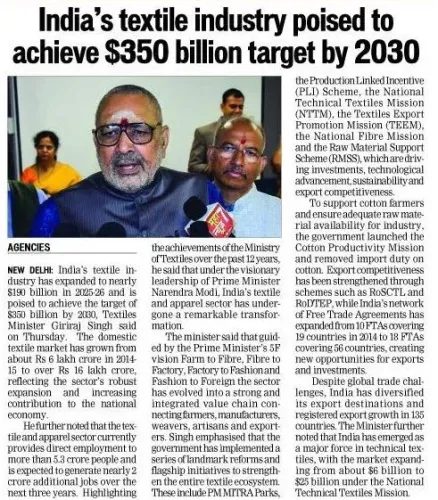
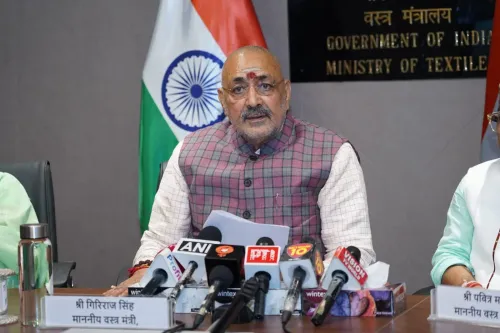
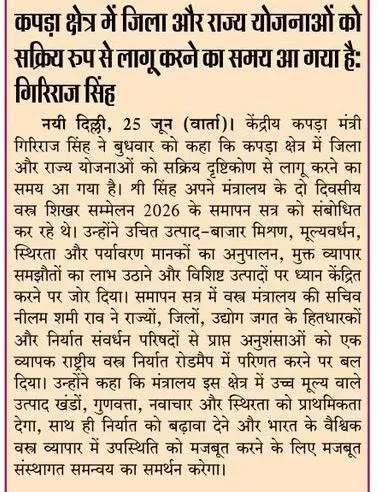
Union Textiles Minister Giriraj Singh on 26 June 2026 called for active state and district participation as the core foundation for making India a global textile hub, urging faster implementation of PLI and PM MITRA schemes and linking progress to the Viksit Bharat 2047 vision.
Key Takeaways
Giriraj Singh on 26 June 2026 called state and district participation the 'strongest foundation' for making India a global textile hub.
He urged effective implementation of district- and state-level plans to boost production, quality, innovation, sustainability, and export capacity.
The PLI scheme for textiles (2021) and PM MITRA parks policy (2021-22) are the two central frameworks that require active state cooperation to succeed.
The post's #FTA hashtag signals a link to ongoing free-trade agreement negotiations, including talks with the European Union .
The Ministry confirmed the Centre's commitment to coordinate with states, industry, and all stakeholders to support the textile sector's growth.
Progress will be measured against the Viksit Bharat 2047 goal of making India a fully developed economy.
Union Textiles Minister Giriraj Singh on Friday, 26 June 2026 called for active participation by states and districts as the strongest foundation for transforming India into a global textile hub, urging effective implementation of plans at sub-national levels to accelerate production, quality, innovation, sustainability, and export capacity.
Context
Posting in Hindi on X, the Minister stated: 'कपड़ा क्षेत्र में राज्यों और जिलों की सक्रिय भागीदारी ही भारत को वैश्विक टेक्सटाइल हब बनाने की दिशा में सबसे मजबूत आधार बनेगी' — 'The active participation of states and districts in the textile sector will be the strongest foundation for making India a global textile hub.' He added that the time has come to implement district- and state-level plans effectively and give new momentum to production, quality, innovation, sustainability, and export capacity. The Ministry of Textiles under Singh has been pushing cooperative federalism as a core delivery model for the sector.
Policy Backdrop
The statement fits squarely into a policy architecture built over the past several years. The Production Linked Incentive (PLI) scheme for textiles, launched in 2021, was designed to boost manufacturing capacity and draw large-scale investment, while the PM MITRA (PM Mega Integrated Textile Region and Apparel) parks policy, approved in 2021-22, aims to develop integrated textile infrastructure with direct state participation. Both schemes explicitly depend on state governments to identify land, clear regulatory hurdles, and mobilise local industry. Singh's post signals that the Centre expects states to move faster on utilising these frameworks. The hashtags #FTA and #ViksitBharat in the post also connect the textile push to ongoing free-trade agreement negotiations and the broader national ambition of becoming a developed economy by 2047.
Stakeholders and Impact
The call directly concerns state governments, textile exporters, and MSME manufacturers — the three groups that determine whether central schemes translate into ground-level output. Singh underlined that the central government is 'committed to providing every possible support in coordination with states, industry, and all stakeholders.' For district-level textile clusters — from Surat and Tiruppur to Panipat and Bhiwandi — this is a signal that New Delhi expects measurable progress on production volumes and export orders. The reference to sustainability also points to growing pressure from international buyers and trade partners, particularly in the context of FTA talks with the European Union and other partners, who increasingly link market access to environmental compliance.
What's Next
Attention will now turn to whether state governments respond with concrete textile policy announcements or enhanced budget allocations aligned with PLI and PM MITRA targets. The utilisation rate of existing scheme funds and the pace of FTA negotiations will be the key metrics to watch. Singh's framing of district-level implementation as the 'strongest foundation' suggests the Ministry may intensify outreach to state textile departments and industry bodies in the coming weeks, with Viksit Bharat targets providing the political deadline for visible results.
Point of View
The Ministry is framing textile export growth as a national-mission deliverable, not a routine sectoral target. The emphasis on sustainability alongside production and quality reflects awareness that access to key Western markets under new FTAs will carry environmental conditionalities. If state governments do not respond with measurable action on PLI and PM MITRA utilisation, the Centre's cooperative-federalism framing risks becoming a shield against accountability for slow progress.
NationPress
26 Jun 2026
Frequently Asked Questions
What did Giriraj Singh say about India becoming a global textile hub?
On 26 June 2026, Union Textiles Minister Giriraj Singh said that active participation of states and districts is the strongest foundation for making India a global textile hub, and called for effective implementation of district- and state-level plans to boost production, quality, innovation, sustainability, and export capacity.
What is the PM MITRA scheme and how does it relate to this?
PM MITRA (PM Mega Integrated Textile Region and Apparel) is a policy approved in 2021-22 to develop integrated textile infrastructure parks with direct state participation. Giriraj Singh's call for state-level action is directly aimed at accelerating the implementation of schemes like PM MITRA.
What is the PLI scheme for textiles?
The Production Linked Incentive (PLI) scheme for textiles was launched in 2021 to boost manufacturing capacity and exports by providing financial incentives to eligible manufacturers. Its success depends significantly on state governments facilitating investment and infrastructure.
How does Viksit Bharat connect to India's textile sector goals?
Viksit Bharat is the government's vision to make India a developed economy by 2047. The textile sector is seen as a key driver of exports, employment, and manufacturing growth needed to achieve that target, which is why Singh linked the two in his post.
Which textile clusters are likely to be impacted by this push?
Major textile clusters such as Surat, Tiruppur, Panipat, and Bhiwandi are among those expected to benefit from faster state-level implementation of central textile schemes, as these hubs concentrate a large share of India's production and export capacity.