Kishan Reddy demands Rahul Gandhi apologise for 'idiot' remark in Lok Sabha
Synopsis
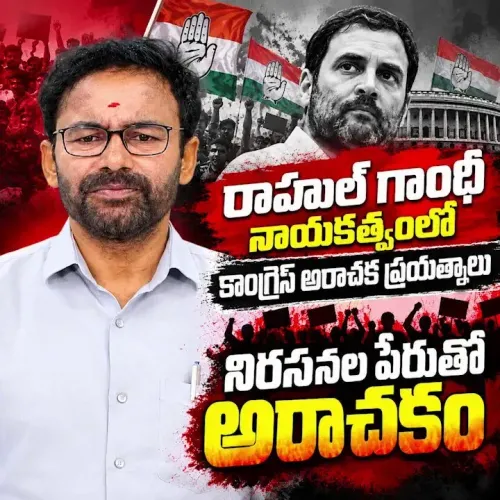
Union Minister G. Kishan Reddy has demanded an unconditional public apology from Opposition Leader Rahul Gandhi after Gandhi allegedly used the word 'idiot' repeatedly in Lok Sabha, calling it an insult to 140 crore Indians and evidence of Congress's political bankruptcy.
Key Takeaways
Kishan Reddy accused Rahul Gandhi of deliberately using the unparliamentary word 'idiot' multiple times on the floor of Lok Sabha .
Reddy demanded Gandhi apologise unconditionally to 140 crore Indians , PM Narendra Modi , and Home Minister Amit Shah .
He alleged Congress tried to exploit a student protest at Jantar Mantar politically and was rejected by the students themselves.
Reddy credited PM Modi with personally intervening to resolve the student agitation in 'Gen-Z language.' The minister framed the outburst as proof of Congress's 'political bankruptcy' following successive election defeats since 2014 .
Indian parliamentary rules maintain a list of banned unparliamentary expressions, with the Speaker empowered to expunge them from the record.
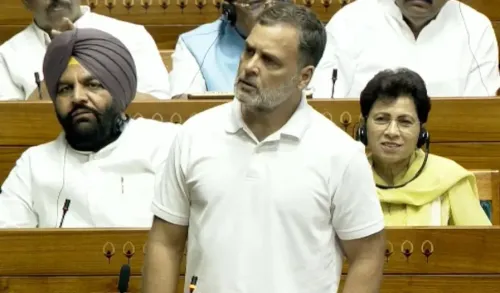
A word spoken on the floor of Lok Sabha has ignited one of the sharpest parliamentary-language rows of the current session. Union Coal and Mines Minister G. Kishan Reddy, also the BJP's Telangana state president, on Wednesday, 29 July 2026, accused Leader of the Opposition Rahul Gandhi of deliberately and repeatedly using the unparliamentary word 'idiot' in the House — and demanded a public, unconditional apology.
The remark that crossed the floor
Reddy's post, written in Telugu, left nothing to interpretation. He charged that Gandhi's repeated use of the word was 'an insult to 140 crore Indians' — arguing that demeaning the Prime Minister amounts to demeaning the democratic verdict of every citizen who voted the BJP government into power three consecutive times. 'Every word reflected irresponsibility and a deliberate intent to insult democratic values,' he wrote.
Indian parliamentary procedure maintains an evolving list of expressions barred from use on the floor of the House. The Speaker's office holds the authority to expunge such words from the official record — a power invoked with increasing frequency as exchanges between the ruling Bharatiya Janata Party and the Indian National Congress have grown more combative since 2014.
Student protests and the political blame game
Reddy also tied the outburst to a separate flashpoint: a student protest at Jantar Mantar, New Delhi. He alleged that Congress attempted to politically exploit the student agitation, was rebuffed by the students themselves, and that Gandhi's anger in the House was a direct consequence of that rejection. He credited Prime Minister Narendra Modi with personally intervening to address the students' concerns — reaching them, as Reddy put it, 'in the Gen-Z language they understand.'
(Note: The specific Jantar Mantar protest and the Prime Minister's direct intervention are referenced in the post but could not be independently verified at the time of publication.)
Reddy's demand: an unconditional apology
The minister's call was unambiguous. Gandhi must apologise — without conditions — to the people of India, to Prime Minister Narendra Modi, and to Union Home Minister Amit Shah. Reddy tagged both Modi and Shah in the post, signalling the demand carries the weight of senior party endorsement.
He framed the broader Congress posture as evidence of 'political bankruptcy' — a party unable to digest successive electoral defeats since 2014, unwilling to engage on policy, and therefore defaulting to personal attacks. 'Politics should be about debating policies, competing on development, and discussing solutions to people's problems,' he wrote. 'But Congress leadership does politics only through personal insults and cheap remarks.'
Where the BJP-Congress language war stands
The row fits a well-worn pattern. Since the 2014 general election, the BJP and Congress have clashed repeatedly over the line between robust opposition and parliamentary decorum — with each side accusing the other of crossing it. What makes this moment distinct is the explicitness of the demand: a named apology, to named individuals, on the record.
Whether the Congress leadership responds, or whether the Speaker's office takes formal action on the language in question, will determine how far this particular clash travels beyond social media and into the chamber itself.
Point of View
Not merely a reaction — by demanding named apologies to Modi and Shah and tagging both leaders, he transforms a parliamentary-language dispute into a formal party-level indictment of the Opposition. The framing of Gandhi's remarks as an insult to the democratic mandate of 140 crore voters is a well-tested BJP rhetorical device that conflates criticism of the Prime Minister with an attack on the electorate itself. The student-protest angle adds a second front, positioning the BJP as responsive to youth concerns while painting Congress as an opportunistic bystander. Congress's formal response — or silence — will signal how much political capital it is willing to spend defending the language used on the floor.
NationPress
28 Oct 2026
Frequently Asked Questions
What did Rahul Gandhi say in Lok Sabha that caused controversy?
According to G. Kishan Reddy , Rahul Gandhi repeatedly and deliberately used the word 'idiot' — classified as an unparliamentary expression — on the floor of Lok Sabha , directed at the central government and PM Modi .
Why is the word 'idiot' considered unparliamentary in India?
The Lok Sabha Secretariat maintains a list of words and phrases deemed unparliamentary and therefore barred from use in the House. The Speaker can order such words expunged from the official record.
What exactly is Kishan Reddy demanding from Rahul Gandhi?
Kishan Reddy is demanding an unconditional public apology from Rahul Gandhi to the people of India, to Prime Minister Narendra Modi , and to Home Minister Amit Shah .
What is the connection between the Jantar Mantar student protest and this controversy?
Reddy alleged that Congress attempted to politically exploit a student protest at Jantar Mantar, New Delhi , was rejected by the students, and that Gandhi's anger in Parliament stemmed from that failure. This claim has not been independently verified.
Has Congress responded to Kishan Reddy's demand for an apology?
As of the time of publication, no formal response from Congress leadership or the Speaker's office regarding the language dispute has been confirmed.