Kishan Reddy Unveils KETO Motors' First Electric Bus in Hyderabad
Synopsis
Union Minister G. Kishan Reddy unveiled KETO Motors' first commercial electric bus in Hyderabad on 2 August 2026, linking the Telangana manufacturer's milestone to India's Aatmanirbhar Bharat push, the FAME scheme, and the PLI programme for domestic EV manufacturing.
Key Takeaways
Kishan Reddy unveiled KETO Motors' first commercial electric bus in Hyderabad on 2 August 2026 .
KETO Motors is a Telangana -based manufacturer, making this a milestone for indigenous EV production in the state.
The launch was framed under the Aatmanirbhar Bharat self-reliance initiative, first announced in May 2020 .
India's EV policy rests on three pillars: the FAME scheme (2015, expanded 2019), Aatmanirbhar Bharat (2020), and the PLI scheme for automobiles (2021).
Kishan Reddy reaffirmed government commitment to the full EV ecosystem — manufacturing, battery production, charging infrastructure, research, and skill development.
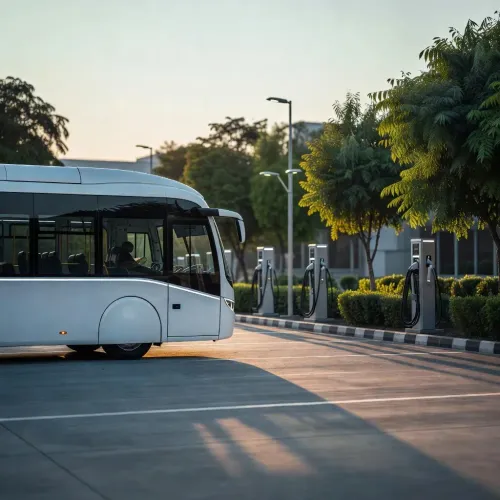
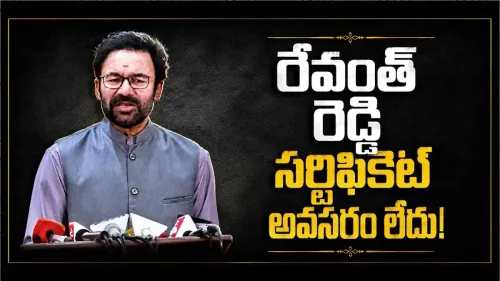
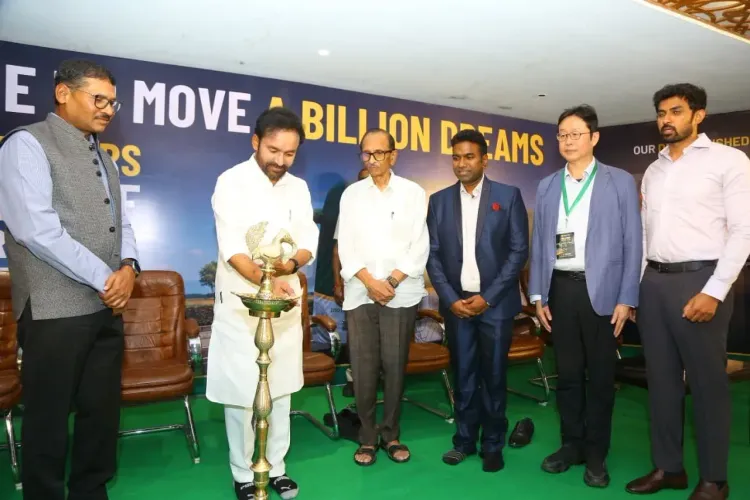
A new chapter in Telangana's green mobility story opened on Sunday, 2 August 2026, as Union Coal and Mines Minister G. Kishan Reddy unveiled KETO Motors' first commercial electric bus and participated in the ceremonial vehicle handover in Hyderabad — marking a concrete step in India's push to put domestically built electric buses on its roads.
KETO Motors' debut bus and what it signals
KETO Motors, a Telangana-based manufacturer, crossed a milestone with the rollout of its maiden commercial electric bus. Kishan Reddy called the launch a reflection of 'the growing strength of India's indigenous manufacturing capabilities,' framing it squarely within the Aatmanirbhar Bharat framework — Prime Minister Narendra Modi's self-reliance drive announced in May 2020. The minister argued that electric mobility is 'not merely an alternative to conventional transport' but central to energy security, pollution reduction, and cutting fuel-import dependence.
The policy scaffolding behind the launch
This handover did not happen in a vacuum. India's EV push rests on three interlocking pillars: the FAME scheme (Faster Adoption and Manufacturing of Electric Vehicles), first launched in 2015 and expanded in Phase II from 2019; the Aatmanirbhar Bharat initiative; and the Production Linked Incentive (PLI) scheme for automobiles and auto components, approved in 2021. Together, these programmes have channelled manufacturing incentives toward building a domestic EV supply chain — from battery cells to finished vehicles — reducing India's dependence on imported fossil fuels and foreign automotive technology.
Telangana's place in India's EV ambition
Hyderabad has emerged as a node in India's evolving EV ecosystem, with state-level policy layering on top of central incentives to attract manufacturers. KETO Motors' first commercial bus is a product of that combined momentum. Kishan Reddy, as BJP Telangana state president, underscored the political as much as the industrial significance of the moment — a home-grown manufacturer in his home state delivering on a nationally articulated promise. The minister reaffirmed the government's commitment to the 'entire EV ecosystem, from vehicle manufacturing and battery production to charging infrastructure, research, and skill development.'
The road from a single ceremonial handover to a scaled, city-wide electric bus fleet is long — but in Hyderabad on 2 August 2026, KETO Motors put the first wheel on it.
Point of View
Local-to-national narrative: a Telangana firm delivering on a Delhi-driven policy promise, useful optics for a state where the party is in opposition. More broadly, the event reinforces the government's strategy of anchoring EV adoption to energy-security and import-substitution arguments rather than purely climate ones — a framing designed to build cross-partisan consensus. The minister's emphasis on the 'full ecosystem' signals that the next policy pressure point will be charging infrastructure and battery localisation, where India still lags. Watch for state-level EV policy announcements in Telangana and PLI disbursement updates as the real measure of momentum.
NationPress
2 Aug 2026
Frequently Asked Questions
What is KETO Motors and where is it based?
KETO Motors is a Telangana-based electric vehicle manufacturer. The company unveiled its first commercial electric bus at a ceremonial handover in Hyderabad on 2 August 2026.
What is the Aatmanirbhar Bharat initiative?
Aatmanirbhar Bharat is a self-reliance initiative announced by Prime Minister Narendra Modi in May 2020. It promotes indigenous manufacturing across sectors including electric mobility, aiming to reduce India's dependence on imports.
What is the FAME scheme for electric vehicles in India?
FAME — Faster Adoption and Manufacturing of Electric Vehicles — was launched in 2015 and expanded in Phase II from 2019. It provides incentives to boost EV adoption and domestic manufacturing, including electric buses.
What did Kishan Reddy say at the KETO Motors electric bus launch?
Kishan Reddy said the launch reflects India's growing indigenous manufacturing strength and called electric mobility central to energy security, pollution reduction, and lowering fuel-import dependence, reaffirming government support for the full EV ecosystem.
What is India's PLI scheme for electric vehicles?
The Production Linked Incentive scheme for automobiles and auto components, including EVs, was approved in 2021. It offers financial incentives to manufacturers to scale up domestic production of electric vehicles and related components.