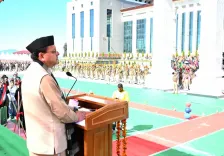
Kolhapur Sangharsh Morcha: Thousands rally at Dasra Chowk against Maharashtra dairy ordinance

Synopsis
During Diwali, thousands of farmers and opposition leaders packed Kolhapur's Dasra Chowk to demand the rollback of a Maharashtra ordinance critics say is tailor-made to hijack the ₹3,000-crore Gokul Milk Union by gifting four government-nominated directors voting rights — enough to flip the board majority. The protest is being read as a flashpoint for the future of Maharashtra's entire cooperative movement.
Key Takeaways
Thousands converged at Dasra Chowk, Kolhapur on 9 November 2026 for a Sangharsh Morcha against a Maharashtra state ordinance.
The ordinance grants voting rights to government-nominated directors in cooperative institutions with turnovers exceeding ₹500 crore , critics allege it targets the ₹3,000-crore Gokul Milk Union .
Maha Vikas Aghadi won 13 of 25 seats in Gokul elections; opposition claims the ordinance is designed to install 4 nominated directors to overturn that majority.
Congress MLA Satej Patil and former MP Raju Shetti led the protest, joined by Jayant Patil (NCP-SP) , Vishwajeet Kadam , Sangli MP Vishal Patil , and the Kolhapur District Bar Association .
Raju Shetti cited a Gujarat court's striking down of a similar provision, arguing the Maharashtra move is legally vulnerable.
Protesters demand the immediate withdrawal of the ordinance and full restoration of Gokul's democratic autonomy.
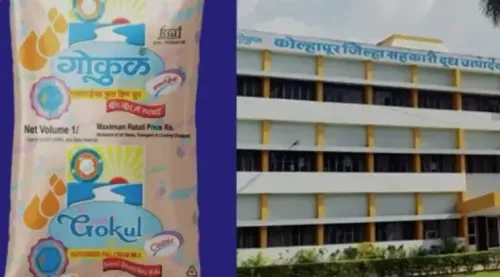
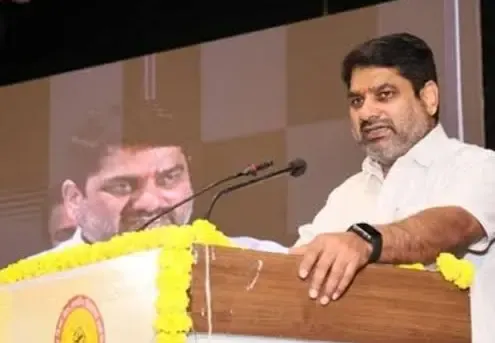
Thousands of farmers, dairy producers, and opposition leaders descended on Dasra Chowk in Kolhapur on 9 November 2026 for a massive Sangharsh Morcha (Struggle March), demanding the immediate rollback of a Maharashtra state ordinance that allows the appointment of government-nominated directors with voting rights to cooperative institutions with turnovers exceeding ₹500 crore. Critics allege the ordinance is specifically engineered to wrest control of the ₹3,000-crore Gokul Milk Union — formally the Kolhapur District Cooperative Milk Producers' Union — by installing four such nominees to break an existing elected majority.
The Ordinance and Its Controversy
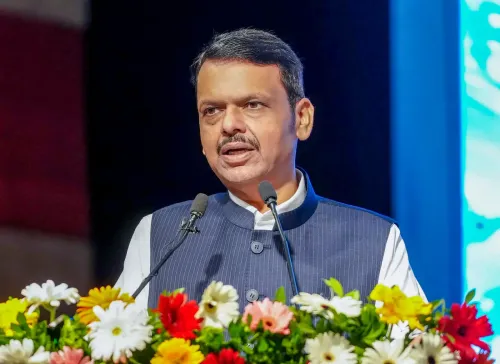
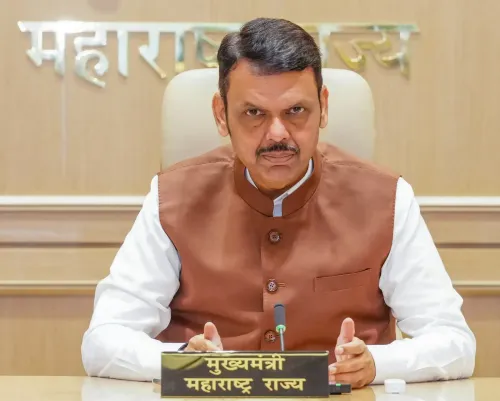
The state's Mahayuti alliance government, headed by Chief Minister Devendra Fadnavis, issued the ordinance granting voting rights to government-nominated directors across cooperative bodies with turnover above ₹500 crore. Opposition leaders argue this is unprecedented in Maharashtra's cooperative history and runs counter to democratic norms that have governed such institutions across India.
Former MP and Swabhimani Shetkari Sanghatana founder Raju Shetti stated at the rally: 'Nominated directors have never been given voting rights. The concept of nominated directors was introduced so that if democratically elected directors are not experts in specific areas, their decisions don't go wrong. A nominated director's job is to advise the elected directors. Nowhere in India — let alone Maharashtra — have nominated directors been given voting rights. They attempted this in Gujarat, but the court struck it down, proving that our stance is not wrong.'
Key Voices at the Rally
Congress MLA Satej Patil, who led the opposition Maha Vikas Aghadi (MVA) panel to win 13 out of 25 seats in the Gokul Milk Union elections against the Mahayuti-backed panel's 12, addressed the crowd directly: 'I was taking medications for 22 days. What was my fault? I was fighting for 5.5 lakh farmers. You were fighting for your own children.' He attributed the ordinance to the influence of Chandrakant Patil and Minister Hasan Mushrif, calling it 'their sin.'
Former minister and NCP (SP) legislator Jayant Patil charged that the government had yielded to pressure from within its own ranks: 'There are people on the other side who behave as though they can change a court's verdict... The government should withdraw this test-tube baby [ordinance].' He invoked Chief Minister Fadnavis's own earlier Assembly statement that no law would be enacted specifically targeting Gokul, calling the subsequent ordinance a contradiction of that assurance.
Congress legislator and former minister Vishwajeet Kadam questioned why the Maharashtra government had engaged a lawyer from Delhi for a matter rooted in Kolhapur's cooperative landscape. Sangli MP Vishal Patil warned that such decisions would cost the ruling alliance electorally, saying: 'If Maharashtra's rulers are thinking about how Gokul can be shut down so Amul can grow big, this is betrayal.'
Atmosphere on the Ground
The protest unfolded against the festive backdrop of Diwali, with demonstrators arriving by buses, tractors, and private vehicles from surrounding villages despite an unprecedented police deployment, strategic barricading, and traffic diversions around Dasra Chowk. Protesters carried black flags and displayed traditional Kolhapuri chappals alongside creative banners. One widely shared banner referenced former Prime Minister Atal Bihari Vajpayee, contrasting his resignation over lacking a single MP's vote with the current move to appoint four directors to manufacture a majority: 'Where is Atalji, who resigned from the Prime Minister's post over lacking a single MP's vote? And where are those today, who are appointing four directors just because they fall short by one director?'
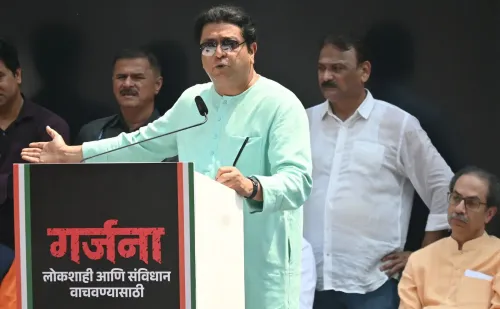
The protest was co-led by Congress MLA Satej Patil and former MP Raju Shetti, with leaders from the Kolhapur District Bar Association and local lawyers joining in solidarity. Shiv Sena (UBT) district chief Viraj Patil responded pointedly to BJP MP Dhananjay Mahadik's scepticism about turnout during Diwali, saying: 'Dhananjay Mahadik should come here and see for himself how many people gather at a single call from Satej Patil.'
What This Means for Maharashtra's Cooperative Sector
Political observers view the Gokul standoff as more than a local institutional dispute — it is being read as a defining test for the broader autonomy of Maharashtra's cooperative movement. The state has a deep cooperative tradition in dairy, sugar, and banking, and the ordinance's reach extends to all such bodies with turnovers exceeding ₹500 crore, raising concerns well beyond Kolhapur. Organisers have framed the stir as pan-Maharashtra in scope, with Satej Patil declaring: 'This struggle march is no longer just Kolhapur's — it has spread across Maharashtra.'
Protesters have set a single core demand: the immediate withdrawal of the state ordinance and the preservation of Gokul's organisational autonomy. The state government is yet to formally respond to the rally. Attention now turns to whether the Fadnavis administration will reconsider the ordinance ahead of any court proceedings or escalate its legal defence.
Point of View
The Mahayuti administration has transformed a local board dispute into a state-wide symbol of institutional overreach. The Vajpayee banner at Dasra Chowk is not incidental: it deliberately turns the BJP's own legacy of democratic propriety against it. If a Gujarat court has already struck down a comparable provision, the legal footing here is shaky. The deeper risk for the ruling alliance is that this controversy, erupting during Diwali and in the land of Chhatrapati Shahu Maharaj, could galvanise the cooperative vote bloc — farmers, dairy producers, sugar workers — well ahead of 2029 state elections.
NationPress
9 Nov 2026
Frequently Asked Questions
What is the Maharashtra state ordinance at the centre of the Kolhapur protest?
The ordinance, issued by the Mahayuti government under Chief Minister Devendra Fadnavis, grants voting rights to government-nominated directors in cooperative institutions with annual turnovers exceeding ₹500 crore. Critics say it was specifically designed to allow the appointment of four such directors to the Gokul Milk Union in Kolhapur, which would give the government-backed side a majority on the board.
What is the Gokul Milk Union and why is it at the centre of this dispute?
The Gokul Milk Union, formally the Kolhapur District Cooperative Milk Producers' Union, is a ₹3,000-crore dairy cooperative that serves as a livelihood anchor for farmers across Kolhapur. The opposition Maha Vikas Aghadi panel won 13 of 25 seats in its recent elections, and protesters allege the ordinance was enacted to reverse that mandate by installing four nominated directors with voting rights.
Who led the Sangharsh Morcha in Kolhapur?
The protest was led by Congress MLA Satej Patil and former MP Raju Shetti, founder of the Swabhimani Shetkari Sanghatana. They were joined by NCP (SP) legislator Jayant Patil, Congress MLA Vishwajeet Kadam, Sangli MP Vishal Patil, Shiv Sena (UBT) district chief Viraj Patil, and members of the Kolhapur District Bar Association.
Has any court previously struck down a similar ordinance?
According to Raju Shetti, a comparable provision granting voting rights to nominated directors was attempted in Gujarat but struck down by a court there. Shetti cited this precedent at the rally to argue that the Maharashtra ordinance is legally untenable.
What is the core demand of the protesters?
Protesters have one central demand: the immediate and unconditional withdrawal of the state ordinance, and the preservation of Gokul Milk Union's democratic autonomy as governed by its elected board of directors. The state government had not formally responded to the rally as of 9 November 2026.