CM Dhami Announces Digital Libraries, Grid Power & Farm Relief for Uttarakhand
Synopsis
Uttarakhand CM Pushkar Singh Dhami announced digital libraries for every district, power-grid links for off-grid villages, a farm electricity surcharge waiver, easier diaspora land-purchase rules, expanded Apuni Sarkar services, guest-teacher pay hikes, and cultural honours for two late folk icons.
Key Takeaways
Two digital libraries and reading rooms will be set up in every district headquarters and municipal area in Uttarakhand.
All revenue villages currently on alternative electricity sources will be connected to the main power grid.
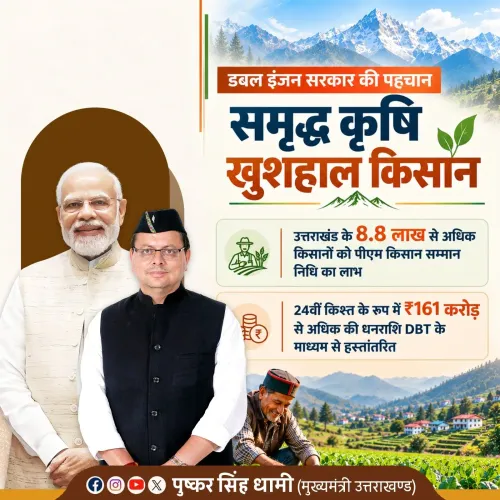
The electricity surcharge on small farmers' power bills will be waived.
The 'Apuni Sarkar' e-governance portal will be strengthened district-by-district to serve elderly, disabled, and remote-area residents.
Late folk legends Gopal Babu Goswami and Chandra Singh Rahi will be posthumously awarded the Uttarakhand Gaurav Samman .
A committee will be formed to address the pending demands of Uttarakhand statehood-movement activists.
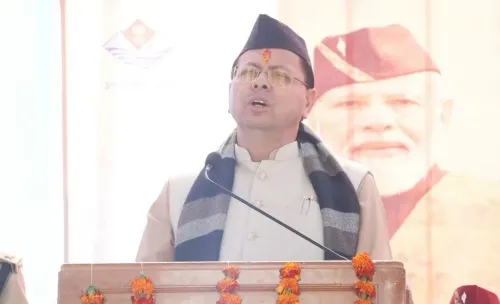
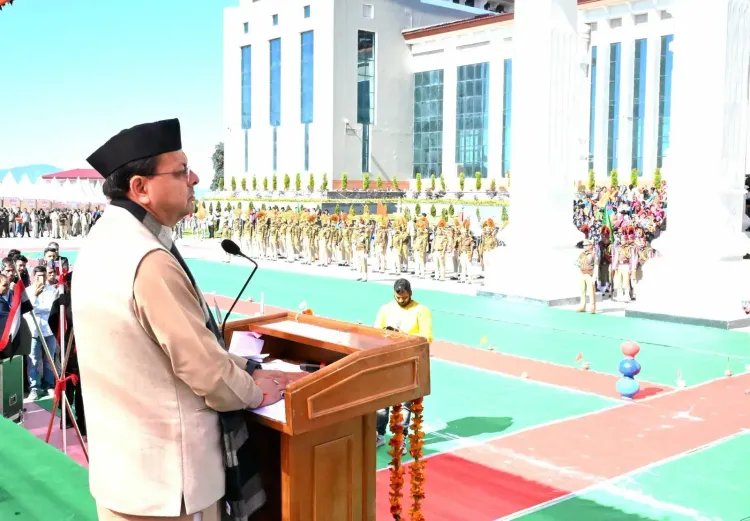
Seven distinct welfare and infrastructure promises in a single address — Uttarakhand Chief Minister Pushkar Singh Dhami used a public event on Monday, 9 November 2026 to roll out a sweeping bundle of governance commitments, from district-level digital libraries to power-grid connections for off-grid villages and a surcharge waiver for small farmers' electricity bills.
Digital libraries, 'Apuni Sarkar' expansion and what they mean for hill districts
At the heart of the announcement is a pledge to establish two modern digital libraries and reading rooms in every district headquarters and municipal area across the state — a move aimed directly at students and young professionals in Uttarakhand's often infrastructure-thin hill towns. Alongside this, CM Dhami said the state's flagship e-governance portal, 'Apuni Sarkar' (our government), will be made simpler and more effective in every district, with a specific focus on reaching elderly citizens, persons with disabilities, and residents of remote areas who cannot physically access government offices.
Apuni Sarkar has been the Uttarakhand government's primary vehicle for doorstep delivery of citizen services. Deepening its district-level reach signals a recognition that digital access alone is not enough — the interface itself must work for the state's most vulnerable users.
Revenue villages to get grid power; diaspora land-purchase rules to be eased
CM Dhami also committed to connecting all revenue villages currently drawing electricity from alternative sources to the main power grid — a long-pending task in a state where remote mountain terrain has historically made last-mile grid extension slow and expensive. The announcement continues a rural electrification push that Uttarakhand governments have pursued since the state's formation in 2000, but which remains incomplete in several high-altitude pockets.
In a separate measure aimed at the state's large diaspora, the CM said the land-purchase process for Uttarakhandis living outside the state who wish to invest back home will be simplified. Uttarakhand has one of India's highest rates of outmigration relative to its population; easing investment barriers for the diaspora has been a recurring policy ask from business and community groups.
Surcharge waiver for small farmers and a pay rise for guest teachers
The economic-relief component of the announcement includes a waiver of the electricity surcharge levied on small farmers' power bills — a targeted measure for an agricultural community whose holdings are typically small and whose margins are thin in a mountain economy. The CM also promised an increase in the honoraria of guest teachers, a large and long-agitating constituency in Uttarakhand's public education system, without specifying a revised figure.
'Uttarakhand Gaurav Samman' for Gopal Babu Goswami and Chandra Singh Rahi
Perhaps the most culturally resonant part of the address was the announcement that the state will posthumously honour late folk singer Gopal Babu Goswami and late folk artist Chandra Singh Rahi with the Uttarakhand Gaurav Samman (Uttarakhand Pride Award). Both are revered figures who dedicated their lives to Garhwali and Kumaoni music and oral heritage. The recognition places their legacy within the state's official cultural identity — a symbolic act that also carries political resonance ahead of future electoral cycles.
A committee for statehood-movement activists — an old wound, a fresh promise
Rounding out the bundle, CM Dhami announced the formation of a committee to address the pending demands of state movement activists — those who participated in the agitation that led to Uttarakhand's creation as a separate state in 2000. Their residual grievances around recognition, compensation and rehabilitation have remained on the political agenda for over two decades. A fresh committee signals acknowledgement, though activists and observers will watch closely to see whether its mandate translates into concrete redressal.
Dhami closed with a pointed framing: 'hamara lakshya keval ghoshnayen karna nahin, balki unhen samayabaddh tarike se dharatal par utaarna hai' — 'our goal is not merely to make announcements, but to implement them in a time-bound manner on the ground.' Whether these commitments track to that standard will be the real measure of the address.
Point of View
Digital exclusion of vulnerable populations, and unresolved symbolic debts to the statehood generation. Pairing welfare economics (farmer surcharge waiver, guest-teacher pay) with cultural patronage (Gaurav Samman) and diaspora outreach (land-purchase simplification) is a classic BJP bundling strategy that keeps multiple constituencies engaged. The formation of yet another committee on statehood activists' demands, however, risks looking like deferred action if its terms of reference are not made public quickly. The real test lies in the implementation calendar Dhami's own framing has invited scrutiny on.
NationPress
9 Nov 2026
Frequently Asked Questions
What is the Apuni Sarkar portal in Uttarakhand?
Apuni Sarkar is Uttarakhand's e-governance portal designed to deliver government services online, with a particular focus on elderly citizens, persons with disabilities, and residents of remote areas who cannot easily visit government offices. CM Dhami has announced it will be made simpler and more accessible in every district.
Who are Gopal Babu Goswami and Chandra Singh Rahi?
Both are late, celebrated folk musicians from Uttarakhand. Gopal Babu Goswami was renowned for popularising Garhwali and Kumaoni folk music, while Chandra Singh Rahi is credited with preserving the state's traditional musical heritage. CM Dhami has announced they will be posthumously honoured with the Uttarakhand Gaurav Samman.
What is the Uttarakhand Gaurav Samman?
The Uttarakhand Gaurav Samman (Uttarakhand Pride Award) is a state government honour recognising outstanding contributions to Uttarakhand's culture, heritage, or public life. CM Dhami announced it will be conferred posthumously on folk legends Gopal Babu Goswami and Chandra Singh Rahi.
What did CM Dhami announce for small farmers in Uttarakhand?
CM Pushkar Singh Dhami announced that the electricity surcharge levied on the power bills of small farmers in Uttarakhand will be waived, providing direct financial relief to the agricultural community in the hill state.
What is the Uttarakhand statehood movement committee about?
CM Dhami announced the formation of a new committee to address the pending demands of activists who participated in the agitation that led to Uttarakhand becoming a separate state in 2000. Their demands around recognition and rehabilitation have remained unresolved for over two decades.