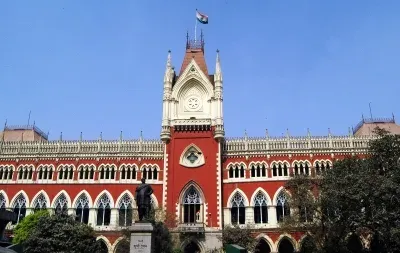
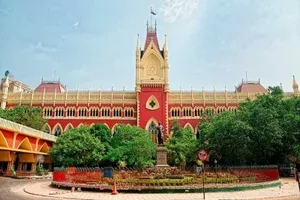
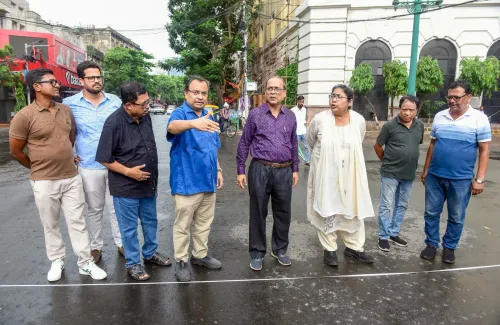
Kolkata Police file contempt case against TMC over July 21 rally violations
Synopsis
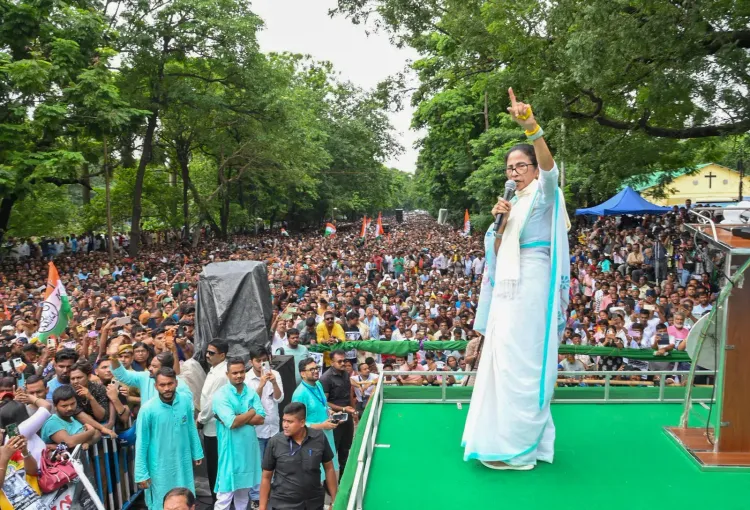
Kolkata Police have filed a suo motu contempt complaint against TMC rally organisers — an extraordinary move given that the force reports to Chief Minister Mamata Banerjee's own government. The Martyrs' Day crowd reportedly blew past a court-mandated 2,500-person cap, shutting both lanes of Cathedral Road and triggering a formal legal confrontation between the state police and the ruling party.
Key Takeaways
Kolkata Police filed a suo motu complaint at Hastings Police Station against TMC rally conveners on 23 July .
The Calcutta High Court had capped attendance at 2,500 and restricted the rally to one lane of Cathedral Road .
Both conditions were allegedly violated on 21 July , forcing police to divert traffic and close both lanes.
A second suo motu complaint covers alleged vandalism by a group of approximately 15 two-wheeler-borne youths on the night of 20 July ; two motorcycles were recovered.
The case is politically significant as Kolkata Police operates under the state government led by Chief Minister Mamata Banerjee .
Kolkata Police have filed a suo motu complaint against the Mamata Banerjee-led faction of the All India Trinamool Congress (TMC), accusing the party of contempt of court in connection with its Martyrs' Day rally held on 21 July at Cathedral Road, in front of the Birla Planetarium in Central Kolkata. The complaint was lodged at Hastings Police Station under the South Division of Kolkata Police on 23 July.
What the Calcutta High Court Had Ordered
According to a city police insider, the Calcutta High Court, while granting permission for the rally earlier this month, had imposed two explicit conditions: capping the number of participants at 2,500 and restricting the gathering to one lane of Cathedral Road, with the adjacent lane to remain open for traffic.
Both conditions were reportedly breached on the day of the event, prompting the police action.
What Happened on the Ground
'The Calcutta High Court's order was clear that the rally should be conducted at one of the two lanes at Cathedral Road. But in reality, after the meeting started, workers and supporters, more than the permissible number, gathered not only on the eastern side of the road but also on the western side. As a result, traffic on that road was obstructed,' a city police insider said.
The insider added that police were compelled to divert vehicles to prevent a law-and-order breakdown, causing widespread disruption to normal traffic movement. 'Since this was a clear violation of the Calcutta High Court's order, it was a contempt of the court; on behalf of the Hastings Police Station, a case has been filed against the conveners and organisers of the rally,' the official stated.
Second Complaint: Pre-Rally Vandalism on July 20
A separate suo motu complaint has also been registered at Hastings Police Station concerning an alleged act of vandalism at the rally venue on the night of 20 July — the eve of the event. According to the complaint, a group of approximately 15 two-wheeler-borne youths arrived near the Cathedral Road venue, raised slogans, and allegedly tore banners before creating a disturbance in the area.
Police present at the scene gave chase, prompting the group to flee, abandoning two motorcycles at the spot. Both vehicles were recovered by the police. Efforts to identify the individuals are reportedly ongoing.
Significance and Broader Context
The Martyrs' Day rally is one of the TMC's most significant annual political events, commemorating party workers killed in political violence on 21 July 1993. This year's edition drew a crowd that, according to police, far exceeded the court-mandated ceiling — a flashpoint that has now translated into a formal legal dispute between the city's own police force and the ruling party's organisers.
Notably, Kolkata Police functions under the state government headed by Chief Minister Mamata Banerjee herself, making the suo motu complaint an unusual and politically significant development. How the Calcutta High Court responds to the contempt angle will be closely watched in the coming days.
Point of View
Enforceable conditions; their breach in full public view leaves the judiciary little room to look away. If the High Court takes up the contempt angle suo motu or on the complaint's basis, it could set a precedent for how political rallies in West Bengal are regulated going forward — and test whether the state's ruling party is subject to the same judicial accountability it routinely invokes against opponents.
NationPress
21 Oct 2026
Frequently Asked Questions
Why did Kolkata Police file a complaint against TMC over the July 21 rally?
Kolkata Police filed a suo motu complaint alleging that TMC rally organisers violated a Calcutta High Court order by allowing more than the permitted 2,500 participants and blocking both lanes of Cathedral Road instead of keeping one free for traffic. The police have characterised this as contempt of court.
What conditions had the Calcutta High Court set for the Martyrs' Day rally?
The Calcutta High Court permitted the rally on two conditions: a maximum of 2,500 participants and use of only one lane of Cathedral Road, with the other lane kept open for public vehicles. Both conditions were allegedly breached on 21 July.
What is the Martyrs' Day rally?
The Martyrs' Day rally is the TMC's flagship annual political event, held every 21 July to commemorate party workers killed in political violence on that date in 1993. It is one of the largest political gatherings in West Bengal.
What happened on the night of 20 July near the rally venue?
A group of approximately 15 two-wheeler-borne youths allegedly arrived at the Cathedral Road venue, raised slogans, tore banners, and created a disturbance before fleeing when police gave chase. They abandoned two motorcycles at the spot, which were recovered by the police.
Why is the Kolkata Police complaint politically significant?
Kolkata Police operates under the West Bengal state government, which is headed by Chief Minister Mamata Banerjee — the same leader whose party faction is named in the complaint. A suo motu case filed by the police against the ruling party's own event organisers is an unusual development that raises questions about judicial oversight and institutional independence.