Kargil Vijay Diwas 2025: Kolkata honours Captain Kanad Bhattacharya's sacrifice
Synopsis
Captain Kanad Bhattacharya of the Sikh Regiment fell in combat near Tiger Hill on 21 May 1999 — yet his name barely features in Kargil's official memory. With 500 NCC cadets marching through Kolkata by candlelight on the eve of Kargil Vijay Diwas, his city is making sure that changes.
Key Takeaways
Captain Kanad Bhattacharya , 8th Battalion, Sikh Regiment , was killed in combat near Tiger Hill on 21 May 1999 , aged 22 .
His patrol was declared missing in action on 21 May 1999 ; his mortal remains were recovered on 15 July 1999 after Tiger Hill was captured.
He was posthumously awarded the Sena Medal (SM) for gallantry, conspicuous courage, and devotion to duty.
A historical debate persists over whether he or Captain Saurabh Kalia — captured on 15 May 1999 and killed in captivity — was the first Indian Army officer to die in the Kargil War.
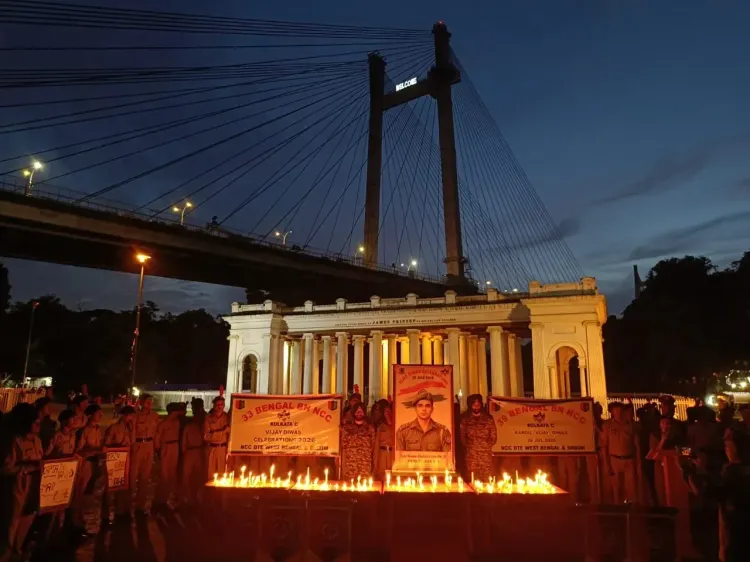
Nearly 500 NCC cadets held a silent march and candlelight vigil at Prinsep Memorial , Kolkata, on 25 July to honour his sacrifice.
On the eve of Kargil Vijay Diwas, Kolkata paid solemn tribute on 25 July to Captain Kanad Bhattacharya, an officer of the 8th Battalion, Sikh Regiment, who fell in battle on 21 May 1999 during the Kargil War — making him one of the earliest Indian Army officers to make the supreme sacrifice in the conflict. His story, long overshadowed by the fog of war and the inaccessibility of his battlefield, is only now receiving the national attention it deserves.
The Question of Who Fell First
A longstanding historical debate surrounds whether Captain Bhattacharya was the first Indian Army officer to die in the Kargil War. Captain Saurabh Kalia is widely cited as the first to make the supreme sacrifice — however, Captain Kalia was captured by the Pakistan Army on 15 May 1999 and died in captivity after 22 days of torture, while Captain Bhattacharya was killed in direct combat on 21 May 1999. The distinction is significant, yet Captain Bhattacharya has rarely featured in mainstream accounts of the war's earliest casualties. Historians and veterans note that the delayed recovery of his mortal remains — retrieved only after Tiger Hill was captured — likely contributed to this oversight.
The Battle on the Tiger Hill Ridge
Captain Bhattacharya, 22 years old at the time, had been commissioned into the Sikh Regiment and posted directly to his unit in Jammu and Kashmir, which was already engaged in operations as reports of large-scale Pakistani infiltration across the Line of Control (LoC) mounted. By the third week of May, a well-coordinated intrusion across multiple sectors had been confirmed, including the heights dominating the Tiger Hill area — one of the most strategically critical battlegrounds of the war.
On 21 May 1999, Captain Bhattacharya was assigned a high-risk mission: to establish a foothold on a northeastern ridge near Tiger Hill. The ridge was blanketed in deep snow and was virtually inaccessible. It was scout Sepoy Major Singh who first detected suspicious movement — a group of heavily armed intruders descending toward their position.
Before evasive action could be taken, the enemy opened fire with heavy automatic weapons and sniper rifles. Facing enemies at a higher altitude — a severe tactical disadvantage — Captain Bhattacharya swiftly divided his patrol into two groups and positioned them to engage from multiple directions. His men returned fire effectively, disrupting the Pakistani troops' advance. Even after sustaining multiple gunshot wounds, he continued to lead from the front, refusing to yield ground. Several members of the patrol were critically injured. Captain Bhattacharya eventually succumbed to his wounds on the battlefield.
Missing in Action — Until Tiger Hill Fell
The patrol was declared missing in action on 21 May 1999, as the intensity of combat and the treacherous terrain made any return impossible. It was only after Indian troops captured Tiger Hill that a thorough search of the area became feasible. On 15 July 1999, the mortal remains of Captain Bhattacharya were recovered from the snow-covered battlefield, finally bringing closure to his family and unit.
He was posthumously awarded the Sena Medal (SM) for gallantry, recognised for his conspicuous courage, indomitable fighting spirit, and unwavering devotion to duty in the face of the enemy.
Kolkata Remembers: Candlelight March and Vigil
On Saturday evening, 25 July, nearly 500 National Cadet Corps (NCC) cadets participated in a silent march to the Prinsep Memorial on the banks of the Hooghly River in Kolkata. A candlelight vigil followed, honouring Captain Bhattacharya and all soldiers who have laid down their lives for the nation. The solemn programme drew tributes from veterans, citizens, and community leaders, underscoring the city's pride in its fallen braveheart.
As India marks Kargil Vijay Diwas on 26 July, the story of Captain Kanad Bhattacharya serves as a reminder that the full human cost of the Kargil War is still being brought to light — one recovered name at a time.
Point of View
But institutional recognition — a place in official Kargil memorials, a named entry in Army records — is what would give this tribute permanence beyond a single anniversary.
NationPress
25 Oct 2026
Frequently Asked Questions
Who was Captain Kanad Bhattacharya?
Captain Kanad Bhattacharya was an officer of the 8th Battalion, Sikh Regiment, Indian Army, who was killed in combat near Tiger Hill during the Kargil War on 21 May 1999, at the age of 22. He was posthumously awarded the Sena Medal (SM) for gallantry.
Was Captain Kanad Bhattacharya the first Indian Army officer killed in the Kargil War?
The question is historically contested. Captain Saurabh Kalia is widely cited as the first, having been captured on 15 May 1999 and killed in Pakistani captivity after 22 days of torture. Captain Bhattacharya died in direct combat on 21 May 1999. Because his remains were only recovered after Tiger Hill's capture on 15 July 1999, his name did not appear in early casualty records.
What happened to Captain Bhattacharya's patrol on 21 May 1999?
Captain Bhattacharya's patrol was ambushed by heavily armed intruders on a snow-covered northeastern ridge near Tiger Hill. Outnumbered and at a lower altitude, he divided his men into two groups to engage the enemy from multiple directions. He continued to lead despite multiple gunshot wounds before succumbing on the battlefield. The patrol was declared missing in action the same day.
When and how were Captain Bhattacharya's remains recovered?
His mortal remains were recovered on 15 July 1999, after Indian troops captured Tiger Hill and the area could be thoroughly searched. The recovery came nearly two months after his death and brought closure to his family and unit.
How did Kolkata mark Kargil Vijay Diwas in his honour?
On 25 July, the eve of Kargil Vijay Diwas, nearly 500 NCC cadets held a silent march to Prinsep Memorial on the banks of the Hooghly River in Kolkata. A candlelight vigil followed, with tributes paid to Captain Bhattacharya and all soldiers who have given their lives for the nation.